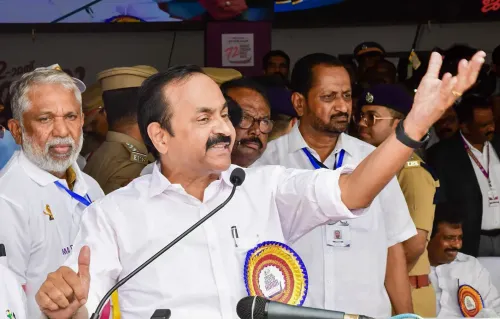
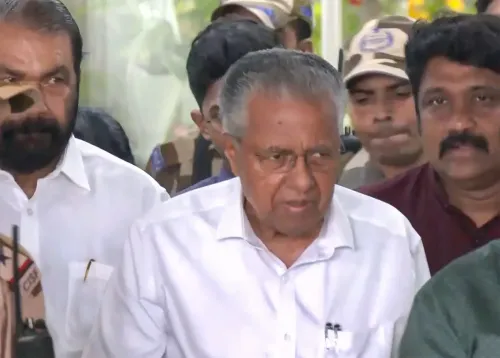
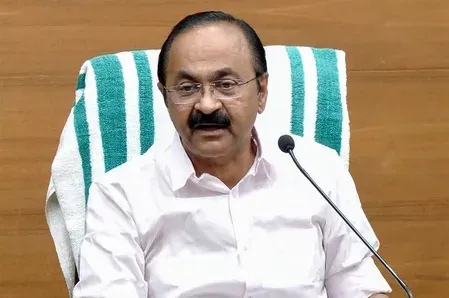
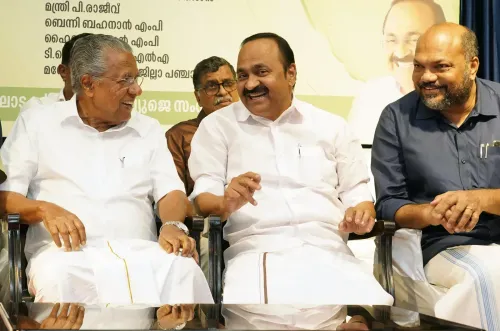
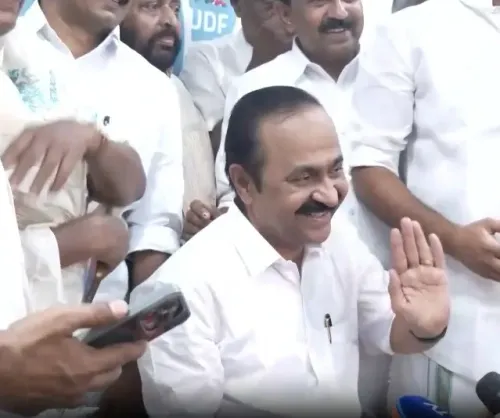
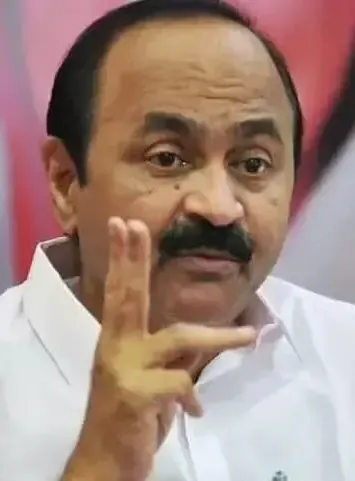
Kerala CM Satheesan blames Vijayan govt for Munambam Waqf land row
Synopsis
Kerala CM Satheesan has turned the Munambam land row into a direct indictment of his predecessor — alleging the Vijayan government deliberately entered the disputed land into the UMEED portal to empower the Waqf Board and make a quick resolution impossible. His dual charge against both the Sangh Parivar and the CPI-M signals that this coastal dispute is now a full-spectrum political battleground.
Key Takeaways
Satheesan on 25 May blamed the previous Pinarayi Vijayan -led government for escalating the Munambam land dispute .
He alleged the outgoing LDF government added the land to the UMEED portal , effectively strengthening the Waqf Board's claim in its final days in office.
Satheesan assured that no resident of Munambam would be evicted: 'Nobody will be thrown out of their homes.' He accused both the Sangh Parivar and the CPI-M of exploiting the dispute for communal and political gain.
The government has committed to pursuing all legal options to protect residents' land rights.
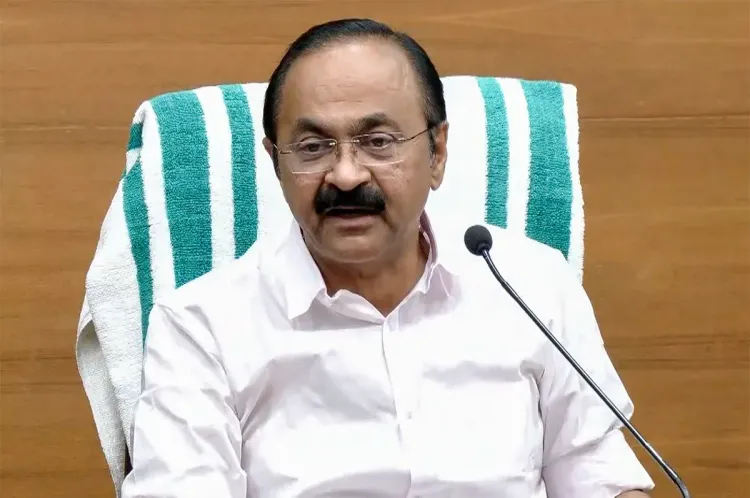
Kerala Chief Minister V. D. Satheesan on Monday, 25 May launched a sharp attack on the previous Left Democratic Front (LDF) government led by Pinarayi Vijayan, holding it responsible for aggravating the Munambam land dispute by entering the contested property into the UMEED portal in its final days in office. Speaking to reporters in Kochi after a Cabinet meeting, Satheesan alleged the move was a deliberate act that deepened communal fault lines and made an administrative resolution far harder.
What the Previous Government Did
According to Satheesan, the outgoing CPI-M-led administration added the Waqf Board as a claimant on the UMEED portal shortly before leaving office. He argued that this entry effectively legitimised the Waqf Board's claim over the land and, by extension, cast the residents of Munambam as encroachers in official records.
'The earlier government created a situation that turned two religious communities against each other. They knowingly left behind a complicated issue,' Satheesan told reporters.
He added that the action was structured in a way that ensured no swift administrative fix was possible. 'It was done to ensure that a decision could not be taken in ten minutes,' he remarked.
Government's Assurance to Residents
Satheesan was categorical that the current United Democratic Front (UDF) government would not displace any resident. 'The present government will not evict the people living in Munambam. Nobody will be thrown out of their homes,' he assured. He said the government would pursue all available legal avenues to protect residents' land rights while remaining within the bounds of law.
Political Blame on Both Flanks
The Chief Minister did not spare either end of the political spectrum. He accused the Sangh Parivar of attempting to exploit the coastal dispute to stoke communal division. In the same breath, he alleged that the CPI-M was also trying to derive political capital from the sensitive issue rather than working toward a resolution.
Notably, this dual accusation places the Satheesan government in a position where it must navigate pressure from a Hindu nationalist narrative on one side and a left-wing political challenge on the other — both, he argued, more interested in the controversy than in the welfare of the affected families.
Background and Stakes
The Munambam land dispute has simmered for years, centred on a coastal settlement in Ernakulam district where residents hold documents suggesting private ownership, while the Waqf Board has asserted claims over the same land. The conflict has periodically flared into a broader flashpoint over Waqf land rights across Kerala, drawing in religious organisations, political parties, and legal bodies.
This is not the first time the UMEED portal entry has been cited as a turning point; legal experts have previously noted that portal registration carries procedural weight in Waqf adjudication. With the matter still unresolved in courts, the Chief Minister's remarks signal that the state government intends to seek a legal pathway that protects residents without directly confronting Waqf jurisdiction — a fine line that will define the dispute's next chapter.
Point of View
He is essentially arguing that a bureaucratic act by the previous government has the power to override decades of residents' possession — which, if true, raises serious questions about the portal's design and the safeguards around Waqf data entry. The dual attack on the Sangh Parivar and the CPI-M is classic centrist positioning, but it sidesteps the harder question: what concrete legal remedy does the UDF government actually have, and on what timeline? Assurances of non-eviction are politically necessary but legally non-binding. The Munambam case is also a stress test for the amended Waqf Act at the state level — and how Satheesan handles it will set a precedent for similar disputes simmering across Kerala's coastline.
NationPress
10 Oct 2026
Frequently Asked Questions
What is the Munambam land dispute in Kerala?
The Munambam land dispute involves a coastal settlement in Ernakulam district, Kerala, where residents claim private ownership of their land while the Waqf Board has asserted competing claims. The controversy intensified after the land was reportedly entered into the UMEED portal, which is seen as strengthening the Waqf Board's legal position.
What did Kerala CM Satheesan allege against the previous government?
Chief Minister V. D. Satheesan alleged that the previous LDF government led by Pinarayi Vijayan deliberately added the Munambam land to the UMEED portal in its final days, effectively bolstering the Waqf Board's claim and making a quick administrative resolution difficult.
Will residents of Munambam be evicted?
Chief Minister Satheesan has categorically assured that no resident will be evicted. He stated that the present government will take all possible legal steps to protect residents and that nobody will be thrown out of their homes.
Why is the UMEED portal significant in this dispute?
The UMEED portal is used for recording Waqf-related land data. According to Satheesan, once the Munambam land was entered into the portal, it procedurally strengthened the Waqf Board's ownership claim and simultaneously implied that the residents living there were encroachers under official records.
Who else has Kerala CM Satheesan blamed for the Munambam controversy?
Beyond the previous LDF government, Satheesan accused the Sangh Parivar of trying to exploit the dispute to create communal division in the coastal region. He also alleged that the CPI-M was attempting to use the sensitive issue for political gain rather than working toward a resolution.