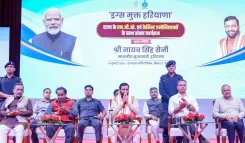
CM Samrat Choudhary Launches Home Registration for 80+ in Bihar

Synopsis
Bihar Chief Minister Samrat Choudhary launched doorstep land registration for citizens aged 80 and above, paperless registration, pre-registration land information by revenue officers, and GEOISO-based site verification on 11 July 2026, advancing the state's e-governance push in land administration.
Key Takeaways
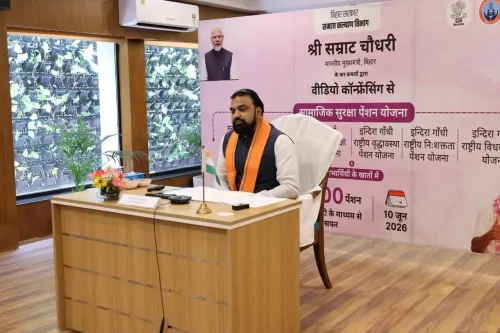
Bihar CM Samrat Choudhary launched the initiative on 11 July 2026 via a live-streamed event.
Citizens aged 80 years and above can now register land documents from home, with revenue officials visiting them directly.
Circle officers and revenue officers will provide pre-registration land information to reduce disputes and errors.
A paperless registration system has been introduced to reduce physical paperwork and improve record accuracy.
GEOISO technology will be used for site verification, adding spatial precision to the registration process.
The reforms build on the Digital India Land Records Modernization Programme launched by the Government of India in 2008 .
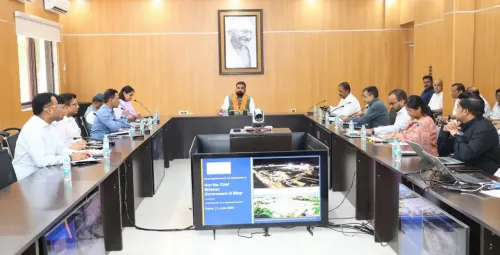
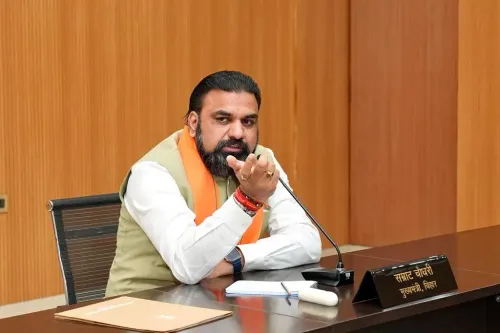
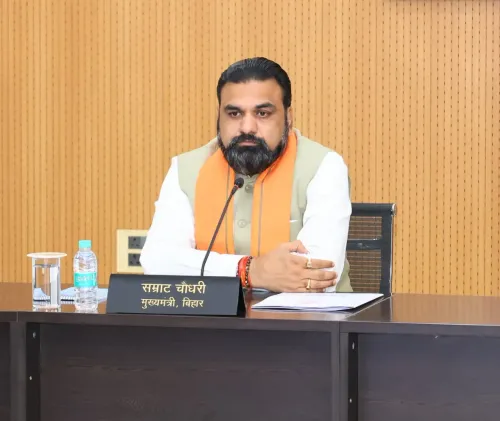
Bihar Chief Minister Samrat Choudhary on Saturday, 11 July 2026, launched a set of citizen-centric land registration reforms in Bihar, including a doorstep registration facility for residents aged 80 years and above, paperless registration, pre-registration land information by revenue officers, and site verification using GEOISO technology.
Context
The Chief Minister announced the initiative via a live-streamed event, describing it as a step toward making land registration more accessible and transparent. The post, shared on 11 July 2026, highlighted four key features: घर बैठे निबंधन (home registration) for citizens aged 80 and above, pre-registration land information provided by अंचल अधिकारी/राजस्व अधिकारी (circle officers and revenue officers), paperless registration, and site inspection using GEOISO technology.
The announcement was accompanied by a live broadcast, signalling the government's intent to publicise the rollout widely and build public confidence in the new system.
Policy Backdrop
The reforms build on the Digital India Land Records Modernization Programme, launched by the Government of India in 2008, which sought to computerise land records and reduce property disputes across states. Bihar has progressively adopted e-governance tools in its land revenue administration as part of this broader national push.
Paperless and digital registration processes have been a growing focus for Indian states seeking to cut corruption, reduce delays, and eliminate the need for physical visits to sub-registrar offices — a burden that falls disproportionately on elderly and rural citizens. The home registration facility for those aged 80 and above directly addresses this vulnerability.
Stakeholders and Impact
Elderly citizens — particularly those above 80 years who face mobility constraints — stand to benefit most immediately, as the new facility allows revenue officials to visit their homes to complete property registration formalities. This removes a significant barrier that has historically left senior citizens dependent on intermediaries, often at personal financial risk.
Landowners more broadly benefit from the pre-registration information service, through which circle officers and revenue officers will provide land-related details before registration is completed. This step is designed to reduce disputes arising from incomplete or inaccurate records at the time of transaction. The introduction of GEOISO technology for site verification adds a layer of spatial accuracy to the process.
What's Next
Attention will now turn to the district-level rollout of the home registration service and whether the new systems will be integrated with central land records databases maintained under national programmes. The pace and uniformity of implementation across Bihar's 38 districts will determine how many citizens can practically access these services.
If the reforms are executed at scale, they could position Bihar as a model for other states seeking to make land administration more inclusive — particularly for elderly and differently-abled populations who have long been underserved by conventional registration infrastructure.
Point of View
These measures could meaningfully reduce land disputes and set a replicable template for other states under the national land records modernisation framework.
NationPress
11 Jul 2026
Frequently Asked Questions
What is the home registration facility launched in Bihar?
Bihar has launched a doorstep land registration service for citizens aged 80 years and above , allowing revenue officials to visit their homes to complete property registration formalities instead of requiring them to visit a sub-registrar office.
Who launched Bihar's new land registration scheme?
Bihar Chief Minister Samrat Choudhary launched the scheme on 11 July 2026 through a live-streamed event.
What is GEOISO technology in Bihar land registration?
GEOISO technology is being used by the Bihar government for site verification during the land registration process, providing spatial accuracy to property records. Specific technical details of the system have not been independently verified.
What is paperless land registration in Bihar?
Bihar's new paperless registration system aims to eliminate physical paperwork from the property registration process, reducing delays, errors, and opportunities for document tampering.
How will revenue officers help before land registration in Bihar?
Under the new system, circle officers and revenue officers in Bihar will provide prospective registrants with land-related information — such as ownership history and encumbrances — before the registration is completed, helping to prevent disputes.