CM Himanta Eyes No. 1 Spot for Assam Pineapples

Synopsis
Assam Chief Minister Himanta Biswa Sarma has toured pineapple farms in Goalpara, Karbi Anglong, and Cachar, spotlighting Cachar's tangy variety and zero-waste circular farming model. He declared Assam is already India's second-largest pineapple producer and set his sights firmly on the top spot.
Key Takeaways
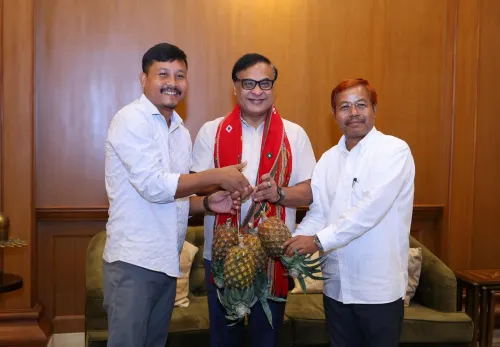
CM Himanta Biswa Sarma personally sampled pineapples from Goalpara , Karbi Anglong , and Cachar to benchmark district-level quality.
The Cachar variant was highlighted for its tangy flavour and a zero-waste circular farming model .
Assam is currently positioned as India's second-largest pineapple producer , with the Chief Minister publicly targeting the top rank.
The push aligns with the national Mission for Integrated Development of Horticulture (MIDH) , which provides enhanced funding to northeastern states.
Key stakeholders include pineapple farmers in Goalpara , Karbi Anglong , and Cachar , as well as traders and processors in the region.
Next steps to watch include new state budget allocations for pineapple value chains and updated national horticulture production rankings.
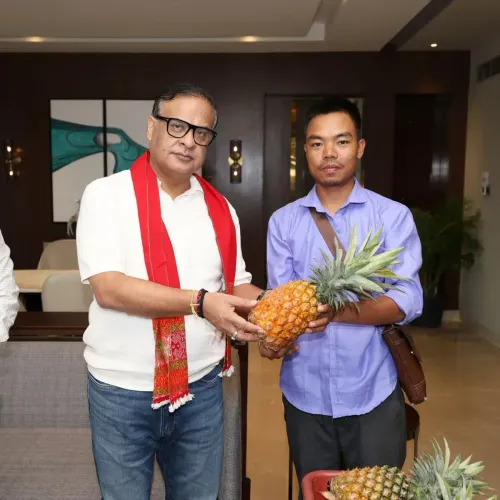
Assam Chief Minister Himanta Biswa Sarma on Saturday, 11 July 2026, declared his ambition to make Assam India's top pineapple producer, sharing his personal sampling tour across the state's key growing districts — Goalpara, Karbi Anglong, and Cachar.
Posting on X, the Chief Minister wrote: 'We're already India's 2nd largest pineapple producer. We're coming for No. 1.' He singled out the Cachar variant for its 'tangy flavour and a zero-waste circular farming model,' signalling that quality and sustainability, not just volume, are central to the state's push.
Context
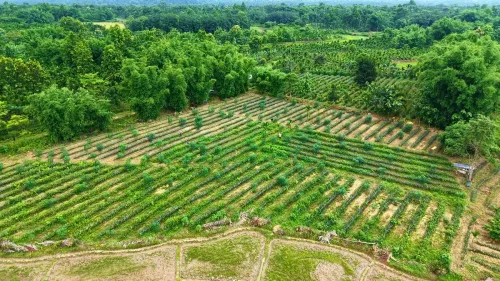
Assam has long been a significant horticultural belt in the Northeast, with pineapple cultivation spread across ecologically distinct districts. Goalpara in the west, the autonomous hill district of Karbi Anglong in the centre, and the southern plains of Cachar each contribute distinct varieties shaped by local soil and climate. The Chief Minister's district-by-district sampling tour reflects a hands-on effort to benchmark quality across these zones.
The specific mention of a 'zero-waste circular farming model' in Cachar points to practices that minimise post-harvest loss — a persistent challenge in perishable fruit supply chains across the Northeast.
Policy Backdrop
The push aligns with the national Mission for Integrated Development of Horticulture (MIDH), under which northeastern states receive enhanced central funding for fruit cultivation, cold-chain infrastructure, and value-chain development. Assam has used such frameworks to diversify farm income beyond paddy and tea, the state's traditional anchors.
State horticulture departments have in recent years emphasised packaging, branding, and market linkages for niche Northeast produce. A move toward the national top rank in pineapple output would require sustained gains in both cultivated area and yield-per-hectare, alongside reduction in post-harvest losses that typically erode producer income.
Stakeholders and Impact
The most direct beneficiaries of any ranking climb would be pineapple farmers across Goalpara, Karbi Anglong, and Cachar, communities that depend on horticulture as a primary or supplementary income source. Improved state-level focus can translate into better extension services, input subsidies, and market access.
Traders, processors, and logistics operators in the Brahmaputra corridor also stand to gain if higher volumes are matched with infrastructure investment. For tribal farming communities in Karbi Anglong, recognition of their produce in a state-level tour by the Chief Minister carries both economic and symbolic weight.
What's Next
Watchers of Assam's agriculture sector will look for concrete follow-through: new government schemes or budget allocations targeting pineapple value chains, export facilitation initiatives, and the next set of national horticulture production statistics that would confirm or update the state's current ranking. The Chief Minister's public commitment creates a visible benchmark against which future policy action will be measured.
Whether the 'zero-waste circular farming model' piloted in Cachar is scaled across other districts will be an early indicator of how far this ambition translates into structured policy.
Point of View
From plains farmers in Goalpara to tribal cultivators in Karbi Anglong. The explicit ranking ambition — 'We're coming for No. 1' — sets a public benchmark that will be difficult to quietly abandon, effectively converting a social media post into a policy commitment. This fits a broader pattern in which the Assam government has sought to reframe the Northeast's agricultural identity around premium, differentiated produce rather than commodity volumes. The spotlight on Cachar's zero-waste model also signals an awareness that sustainability credentials are increasingly important for domestic market differentiation and potential export positioning.
NationPress
10 Oct 2026
Frequently Asked Questions
Is Assam really India's second largest pineapple producer?
Chief Minister Himanta Biswa Sarma stated on 11 July 2026 that Assam is India's second-largest pineapple producer. This claim has not been independently verified by NationPress against the latest national horticulture statistics, but it reflects the state government's official position.
Which districts in Assam grow pineapples?
Assam's pineapple cultivation spans multiple districts. CM Sarma's recent tour covered Goalpara in western Assam, Karbi Anglong in the central hill region, and Cachar in the south, all of which are established pineapple-growing zones.
What is a zero-waste circular farming model?
A zero-waste circular farming model refers to agricultural practices that minimise or eliminate post-harvest waste by repurposing crop residue, peels, and by-products — for example as compost, animal feed, or processed goods. CM Sarma cited such a model in Cachar as a standout feature of that district's pineapple farming.
What government schemes support pineapple farming in Assam?
The central government's Mission for Integrated Development of Horticulture (MIDH) provides enhanced funding to northeastern states including Assam for fruit cultivation, cold-chain infrastructure, and value-chain development, supporting efforts to scale up pineapple production.
What will it take for Assam to become India's top pineapple producer?
Reaching the number-one rank would require Assam to expand cultivated area, improve yield-per-hectare, reduce post-harvest losses, and strengthen market linkages and processing capacity — areas the state government has indicated it intends to address through horticulture-focused policy.