What is the Viksit Bharat Sikhsha Adhishthan Bill Tabled in Lok Sabha?
Synopsis
Union Education Minister Dharmendra Pradhan has introduced the Viksit Bharat Sikhsha Adhishthan Bill in the Lok Sabha. This bill aims to overhaul India's higher education system but faces strong opposition. Will it successfully transform the educational landscape in the country?
Key Takeaways
Proposed establishment of a Higher Education Board.
Centralized regulation and consolidation of councils.
Opposition raises concerns about autonomy.
Penalties for non-compliance could be significant.
Focus on outcome-based education and 'Bharatiya' knowledge systems.
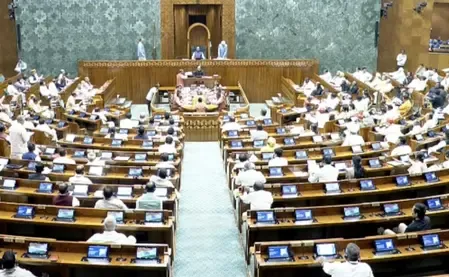
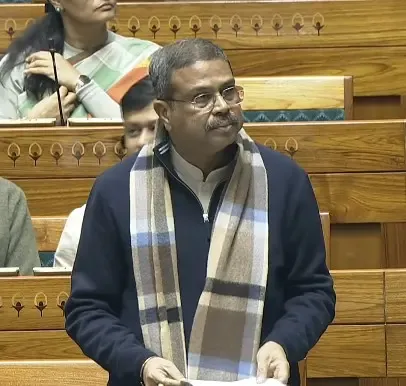
New Delhi, December 15 (NationPress) – On Monday, Union Education Minister Dharmendra Pradhan presented the Viksit Bharat Sikhsha Adhishthan Bill 2525 in the Lok Sabha amidst the ongoing Winter Session of Parliament, paving the way for a significant transformation of India's higher education regulatory landscape.
This Bill aims to establish a Higher Education Board to centralize regulation in the sector and revamp the current system by merging various regulatory councils into a single commission.
However, the introduction of the Bill encountered fierce opposition.
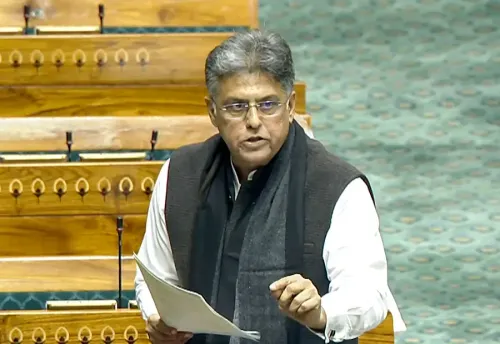
Congress MP Manish Tewari voiced his dissent, contending that the proposed legislation grants the Centre excessive power to dictate education policy, undermining the authority of state governments and educational institutions.
"It also meddles in the administrative affairs of institutions, stripping them of their autonomy in everyday operations and appointments," Tewari remarked while opposing the Bill.
Numerous other opposition MPs echoed similar concerns and called for the withdrawal of the legislation from the Lok Sabha.
In light of these objections, the Bill has been referred to a Joint Parliamentary Committee (JPC) for in-depth examination.
The proposed legislation outlines an ambitious initiative to create a cohesive framework for regulation, accreditation, and standard-setting in higher education.
It prioritizes outcome-based education and the integration of 'Bharatiya' knowledge systems, aligning with the government's broader vision of an 'Atmanirbhar Bharat'.
Through this Bill, the Centre seeks to form a commission designed to enable universities and other higher educational institutions to become independent self-governing entities and to foster excellence via a robust and transparent accreditation and autonomy system.
The proposed structure delineates that the Commission will operate through three distinct branches: a Regulatory Council, an Accreditation Council, and a Standards Council. The 12-member commission will comprise the heads of these three councils, the Union higher education secretary, two eminent academicians of professor rank from state higher educational institutions, five distinguished experts, and a member secretary.
Appointments to the Commission will be conducted solely by the Centre via a three-member search panel. The Bill also extends legal safeguards to the office-bearers and employees of the Commission and its councils.
Moreover, the legislation stipulates stringent penalties for non-compliance. Educational institutions violating the provisions of the new law and failing to address shortcomings could incur fines ranging from a minimum of Rs 10 lakh to Rs 30 lakh. In cases of repeated violations, higher educational institutions could face fines of at least Rs 75 lakh or suspension.
According to the Bill, the Commission will provide high-level strategic direction for the comprehensive and holistic advancement of higher education and research within a competitive global framework.
It will also endeavor to devise a roadmap to transform higher educational institutions into expansive multi-disciplinary education and research centers, as well as to promote India as a prime education destination.
Point of View
It is essential to acknowledge the significance of the Viksit Bharat Sikhsha Adhishthan Bill while maintaining an unbiased perspective. The proposed changes could potentially enhance the higher education landscape in India, aligning it with global standards. However, the concerns raised by opposition parties regarding state autonomy and institutional independence warrant careful consideration. A balanced approach is crucial to ensure that reforms benefit all stakeholders in the education sector.
NationPress
7 Oct 2026
Frequently Asked Questions
What does the Viksit Bharat Sikhsha Adhishthan Bill aim to achieve?
The Bill aims to centralize regulation in higher education, create a Higher Education Board, and consolidate existing regulatory councils into a single commission.
What are the main concerns raised by the opposition?
The opposition argues that the Bill grants excessive power to the Centre, undermining the authority of state governments and compromising institutional independence.
What penalties are proposed for non-compliance with the Bill?
Institutions that violate the provisions may face fines ranging from Rs 10 lakh to Rs 30 lakh, and repeated offenses could incur fines of at least Rs 75 lakh or suspension.
What is the role of the Joint Parliamentary Committee in this context?
The Bill has been referred to a Joint Parliamentary Committee for detailed scrutiny following objections raised by opposition MPs.
How does this Bill align with the government's vision?
The Bill emphasizes outcome-based education and aims to integrate 'Bharatiya' knowledge systems, aligning with the broader vision of an 'Atmanirbhar Bharat'.