VOC Port cuts carbon emissions 45%, becomes India's green maritime model
Synopsis
VOC Port has cut net carbon emissions by 45% and offset nearly 94% of its energy use through renewables — figures that, if replicated across India's major ports, could reshape the country's maritime emissions profile. The port's first Sustainability Report, released by Minister Sonowal, also marks the launch of a Centre of Excellence in Maritime Logistics and a new Kendriya Vidyalaya for the port community.
Key Takeaways
VOC Port has reduced net carbon emissions by around 45 per cent , as per its first Sustainability Report released on 23 June .
Renewable energy now offsets nearly 94 per cent of the port's total energy-consumption equivalent.
Carbon intensity per tonne of cargo has been cut by nearly half over the past four years .
VOC Port Authority signed an MoU with Gati Shakti Vishwavidyalaya, Vadodara , to establish a Centre of Excellence in Maritime Logistics and Port Management .
Kendriya Vidyalaya, VOC Port commenced academic activities for the 2026-27 session, offering CBSE education to port employees' children and the local community.
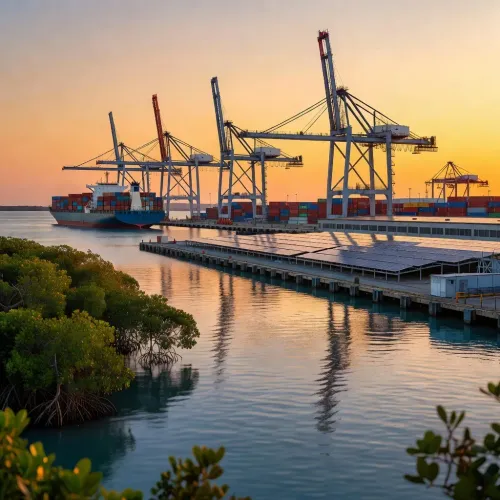
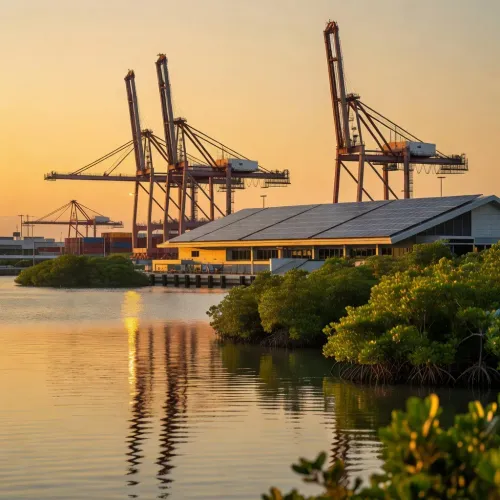
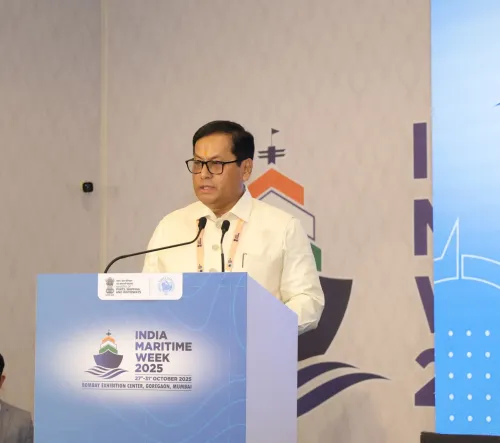
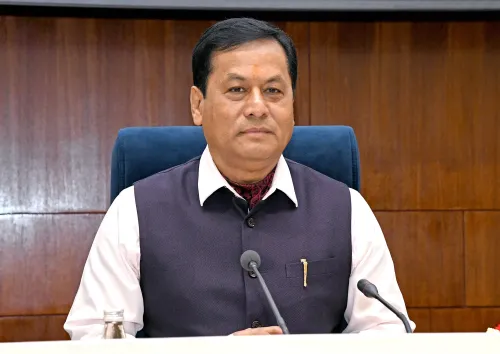
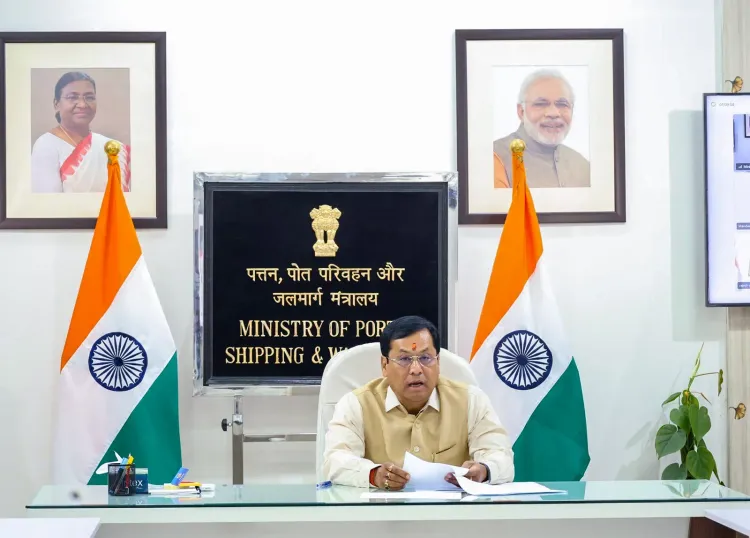
The VO Chidambaranar Port Authority (VOCPA), commonly known as VOC Port, has emerged as a benchmark for sustainable maritime development in India, with renewable energy now offsetting nearly 94 per cent of the port's total energy-consumption equivalent and net carbon emissions slashed by around 45 per cent. Union Minister of Ports, Shipping and Waterways Sarbananda Sonowal highlighted these achievements on Tuesday, 23 June, while releasing the port's first Sustainability Report.
Key Findings of the Sustainability Report
The inaugural Sustainability Report for VOC Port laid out a striking set of environmental milestones. Carbon intensity per tonne of cargo handled has been reduced by nearly half over the past four years, according to the minister. The port's renewable energy integration has reached a scale where it effectively neutralises almost the entirety of its energy consumption, reinforcing its position as a frontrunner in India's green maritime transition.
Notably, these gains have been achieved alongside continued cargo operations — suggesting that decarbonisation and throughput growth are not mutually exclusive, a signal the broader Indian ports sector will likely take note of.
What the Minister Said
'VOC Port is demonstrating what can be achieved when infrastructure development is guided by sustainability, innovation and community welfare. The port's achievement in reducing net carbon emissions by 45 per cent is a significant milestone in India's journey towards greener and more responsible maritime growth,' Sonowal said.
The minister added that these initiatives reflect Prime Minister Narendra Modi's vision for building 'modern, sustainable and future-ready infrastructure while investing in people, technology and the environment.'
Academia Partnership and Centre of Excellence
VOC Port Authority also signed a Memorandum of Understanding (MoU) with Gati Shakti Vishwavidyalaya, Vadodara, to foster collaboration across research, innovation, logistics education, skill development and sustainable port operations. The partnership is expected to facilitate the establishment of a Centre of Excellence in Maritime Logistics and Port Management, creating structured pathways for industry-academia engagement in a sector that has historically lacked specialised institutional support.
Kendriya Vidyalaya Launched for Port Community
A significant social infrastructure development was also announced at the event: the commencement of academic activities at Kendriya Vidyalaya, VOC Port, for the 2026-27 academic session. The school will initially operate from the Port School campus and will offer CBSE-affiliated education to children of port employees, Central government personnel and the surrounding local community.
'Quality education is one of the most powerful instruments of social transformation. The establishment of Kendriya Vidyalaya at VOC Port will provide new opportunities for children and strengthen the social infrastructure required for long-term development,' Sonowal said.
What This Means for India's Maritime Sector
This comes amid India's broader push to green its port infrastructure under the Maritime India Vision 2030 and the Harit Sagar green port guidelines. VOC Port, located in Thoothukudi, Tamil Nadu, handles a significant share of India's container and coal traffic, making its decarbonisation trajectory strategically important. If its model is replicated across major ports, the cumulative emissions reduction could be substantial. The next phase will test whether these gains are sustained as cargo volumes scale up.
Point of View
But the more telling metric is carbon intensity per tonne of cargo — and halving that over four years while maintaining operations is genuinely difficult to achieve. The question mainstream coverage skips is verification: India has no independent third-party audit mandate for port sustainability reports yet, so the figures rest on self-disclosure. The MoU with Gati Shakti Vishwavidyalaya is a meaningful structural move — India's ports sector has long suffered from a skills gap at the logistics-management layer, and an institution dedicated to that gap is overdue. The Kendriya Vidyalaya launch, while a welfare positive, is the softest news of the three announcements and risks diluting the sharper environmental story.
NationPress
22 Sept 2026
Frequently Asked Questions
What did VOC Port achieve in carbon emissions reduction?
VOC Port reduced its net carbon emissions by around 45 per cent and offset nearly 94 per cent of its energy-consumption equivalent through renewable energy, according to its first Sustainability Report released on 23 June. Carbon intensity per tonne of cargo was also cut by nearly half over four years.
What is the MoU signed by VOC Port Authority?
VOC Port Authority signed an MoU with Gati Shakti Vishwavidyalaya, Vadodara, to collaborate on research, innovation, logistics education, skill development and sustainable port operations. The partnership aims to establish a Centre of Excellence in Maritime Logistics and Port Management.
What is the significance of VOC Port's Sustainability Report?
It is the port's first Sustainability Report and benchmarks its environmental progress, including a 45% reduction in net carbon emissions and near-total renewable energy offset. It positions VOC Port as a model for green maritime development across India's major ports.
Who is Sarbananda Sonowal and what did he announce?
Sarbananda Sonowal is the Union Minister of Ports, Shipping and Waterways. On 23 June, he released VOC Port's first Sustainability Report and highlighted the port's decarbonisation milestones, the Gati Shakti Vishwavidyalaya MoU, and the launch of a Kendriya Vidyalaya at the port.
What is the Kendriya Vidyalaya launched at VOC Port?
Kendriya Vidyalaya, VOC Port, commenced its academic activities for the 2026-27 session, initially operating from the Port School campus. It will offer CBSE-affiliated education to children of port employees, Central government personnel and the local community.