Bridging Science and Tradition: VP Radhakrishnan Advocates for Tribal Empowerment
Synopsis
Vice President C.P. Radhakrishnan emphasizes the need for a synergy between modern science and traditional wisdom for the empowerment of tribal communities during a significant conference in New Delhi. He outlines the potential of tribal regions for sustainable development.
Key Takeaways
Integration of Science and Tradition: Modern science can enhance traditional knowledge for tribal empowerment.
Role of Tribal Communities: They are vital for biodiversity conservation and cultural heritage.
Government Initiatives: Programmes like PM-JANMAN and Dharti Abha support tribal welfare.
Potential for Growth: Tribal regions have immense potential for green economic development.
Educational Impact: Institutions like ITITI Doon Sanskriti School provide valuable education to tribal youth.
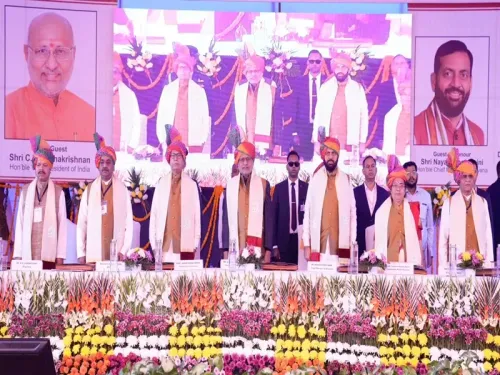
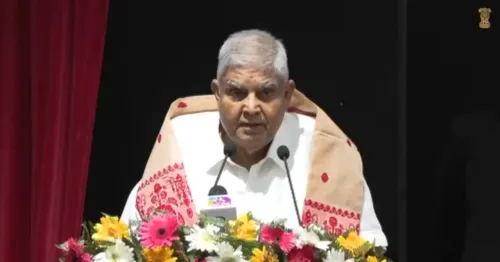
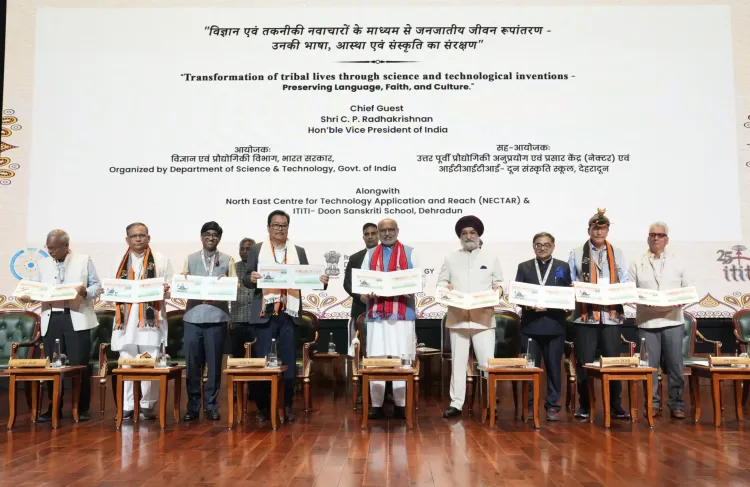
New Delhi, April 12 (NationPress) On Sunday, Vice President C.P. Radhakrishnan officially opened a conference titled 'Transformation of Tribal Lives through Science and Technological Interventions – Preserving Language, Faith and Culture' at Bharat Mandapam in the heart of the national capital.
This event was organized by the Department of Science and Technology, Government of India, in partnership with the North East Centre for Technology Application and Reach (NECTAR) and ITITI Doon Sanskriti School, Dehradun.
In his address, the Vice President emphasized the importance of merging contemporary innovation with age-old wisdom, stating that the conference has "effectively showcased the synergy of scientific inquiry and technological progress alongside traditional knowledge".
He remarked, "When modern science collaborates with language, faith, and culture, it transforms into a formidable instrument for safeguarding and empowering communities."
Addressing the role of tribal communities in India's social fabric, Vice President Radhakrishnan pointed out, "India is home to approximately 1.4 lakh tribal villages, which constitute nearly 9 percent of the nation's populace."
He highlighted that tribal communities possess invaluable traditional knowledge that is crucial for preserving biodiversity and promoting sustainable forest resource management.
Moreover, he acknowledged that these communities have, throughout the ages, upheld India’s rich cultural values, spiritual beliefs, and civilizational heritage.
The Vice President noted that tribal regions are ripe with "vast potential" for green economic advancement. He also praised the "remarkable abilities" inherent in tribal communities, particularly in fields such as design, textiles, and color coordination, which have been meticulously handed down through generations.
Referencing the vision of 'Viksit Bharat 2047', he stated that the core philosophy remains 'Vikas Bhi, Virasat Bhi', underscoring the idea that "modern progress and the preservation of traditions are not opposing forces, but rather complementary aspects of development."
Reflecting on his time as a Member of the 12th and 13th Lok Sabha, Vice President Radhakrishnan recounted his advocacy for the establishment of Chhattisgarh, Uttarakhand, and Jharkhand, noting that these milestones significantly aided tribal welfare and empowerment.
He also honored former Prime Minister Atal Bihari Vajpayee for founding the Ministry of Tribal Affairs, describing it as a "moral obligation to ensure justice, dignity, and opportunities for tribal communities."
The Vice President shared his experiences visiting the birthplace of Bhagwan Birsa Munda in Ulihatu, Jharkhand, and commended Prime Minister Narendra Modi for bringing the contributions of tribal freedom fighters into the national spotlight.
He highlighted pivotal government initiatives, including the PM-JANMAN programme, which has sanctioned over 2,400 roads totaling nearly 7,300 km and more than 160 bridges.
Additionally, he mentioned the 'Dharti Abha - Janjatiya Gram Utkarsh Abhiyan', which aims to uplift over 63,000 tribal villages by prioritizing clean drinking water, housing, education, healthcare, and sustainable livelihood opportunities.
Vice President Radhakrishnan also noted the swift advancement of infrastructure and connectivity in the North-Eastern region, reiterating the Centre's dedication to fostering inclusive and balanced growth across all areas.
In congratulating ITITI Doon Sanskriti School on its Silver Jubilee, he reminisced about its inauguration 25 years ago by former Prime Minister Atal Bihari Vajpayee.
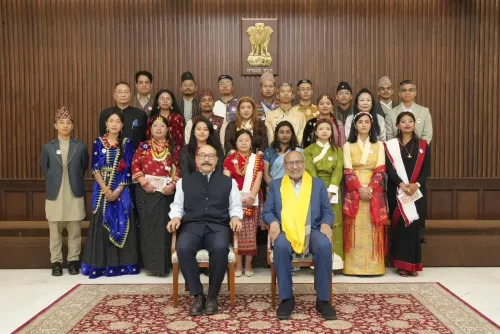
He commended the institution for becoming a beacon of hope for tribal children from Uttarakhand, the North-East, and Ladakh, stating that over 2,000 tribal students have benefited from the high-quality education provided by the school.
Point of View
The emphasis on integrating modern science with traditional tribal knowledge presents a promising pathway for enhancing the lives of tribal communities. The Vice President's remarks reflect a commitment to fostering sustainable development while honoring cultural heritage.
NationPress
20 Sept 2026
Frequently Asked Questions
What was the purpose of the conference inaugurated by VP Radhakrishnan?
The conference aimed to discuss the transformation of tribal lives through scientific and technological interventions while preserving language, faith, and culture.
What did VP Radhakrishnan emphasize about tribal communities?
He highlighted their critical role in India's biodiversity conservation and the importance of their traditional knowledge systems.
What government initiatives were mentioned by the Vice President?
He discussed the PM-JANMAN programme and the 'Dharti Abha - Janjatiya Gram Utkarsh Abhiyan' aimed at improving infrastructure and living conditions in tribal areas.
How many tribal villages are there in India?
India has approximately 1.4 lakh tribal villages, accounting for nearly 9 percent of the country's population.
What is the significance of ITITI Doon Sanskriti School?
The school has been a source of quality education for over 2,000 tribal children from various regions, promoting empowerment through education.