Is the ECI Confused? Ram Gopal Yadav's Strong Words
Click to start listening
Synopsis
In a striking critique, Ram Gopal Yadav of the Samajwadi Party calls out the Election Commission of India for its apparent confusion during the Special Intensive Revision process that impacts voting eligibility across several states. This situation raises concerns about the integrity of the electoral process.
Key Takeaways
- Ram Gopal Yadav criticizes the ECI for confusion during the Special Intensive Revision.
- Concerns raised about voters being incorrectly categorized.
- Significant impact on voting eligibility and upcoming elections.
- Extended timelines for the electoral roll updates announced.
- Need for transparency and clear communication from the ECI.
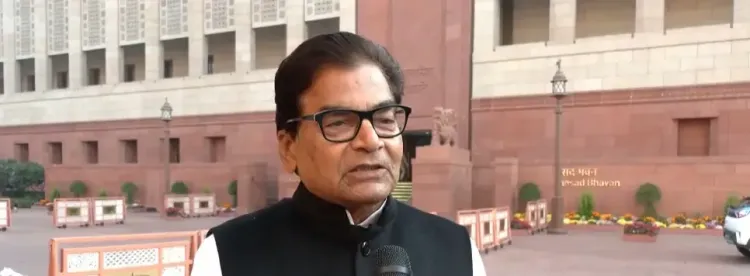
New Delhi, Dec 10 (NationPress) Samajwadi Party MP Ram Gopal Yadav on Wednesday issued a strong criticism of the Election Commission of India, asserting that the ECI seemed to be in a state of confusion during the ongoing Special Intensive Revision (SIR) process affecting 12 states and union territories.
In an interview with IANS, Ram Gopal Yadav stated, “We believe the Election Commission itself is confused regarding the SIR. Booth Level Officers (BLOs) have erroneously categorized numerous individuals as absent, permanently relocated, or even deceased. Shockingly, some individuals marked as deceased are still alive.”
He emphasized, “If this trend persists on such a large scale, it will lead to a significant reduction in votes.”
Yadav further elaborated, “A voter registered in 2003, who remains eligible in 2025, need not provide any documentation as per the Election Commission’s regulations. They simply need to fill out a form to maintain their voter status. There are countless such instances. For example, I have been casting my vote since 1967, long before 2003, and plan to continue voting in 2025. Yet, we have been assigned to Category C, and now we are receiving notices requesting documents. On one hand, the Election Commission claims no documents are necessary; on the other, to alleviate the burden on officials, everyone has been placed in Category C.”
“Before any votes are deleted, a notice must be issued. The SDM mentioned that notices were dispatched, but many people did not receive them. If you don’t receive the notice, you cannot respond, leading to vote deletions. Already, two to three lakh votes have been cut, and this number could climb by another two to three lakh. Only about 50 percent of the votes may remain. This is the pressing issue, and many are failing to grasp its seriousness,” he conveyed to IANS.
In the meantime, on December 1, the Election Commission extended the timeline for SIR Phase 2 across all 12 states and union territories, granting an additional week for BLOs to share the list of absent, shifted, deceased, and duplicate voters with booth-level agents (BLAs) of political parties prior to the publication of the draft electoral roll, ensuring complete transparency. The enumeration period will now extend until December 11 instead of the previously scheduled December 4.
The draft electoral roll is now set to be published on December 16 rather than December 9. Claims and objections can be submitted until January 15, 2026, with the final roll due to be published on February 14, a shift from the earlier February 7.
Point of View
It is essential to acknowledge the concerns raised by Ram Gopal Yadav regarding the Election Commission's processes. These issues could potentially undermine voter confidence and the integrity of the upcoming elections. It is imperative for the ECI to address these allegations transparently and efficiently to uphold the democratic principles of our nation.
NationPress
10/12/2025
Frequently Asked Questions
What is the Special Intensive Revision process?
The Special Intensive Revision (SIR) process is a procedure implemented by the Election Commission to update and verify the electoral rolls in preparation for upcoming elections.
How does the Election Commission categorize voters?
The Election Commission categorizes voters based on their eligibility, including classifications for those marked as absent, deceased, or permanently relocated.
What happens if I don't receive a notice from the Election Commission?
If you do not receive a notice regarding your voter status, it can impede your ability to respond to any changes or requests for documentation, potentially affecting your voting rights.
What is the deadline for submitting claims and objections regarding the electoral roll?
Claims and objections can be submitted until January 15, 2026, according to the recent announcements by the Election Commission.
When will the final electoral roll be published?
The final electoral roll is expected to be published on February 14, 2026.