Could the Multi-faceted Battle in West Bengal Favor BJP?
Synopsis
As West Bengal gears up for elections, the disarray among opposition parties could benefit BJP. The implications of shifting voter demographics, particularly among Muslims, and the rise of new political entities are critical elements in this evolving political landscape. Will BJP capitalize on these shifts?
Key Takeaways
West Bengal elections will see a multi-cornered contest.
Muslim voters are a crucial demographic influencing outcomes.
Mamata Banerjee's shift towards soft Hindutva could fracture her traditional support.
New parties like the Janata Unnayan Party are emerging.
The INDIA bloc is facing disintegration.
New Delhi, Feb 6 (NationPress) The fracture was apparent with the West Bengal Pradesh Congress leadership's notable silence regarding the repeated attempts from the Communist Party of India (Marxist) state leader for unity ahead of the forthcoming Assembly elections.
This scenario highlights the challenges faced by the Opposition alliance, which was grandiosely announced as the Indian National Developmental Inclusive Alliance (INDIA) bloc less than three years ago.
West Bengal is now set for a multi-faceted electoral battle, potentially providing an edge to the BJP, the primary opposition party in the state.
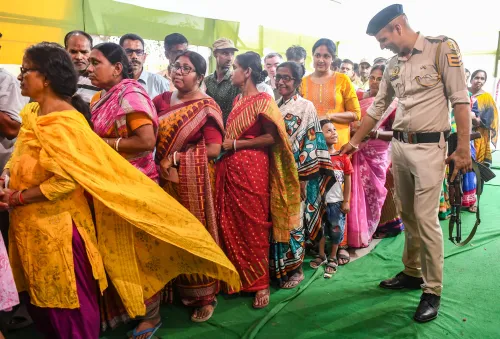
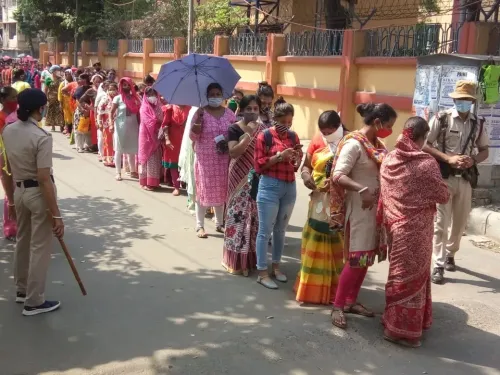
Outcomes in around 80-90 Assembly seats stand to be swayed by the Muslim voting demographic, which plays a crucial role in 40-50 constituencies.
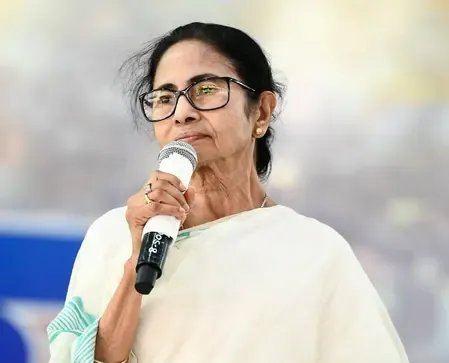
This specific voter group has consistently supported the ruling Trinamool Congress, with Chief Minister Mamata Banerjee implementing various welfare initiatives for them.
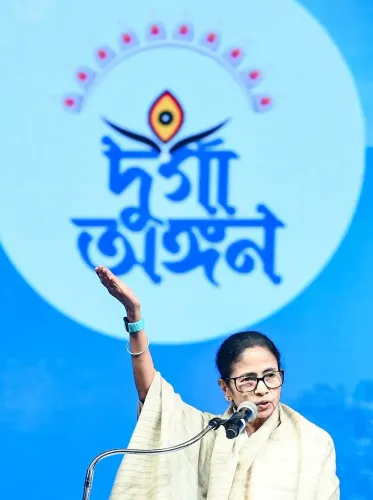
However, her recent pivot towards what is termed as “soft Hindutva” could fracture minority support. Her recent inauguration of high-profile temples and generous government donations for Durga Puja celebrations are perceived as efforts to attract the majority community away from the BJP.
Multiple political parties are anticipated to participate in the upcoming elections, overtly showcasing religious affiliations.
Humayun Kabir, a former Trinamool MLA and architect of a multi-crore Babri Masjid replica, has established the Janata Unnayan Party (JUP), aiming to be a decisive player post-elections.
While Mamata Banerjee's recent actions might alienate her traditional voter base, a solid Muslim coalition backing Humayun Kabir could prove beneficial in post-election alliances.
Also in the mix is the Indian Secular Front (ISF), initiated by the cleric Peerzada Abbas Siddiqui of the Furfura Sharif sufi shrine, which aims to advocate for “social justice” for Muslims and Dalits in the state.
Asaduddin Owaisi is also set to test the political waters in Bengal, following AIMIM's success in Muslim-majority areas of Bihar.
Kabir is focused on uniting Islamic parties to enhance post-poll negotiation strength. The split in the Opposition became evident when Congress state party President Adhir Ranjan Chowdhury was replaced by Subhankar Sarkar.
While Chowdhury has been a critic of Mamata Banerjee, Sarkar is viewed as more adaptable. The Congress has also severed ties with the Left Front and ISF, with many within feeling that the alliance weakened their position.
Previous elections indicated no gains, and the Trinamool Congress offered only token seat-sharing when approached.
A string of developments since 2025 made this split unavoidable, culminating in the decision to independently contest all 294 seats. Among these was CPI(M) state secretary Md. Salim’s recent interaction with Humayun Kabir.
Chowdhury, who represented West Bengal’s Baharampur constituency for five consecutive terms, was the Congress party leader in the 17th Lok Sabha but lost to Trinamool's Yusuf Pathan in the 2024 parliamentary elections.
Some factions within the state Congress are advocating for his candidacy as the chief ministerial nominee, although it remains unclear how many seats the party can secure independently.
Though Chowdhury may appear hesitant without official backing, he is likely to contest in an Assembly constituency, ideally in Murshidabad district.
In the 2021 Assembly elections, the Congress-Left alliance failed to secure a single seat in the 294-member Assembly, with the ISF, the junior partner, winning just one.
Overall, the INDIA bloc, comprising 28 major opposition parties, including Congress, CPI(M), DMK, Trinamool, Aam Aadmi Party, Shiv Sena (UBT), and RJD, is gradually fragmenting after experiencing losses since the 2024 Lok Sabha elections, compounded by defeats in states like Maharashtra and Bihar.
However, the extent to which the BJP can capitalize on this political landscape in West Bengal remains uncertain, given the lack of a single, strong regional leader and a unified state party.
Point of View
The ongoing political maneuverings in West Bengal signify a crucial moment in the state's electoral history. The fragmentation of traditional alliances and the emergence of new political forces highlight the evolving dynamics. Understanding these shifts is essential for comprehending the broader implications for national politics.
NationPress
30 Sept 2026
Frequently Asked Questions
What is the current political situation in West Bengal?
The political landscape in West Bengal is fragmented with several parties, including the BJP, Congress, and new entities like the Janata Unnayan Party, positioning themselves for the upcoming Assembly elections.
How influential are Muslim voters in West Bengal?
Muslim voters significantly impact the electoral outcomes in West Bengal, particularly in 40-50 constituencies, influencing the results in 80-90 Assembly seats.
What recent actions have been taken by Mamata Banerjee?
Mamata Banerjee has shifted towards 'soft Hindutva' by inaugurating temples and providing government funding for Durga Puja, which may affect her support among minority voters.
What does the future hold for the Congress party in West Bengal?
The Congress party faces challenges due to internal strife and a lack of significant electoral gains, with uncertainty regarding their performance in the upcoming elections.
What is the significance of the INDIA bloc's disintegration?
The disintegration of the INDIA bloc indicates a weakening of opposition unity, which could provide an advantage to the BJP in upcoming elections.