Krishna Gupta appointed West Bengal State Election Commissioner ahead of December polls
Synopsis
West Bengal has filled a year-long vacancy at the top of its State Election Commission, appointing 1991-batch IAS officer Krishna Gupta just months before Kolkata Municipal Corporation elections in December. With ward realignment also on the table, the new Commissioner steps into one of the most consequential administrative roles in the state's immediate electoral calendar.
Key Takeaways
The West Bengal Home and Hill Affairs Department notified the appointment of Krishna Gupta as State Election Commissioner on 25 June .
Gupta , a 1991-batch IAS officer , retires on 30 June and takes over as Commissioner from 1 July .
The post had been vacant for nearly one year after the retirement of predecessor Rajiv Sinha .
Ravi gave assent under Article 243K(1) of the Constitution and the West Bengal State Election Commission Act, 1998 .
Elections to the Kolkata Municipal Corporation and other civic bodies are scheduled for December 2025 .
Chief Minister Suvendu Adhikari has also flagged urgent ward realignment work ahead of the polls.
The West Bengal Home and Hill Affairs Department on Thursday, 25 June issued a formal notification appointing Indian Administrative Service (IAS) officer Krishna Gupta as the new State Election Commissioner of West Bengal. The appointment ends a vacancy that had persisted for nearly a year and comes with critical municipal elections on the horizon.
Who Is Krishna Gupta
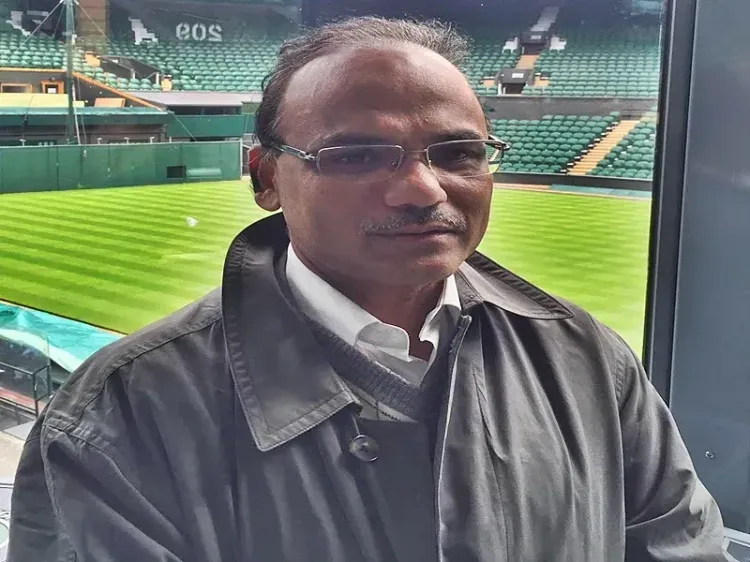
Krishna Gupta is a 1991-batch IAS officer of the West Bengal cadre, currently serving as Additional Chief Secretary to the West Bengal Cooperation Department. He is scheduled to retire from active service on 30 June, after which he will formally assume charge as State Election Commissioner. The notification was issued by Chief Secretary Manoj Kumar Agarwal on the directions of the Governor.
Constitutional Backing and Legal Framework
West Bengal Governor R.N. Ravi gave his assent to the appointment under Article 243K(1) of the Constitution and Sections 3(1) and 3A(1) of the West Bengal State Election Commission Act, 1998. The post had been vacant since the end of the tenure of the previous incumbent, Rajiv Sinha — also a retired IAS officer whose last assignment was as Chief Secretary of West Bengal.
Why the Appointment Matters Now
Elections to the Kolkata Municipal Corporation and several municipalities and municipal corporations are scheduled for December this year. The State Election Commissioner holds constitutional responsibility for superintending, directing, and controlling the preparation of electoral rolls and the conduct of elections to panchayats, municipalities, and other local self-governing bodies. Filling the vacancy before the December polls was therefore considered administratively essential.
Ward Realignment on the Agenda
The new West Bengal government under Chief Minister Suvendu Adhikari has also flagged plans for ward realignment ahead of the urban civic body elections. Adhikari recently visited the Kolkata Municipal Corporation and noted that voter numbers varied significantly across wards, making realignment an urgent priority. The State Election Commission is also constitutionally responsible for overseeing the ward delimitation process, adding further weight to the Gupta appointment.
What Comes Next
With Gupta set to take charge from 1 July, the State Election Commission is expected to begin preparatory work for the December municipal elections, including the ward realignment exercise. Administrative observers note that the compressed timeline — under six months to polling day — will test the new Commissioner's capacity to operationalise a body that has been without a head for close to a year.
Point of View
West Bengal has left itself a dangerously narrow window to operationalise a constitutional body that underpins local democracy. The appointment of a serving bureaucrat who retires the same week he is named raises the broader question of succession planning in key constitutional posts. Whether Gupta can move quickly enough to complete delimitation and election preparation in under six months will be the real test — and the political stakes for the Adhikari government, which needs credible civic polls to consolidate its urban footprint, are considerable.
NationPress
25 Jun 2026
Frequently Asked Questions
Who is Krishna Gupta, the new West Bengal State Election Commissioner?
Krishna Gupta is a 1991-batch IAS officer of the West Bengal cadre, currently posted as Additional Chief Secretary to the West Bengal Cooperation Department. He retires from service on 30 June and will assume charge as State Election Commissioner immediately thereafter.
Why was the West Bengal State Election Commissioner post vacant?
The post fell vacant after the end of the tenure of the previous Commissioner, Rajiv Sinha, a retired IAS officer who had last served as Chief Secretary of West Bengal. It had remained unfilled for nearly a year before this appointment.
What elections will Krishna Gupta oversee as State Election Commissioner?
Gupta will be responsible for conducting elections to the Kolkata Municipal Corporation and several other municipalities and municipal corporations scheduled for December 2025. He will also oversee the ward realignment process ahead of these polls.
Under what legal authority was Krishna Gupta appointed?
The appointment was made under Article 243K(1) of the Constitution of India and Sections 3(1) and 3A(1) of the West Bengal State Election Commission Act, 1998, with the assent of Governor R.N. Ravi. The notification was issued by Chief Secretary Manoj Kumar Agarwal.
What is ward realignment and why is it relevant now?
Ward realignment is the process of redrawing ward boundaries within municipalities to equalise voter numbers across wards. Chief Minister Suvendu Adhikari has flagged it as urgent given significant voter-count disparities between wards, and the State Election Commission is constitutionally responsible for overseeing this process before the December elections.