Free bus rides for women in West Bengal begin today with ID proof rule
Synopsis
West Bengal's free-bus-ride promise to women became reality on 1 June — but with a catch: every woman must carry government-approved ID to board for free. A smart card system is in the works, but until then, the scheme's success hinges on how smoothly conductors handle document checks across thousands of daily routes.
Key Takeaways
West Bengal launched free rides for women on all state-operated buses from 1 June .
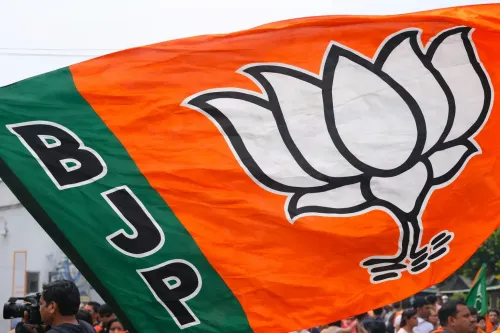
The scheme fulfils a BJP pre-election pledge made in its Sankalp Patra .
Women must show any one of the approved identity documents — including Aadhaar , EPIC card , PAN card , or a school/college ID — to receive a zero-value ticket .
The scheme covers both short-distance and long-distance state-run bus routes across the entire state.
A personalised smart card with QR code will eventually replace document-based verification; applications go to the local BDO/SDO .
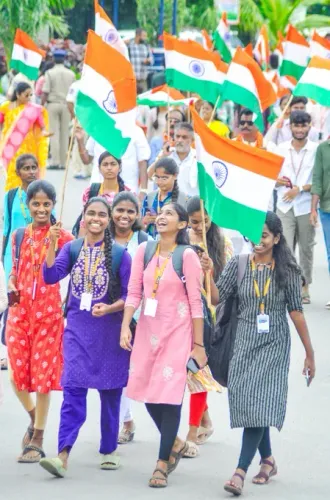
West Bengal launched free rides for all women on state-operated buses on Monday, 1 June, fulfilling a key pledge made by the Bharatiya Janata Party (BJP) in its pre-election Sankalp Patra (election manifesto). The scheme, rolled out across the entire state, covers both short-distance and long-distance routes on government-run buses.
How the Scheme Works
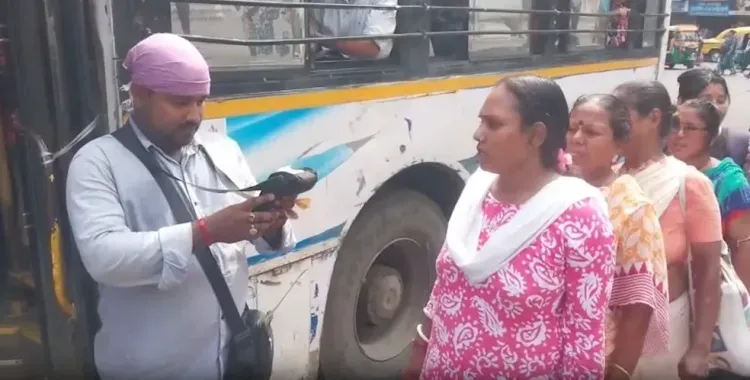
Women availing the facility must present any one valid identity document from a list approved by the West Bengal state transport department. Upon verification, bus conductors issue a 'zero-value' ticket — confirming the journey without any charge. Conductors have been trained by the transport department specifically to administer this process.
Accepted Identity Documents
The state transport department has specified a broad list of eligible documents. These include Aadhaar card, EPIC card, Grameen Rozgar Guarantee Card, Ayushman Bharat Health Card, driving licence, PAN card, passport, pension documents with photograph, service identity cards with photograph issued by Central or state governments, public sector undertakings and public limited companies, official identity cards issued by schools, colleges or universities, and any other identity card issued by the Government of West Bengal bearing a recent photograph of the beneficiary.
Smart Card System Coming Later
The current document-based verification is a transitional arrangement. The state government has indicated that each eligible woman will subsequently be issued a personalised smart card — digital, embedded with a QR code, and carrying the beneficiary's name and photograph. Applications for the smart card are to be submitted to the BDO or SDO of the respective area. Until smart cards are distributed, the listed identity documents will remain valid for availing the free-ride benefit.
Scope and Coverage
The scheme applies uniformly across West Bengal, covering the full network of state-run buses. The inclusion of both intra-city and inter-city routes broadens the reach significantly, potentially benefiting millions of women commuters — including students, daily wage workers, and rural residents who depend on public transport. This comes amid a wider trend of state governments across India rolling out gender-targeted transit subsidies as part of welfare-oriented electoral commitments.
How quickly the smart card rollout proceeds — and whether the ID-verification step creates friction at the ground level — will determine how effectively the scheme reaches its intended beneficiaries.
Point of View
But the mandatory ID-proof requirement introduces a layer of friction that could exclude precisely the women it is meant to help — those without easily accessible documentation in rural or semi-urban areas. The transitional smart card system is sensible in design, but its rollout timeline remains unspecified, leaving the current arrangement open-ended. Across India, similar gender-targeted transit subsidies have shown mixed outcomes: ridership among target groups rises, but administrative bottlenecks at the conductor level often dilute impact. West Bengal's real test will be whether the zero-value ticket becomes genuinely zero-hassle.
NationPress
22 Sept 2026
Frequently Asked Questions
What is the free bus ride scheme for women in West Bengal?
It is a state government initiative launched on 1 June that allows all women to travel free of charge on state-operated buses across West Bengal. The scheme was a pre-election commitment made by the BJP in its Sankalp Patra and covers both short-distance and long-distance government bus routes.
What documents do women need to avail the free ride?
Women must carry any one valid identity document from the state transport department's approved list. Accepted documents include Aadhaar, EPIC card, PAN card, passport, driving licence, Ayushman Bharat Health Card, Grameen Rozgar Guarantee Card, school or college ID cards, and government-issued service identity cards, among others.
What is the zero-value ticket issued on state buses?
A zero-value ticket is a formal bus ticket issued by the conductor that records the journey but charges no fare. It is provided to women after they present one of the approved identity documents, ensuring the ride is officially logged without any payment.
Will the ID document requirement be permanent?
No. The document-based verification is a transitional measure. The state government plans to issue personalised smart cards — digital cards with a QR code, name, and photograph — to each eligible woman upon application to the local BDO or SDO. Until smart cards are issued, the approved identity documents remain valid.
Which buses are covered under the West Bengal women's free ride scheme?
The scheme applies to all state-operated buses across West Bengal, covering both short-distance and long-distance routes. Private buses are not covered under this arrangement.