Rajasthan woman files case over WhatsApp triple talaq from Kuwait husband

Synopsis
A Banswara woman's complaint that her Kuwait-based husband ended their marriage with a WhatsApp message on 17 May puts India's 2019 triple talaq law to a cross-border test. With no extradition treaty between India and Kuwait, the case raises a pointed question about whether criminalising the practice is enough when enforcement stops at the border.
Key Takeaways
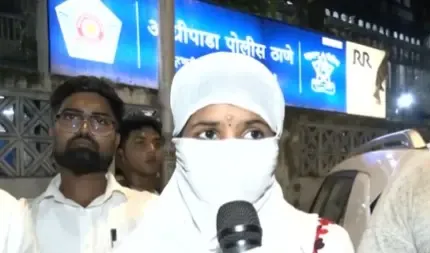
A woman in Banswara, Rajasthan filed a complaint at the Women's Police Station on 6 June , alleging triple talaq via WhatsApp on 17 May .
The accused, Ashiq Iqbal of Gorakh Imli, has reportedly been working in Kuwait for the past year.
The complainant alleged years of physical and mental harassment and is raising two sons, aged 16 and 10 , alone.
A case has been registered and a notice will be issued to summon Iqbal; due process for overseas accused will be followed.
Triple talaq was declared unconstitutional by the Supreme Court and criminalised under the Muslim Women (Protection of Rights on Marriage) Act, 2019 , carrying up to three years imprisonment.
A woman in Rajasthan's Banswara district has filed a police complaint alleging that her husband sent her a triple talaq message via WhatsApp on 17 May while residing in Kuwait, triggering a criminal investigation under the Muslim Women (Protection of Rights on Marriage) Act, 2019. The complaint was submitted at the Women's Police Station in Banswara on Friday, 6 June, making it among the more recent cases to test the extraterritorial reach of India's triple talaq law.
What the Complaint Alleges
According to officials, the woman stated that her husband, identified as Ashiq Iqbal, a resident of Gorakh Imli, sent a triple talaq message to her WhatsApp number on 17 May, abruptly ending the marriage through a medium that is neither legally recognised nor permissible under Indian law. Iqbal has reportedly been working in Kuwait for the past year.
Beyond the WhatsApp message, the complainant alleged years of physical and mental harassment. She stated that whenever Iqbal returned to India from Kuwait, relations would remain normal for a day or two before he allegedly began harassing and assaulting her over minor issues. She said she has been raising her two sons, aged 16 and 10, on her own in Banswara, away from her husband's family.
Police Action and Next Steps
Women's Police Station SHO Urmila confirmed that a case has been registered on the basis of the written complaint and that a notice will be issued to the accused, summoning him for questioning. Since Iqbal is currently abroad, authorities have indicated they will follow due legal process to secure his response, which may involve coordinating through formal channels for overseas summons.
Statements from all concerned parties are yet to be recorded, and the investigation is ongoing, according to officials.
The Legal Context
The case draws significance from the legal framework surrounding triple talaq in India. The Supreme Court declared the practice unconstitutional in 2017, and Parliament subsequently enacted the Muslim Women (Protection of Rights on Marriage) Act, 2019, which criminalises instant triple talaq and makes it punishable with up to three years imprisonment. The law applies regardless of the mode of communication — including WhatsApp messages — and irrespective of whether the accused is on Indian soil at the time.
Notably, this is not an isolated incident. Cases of triple talaq delivered via digital platforms — text messages, WhatsApp, and even voice notes — have been reported across several Indian states since the law came into force, raising recurring questions about enforcement when the accused is overseas.
Broader Impact
The woman's situation — living separately with minor children, alleging sustained domestic abuse, and now navigating a criminal complaint against a husband in a foreign country — reflects the vulnerabilities that the 2019 Act sought to address. Critics of the law's implementation, however, argue that cross-border cases remain difficult to prosecute in practice, given the absence of a bilateral extradition treaty between India and Kuwait.
As the investigation continues, the case is expected to test how effectively Indian authorities can pursue triple talaq charges when the accused is beyond immediate jurisdictional reach.
Point of View
But enforcement architecture for cross-border cases remains thin. Digital triple talaq — via WhatsApp, SMS, or voice note — has become a recurring pattern since 2019, suggesting that the deterrent effect of the law is limited for those who can simply leave the country. Until India builds bilateral legal cooperation mechanisms that match the reach of its domestic statutes, cases like this risk ending in notices that go unanswered.
NationPress
24 Sept 2026
Frequently Asked Questions
What happened in the Banswara triple talaq case?
A woman in Banswara, Rajasthan filed a police complaint on 6 June alleging that her husband, Ashiq Iqbal, sent her a triple talaq message on WhatsApp on 17 May while living in Kuwait. A case has been registered and police are initiating the legal process to summon him.
Is triple talaq sent via WhatsApp legally valid or criminal in India?
Triple talaq in any form — including via WhatsApp — is illegal in India. The Supreme Court declared the practice unconstitutional in 2017, and the Muslim Women (Protection of Rights on Marriage) Act, 2019 criminalises it, making it punishable with up to three years imprisonment regardless of the medium used.
What action has the Banswara police taken?
Women's Police Station SHO Urmila confirmed that a case has been registered based on the written complaint. Police will issue a notice to the accused summoning him for questioning, and will follow due legal process since he is currently abroad in Kuwait.
Who is affected by the Muslim Women (Protection of Rights on Marriage) Act, 2019?
The Act protects Muslim women from instant triple talaq across India. It applies to all forms of the pronouncement — spoken, written, or digital — and grants affected women the right to seek custody of minor children and subsistence allowance, in addition to criminal recourse against the husband.
What are the challenges in prosecuting cross-border triple talaq cases?
When the accused is residing abroad, Indian authorities must rely on formal diplomatic and legal channels to secure his response, which can be slow. In the absence of an extradition treaty between India and Kuwait, compelling the accused to return for questioning or trial remains legally complex.