Supreme Court to Review Unilateral Divorce Practices Today
Synopsis
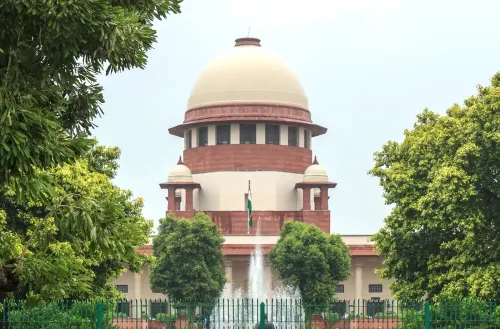
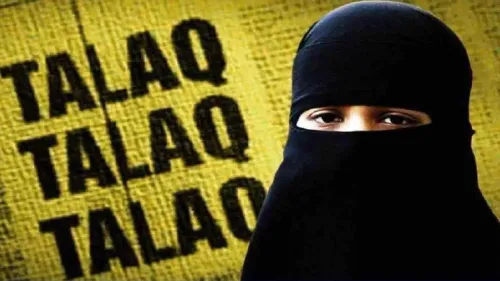
Today, the Supreme Court will review petitions questioning the constitutional validity of unilateral divorce practices in the Muslim community, focusing on Talaq-e-Hasan and Talaq-e-Ahsan, which allow men to dissolve marriages without consent.
Key Takeaways
The Supreme Court is reviewing the constitutionality of unilateral divorce practices.
Talaq-e-Hasan and Talaq-e-Ahsan are central to the discussion.
The case highlights rights issues for Muslim women.
Judicial intervention in religious practices is a critical focus.
Mediation has been recommended to resolve disputes amicably.
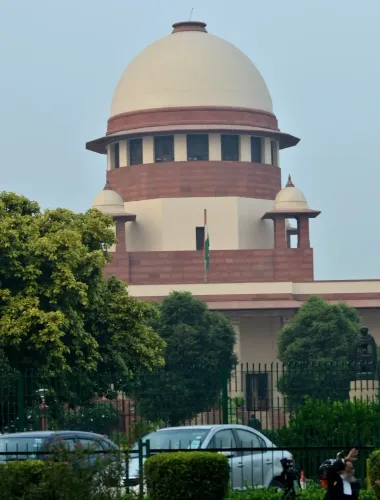
New Delhi, March 19 (NationPress) The Supreme Court is set to deliberate on a series of petitions today that question the constitutional legitimacy of unilateral divorce practices within the Muslim community, particularly Talaq-e-Hasan and Talaq-e-Ahsan. These practices enable a Muslim man to terminate a marriage unilaterally without his wife's consent.
According to the schedule released on the apex court's website, this case is scheduled for hearing on March 19 before a judicial panel that includes Chief Justice of India (CJI) Surya Kant, alongside Justices Joymalya Bagchi and Vipul M. Pancholi.
The petitions raise significant concerns about whether such forms of 'extra-judicial' divorce contravene the fundamental rights granted under Articles 14, 15, and 21 of the Constitution, especially regarding the rights to equality and dignity for Muslim women.
In the last hearing, the Supreme Court issued interim orders in specific cases but refrained from making any definitive rulings on the validity of these divorce practices.
In one instance, the CJI Kant-led panel had temporarily halted the enforcement of a purported Talaq-e-Hasan declared by a husband against his wife, explaining that the husband had not appeared before the court to address the serious accusations against him. The court stated, 'In such circumstances... we stay the operation of the alleged Talaq-e-Hasan... and declare that the petitioner (wife) and respondent shall be considered a validly married couple unless the husband demonstrates that a lawful Talaq has been issued.'
The court emphasized the importance of a balanced approach when navigating the intersection of personal law and constitutional rights. The Supreme Court noted that judicial entities should minimize interference in religious matters unless such practices infringe upon fundamental or human rights.
'While honoring all religions, the primary guideline for a court should be to limit interference in religious affairs, unless... constitutional rights or human rights' are at stake, remarked the CJI Kant-led panel.
The main petition, filed by journalist Benazeer Heena, prompted the court to refer the involved parties to mediation, highlighting an 'urgent and dire necessity' to seek a peaceful resolution, including a mutually agreeable dissolution of marriage.
Former Supreme Court judge Justice Kurian Joseph has been appointed as the sole mediator, tasked with concluding the mediation process within four weeks. Meanwhile, the CJI Kant-led panel instructed that previous talaq notifications 'shall remain suspended.'
Importantly, the Supreme Court clarified in prior proceedings that its interim measures to suspend certain talaq instances were based on the specific circumstances of those cases and do not constitute a final determination regarding the validity of these practices.
The collection of petitions also raises broader questions regarding the legality of divorce communicated through electronic means such as email and messaging services, and it seeks guidelines to protect the rights of affected women.
Point of View
Highlighting the tension between personal law and constitutional rights. It challenges the norms of gender equality within religious practices, seeking to protect the rights and dignity of Muslim women.
NationPress
20 Sept 2026
Frequently Asked Questions
What is Talaq-e-Hasan?
Talaq-e-Hasan is a form of unilateral divorce in the Muslim community that allows a husband to dissolve the marriage without the wife's consent.
What is the Supreme Court reviewing today?
The Supreme Court is reviewing the constitutional validity of unilateral divorce practices, including Talaq-e-Hasan and Talaq-e-Ahsan.
Why is this case significant?
This case addresses fundamental rights issues, particularly regarding the equality and dignity of Muslim women under the Constitution.
What are the key articles involved in this case?
The key articles under scrutiny are Articles 14, 15, and 21 of the Constitution, which guarantee rights to equality and dignity.
What is the role of mediation in this case?
Mediation has been suggested to explore amicable resolutions between the parties involved, aiming for a mutually acceptable divorce.