International Widows Day 23 June: Why the UN made it official in 2010
Synopsis
A widow's suffering in 1954 Punjab set off a chain of events that ended at the UN General Assembly in 2010. Fifty-six years after Shrimati Pushpa Wati Loomba was widowed, her son Lord Raj Loomba secured a unanimous UN resolution making 23 June International Widows Day — giving 300 million invisible women a place on the global development agenda for the first time.
Key Takeaways
The UN General Assembly unanimously adopted 23 June as International Widows Day on 21 December 2010 .
An estimated 300 million widows live worldwide today, with more than 500 million children dependent on them.
The date marks the widowhood of Shrimati Pushpa Wati Loomba on 23 June 1954 in Punjab , the founding story of the Loomba Foundation .
The Loomba Foundation first launched the observance in 2005 and spent five years building a coalition across more than 40 countries before securing UN recognition.
In 2026 , the Foundation marks the 16th UN International Widows Day with events at the British Council, New Delhi and the House of Lords, London .
India played a pivotal role in championing the UN resolution and remains central to the global widowhood movement.
Every year on 23 June, the United Nations marks International Widows Day — a global observance established to confront the discrimination, poverty, and social exclusion that an estimated 300 million widows worldwide continue to endure. The day traces its origins to a personal tragedy in Punjab, India, and its journey to the UN General Assembly is one of the more remarkable advocacy stories of the 21st century.
The Crisis Behind the Calendar Date
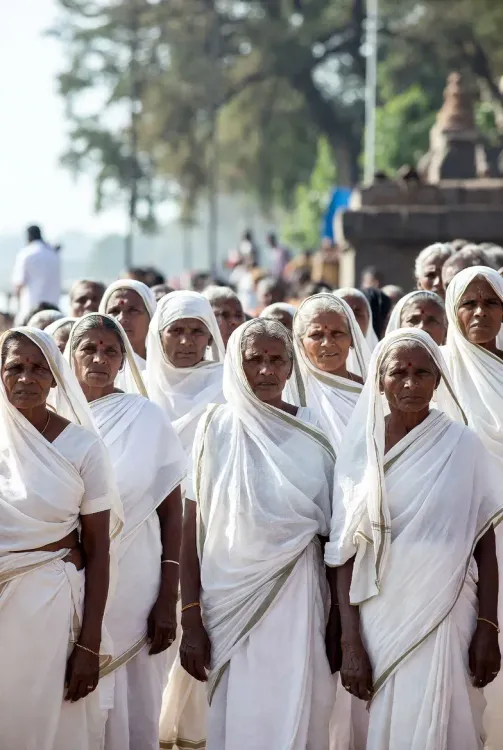
Widowhood has historically been treated as a private grief rather than a public policy failure. Yet the scale of the problem tells a different story. According to the Loomba Foundation, roughly 300 million widows live across the world today, with more than 500 million children dependent on them. Millions of these women live in extreme poverty, face property dispossession, and are subjected to harmful traditional practices ranging from forced 'cleansing' rituals in parts of Africa to social ostracism and exclusion from family ceremonies in South Asia.
In India, despite the legal abolition of practices such as sati, widows in many communities continue to be blamed for their husbands' deaths, denied inheritance rights, and barred from auspicious family occasions. Critics argue that legal reform has outpaced cultural change, leaving millions of women in a legal grey zone that official statistics rarely capture.
How a Punjab Tragedy Became a Global Movement
The date 23 June was chosen deliberately. It marks the day in 1954 when Shrimati Pushpa Wati Loomba was widowed in Punjab — an event that shaped the life of her son, Lord Raj Loomba CBE, who went on to found the Loomba Foundation in her memory. The Foundation launched International Widows Day on 23 June 2005, marking the 51st anniversary of his mother's widowhood.
Over the following five years, the Foundation built a coalition spanning more than 40 countries, engaging parliamentarians, civil society organisations, and UN agencies. It published research that, for the first time, quantified the global scale of widow marginalisation and made the case that widowhood was a development and human rights emergency, not a cultural footnote.
The UN Resolution: A Watershed Moment
The sustained campaign culminated on 21 December 2010, when the United Nations General Assembly unanimously adopted 23 June as International Widows Day. India played a pivotal role in championing the resolution, lending political weight to the argument that empowering widows is inseparable from the broader goals of gender equality and poverty reduction.
The adoption marked the first time the international community formally recognised widowhood as a global development priority. Before this, there were no dedicated international conventions, no standardised global data, and no coordinated policy response. Widows were, in effect, absent from the development agenda.
Why the Observance Remains Urgent in 2026
Sixteen years on, the structural drivers of widow vulnerability have not disappeared. Conflicts in Syria, Ukraine, Sudan, and Afghanistan have created millions of new widows. The HIV/AIDS epidemic continues to leave women across sub-Saharan Africa exposed to stigma and property grabbing. Natural disasters and pandemics disproportionately affect women in informal labour with no social protection net. Cultural norms in multiple regions still restrict widows' rights to remarry, inherit, or participate in community life.
The UN has consistently argued that without targeted national policies covering social protection, education, healthcare, and economic empowerment, widows and their children risk being locked into intergenerational poverty.
India and the UK Mark the 16th UN International Widows Day
This year, the Loomba Foundation will observe the 16th UN International Widows Day with two parallel events on 23 June 2026. The first will be held at the British Council in New Delhi, bringing together policymakers, NGOs, philanthropists, and community leaders to discuss economic empowerment, skills training, and social reintegration for widows in India.
Simultaneously, the Foundation will host a conference at the House of Lords in London, focused on widows in Africa under the theme 'Widows in Africa: Perspectives on Justice, Dignity, and Economic Power.' The dual-city format underscores the global reach of the issue and the cross-continental leadership the Foundation has maintained since the movement's founding.
As the observance enters its second decade and a half, the Loomba Foundation's message remains unchanged: widows' rights are human rights, and their empowerment is a prerequisite for stronger families, communities, and nations.
Point of View
Channelled through sustained advocacy, can reshape international norms — but the gap between a UN resolution and lived reality remains wide. Sixteen years after the General Assembly acted, widows in India still navigate property laws that exist on paper and social codes that operate in practice. The Loomba Foundation's dual-city format this year — New Delhi and London on the same day — signals ambition, but the harder test is whether the observance translates into measurable policy change in the countries where widow marginalisation is most acute. Awareness events are necessary; they are not sufficient.
NationPress
21 Oct 2026
Frequently Asked Questions
Why is International Widows Day observed on 23 June?
The date marks 23 June 1954, when Shrimati Pushpa Wati Loomba was widowed in Punjab, India. Her son, Lord Raj Loomba CBE, chose the anniversary deliberately when the Loomba Foundation launched International Widows Day in 2005, symbolising both personal loss and the lifelong struggle faced by millions of widows.
When did the United Nations officially recognise International Widows Day?
The UN General Assembly unanimously adopted 23 June as International Widows Day on 21 December 2010. It was the first time the international community formally recognised widowhood as a global development and human rights priority, with India playing a pivotal role in championing the resolution.
How many widows are there in the world today?
According to the Loomba Foundation, there are an estimated 300 million widows worldwide, with more than 500 million children dependent on them. Many live in extreme poverty and face property dispossession, harmful traditional practices, and social ostracism.
What is the Loomba Foundation and what does it do?
The Loomba Foundation is an international charitable organisation founded by Lord Raj Loomba CBE in memory of his mother, Shrimati Pushpa Wati Loomba. It campaigns for the rights and welfare of widows globally, engages with governments and UN agencies, and organises events in multiple countries to raise awareness and shape policy.
How is International Widows Day being marked in 2026?
The Loomba Foundation is observing the 16th UN International Widows Day on 23 June 2026 with two simultaneous events — one at the British Council in New Delhi focused on widows in India, and another at the House of Lords in London focused on widows in Africa under the theme 'Widows in Africa: Perspectives on Justice, Dignity, and Economic Power'.