Yadav at ASSOCHAM: EV shift is about building industrial ecosystem
Synopsis
Union Environment Minister Bhupender Yadav, speaking at an ASSOCHAM national conference on 2 July 2026, declared India's electric mobility transition a mission to build a sustainable industrial ecosystem — creating green jobs and advancing PM Modi's Viksit Bharat 2047 goal, not merely swapping technologies.
Key Takeaways
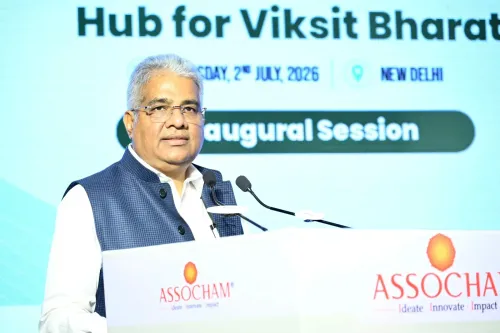
Bhupender Yadav addressed the ASSOCHAM National Conference on Electric Mobility on 2 July 2026 .
He framed India's EV transition as building a 'sustainable industrial ecosystem' — not just a technology change.
The push is tied to PM Modi's Viksit Bharat by 2047 vision, emphasising manufacturing strength and green job creation.
India's EV policy lineage includes the NEMMP 2020 (2013) , FAME India Phase I (2015) , and the PLI scheme for automobiles (2021) .
India committed to net-zero emissions by 2070 at COP26, Glasgow , anchoring EV growth within climate obligations.
Upcoming budget cycles and PLI reviews will be key indicators of how central EV incentives evolve.
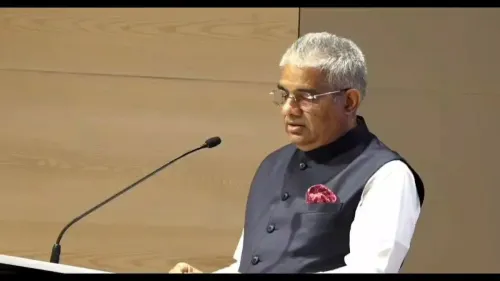
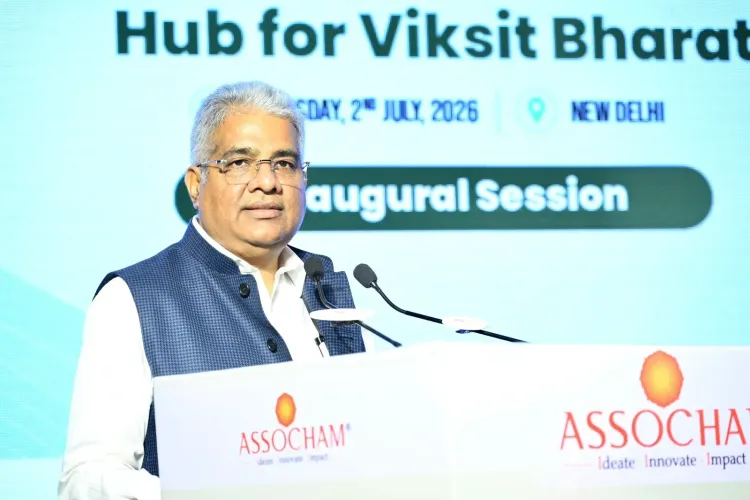
Union Environment Minister Bhupender Yadav addressed the National Conference on 'Electric Mobility: Building India an Electric Mobility Hub for Viksit Bharat', convened by industry body ASSOCHAM, on Thursday, 2 July 2026. Speaking at the event, Yadav framed India's electric-vehicle transition as a structural economic transformation rather than a mere technological swap, linking it directly to Prime Minister Narendra Modi's vision of a developed India by 2047.
Context
Addressing the conference, Yadav stated that 'India's transition to electric mobility is not merely about replacing one technology with another — it is about building a sustainable industrial ecosystem that strengthens manufacturing, creates green jobs and supports PM Modi's vision of Viksit Bharat by 2047.' The framing positions electric mobility as a pillar of India's long-term industrial strategy rather than a standalone climate measure. ASSOCHAM, one of India's apex chambers of commerce, convened the national conference to bring together policymakers and industry on the EV agenda.
Policy Backdrop
India's electric mobility push has a layered policy history. The National Electric Mobility Mission Plan (NEMMP) 2020, launched in 2013, was the first formal framework for hybrid and electric vehicle promotion, followed by the FAME India scheme (Phase I) in 2015, which introduced demand-side incentives for EV buyers. In 2021, the government notified a Production Linked Incentive (PLI) scheme for automobiles and auto components, aimed at anchoring domestic EV manufacturing capacity under the broader Atmanirbhar Bharat agenda. India also committed to a net-zero emissions target by 2070 at the COP26 summit in Glasgow that same year, embedding EV scale-up within its international climate obligations.
The Viksit Bharat vision, announced in 2022, sets the overarching goal of transforming India into a developed nation by the centenary of its independence. Electric mobility, with its dual promise of reducing oil import dependence and generating green industrial employment, has been positioned as one of the enabling levers of that vision.
Stakeholders and Impact
The conference audience and the policy direction it reflects span a wide range of actors: domestic auto manufacturers scaling EV lines, battery producers seeking PLI-linked investment certainty, and a nascent green-collar workforce in assembly, charging infrastructure and battery recycling. For India's auto sector — one of the largest contributors to manufacturing GDP — the shift to electric mobility carries both disruption risk and export opportunity, particularly as global supply chains reorganise around battery technology. Central incentive schemes and state-level complementary policies together shape the investment calculus for these players.
Yadav's emphasis on 'green jobs' signals that the government is alive to the workforce transition dimension, a concern that has gained prominence in policy discussions as internal-combustion-engine supply chains face structural decline globally.
What's Next
Upcoming Union Budgets and PLI review cycles will be closely watched for updated central EV incentive structures and battery storage outcomes. State governments are also expected to revise their own EV policies in alignment with central direction, and fresh manufacturing investment announcements from both domestic and global OEMs could follow the policy signals articulated at forums such as this one. As India seeks to position itself as a global electric mobility hub, the coherence between climate commitments, industrial policy and skilling programmes will be the defining test of whether the vision translates into durable economic gains.
Point of View
Designed to build political consensus across manufacturing, labour and green-economy constituencies. By invoking green jobs alongside manufacturing, the address signals an awareness that the energy transition carries workforce risks that must be managed politically. The choice of an ASSOCHAM platform underscores the government's intent to keep industry closely invested in the EV policy direction ahead of potential incentive revisions. Taken together, the speech is less a policy announcement than a confidence signal to investors and industry that the EV roadmap remains a central plank of India's 2047 development story.
NationPress
2 Jul 2026
Frequently Asked Questions
What did Bhupender Yadav say at the ASSOCHAM electric mobility conference?
Yadav said India's transition to electric mobility is not merely about replacing one technology with another but about building a sustainable industrial ecosystem that strengthens manufacturing, creates green jobs and supports PM Modi's Viksit Bharat vision by 2047.
What is the Viksit Bharat 2047 vision?
Viksit Bharat is the Indian government's goal, announced in 2022, to transform India into a fully developed nation by 2047 — the centenary of independence — through sustainable and inclusive economic growth.
What are India's main electric vehicle policy schemes?
India's key EV schemes include the National Electric Mobility Mission Plan (NEMMP) 2020 launched in 2013, the FAME India scheme from 2015 providing demand incentives, and the Production Linked Incentive (PLI) scheme for automobiles notified in 2021 to boost domestic manufacturing.
What is India's net-zero target?
India committed to achieving net-zero carbon emissions by 2070, a pledge made at the COP26 climate summit in Glasgow in 2021.
Why is ASSOCHAM involved in India's EV policy discussions?
ASSOCHAM is one of India's apex chambers of commerce representing a broad cross-section of industry, making it a key platform for aligning government policy direction with private-sector investment decisions on electric mobility.