Bhupender Yadav Links Vocal for Local to Atmanirbhar Bharat Vision
Synopsis
Union Environment Minister Bhupender Yadav declared on X that the faster the Vocal for Local campaign grows, the sooner Atmanirbhar Bharat becomes reality — reinforcing a signature Modi-era economic vision during the Mann Ki Baat broadcast on October 25, 2026.
Key Takeaways
Bhupender Yadav posted on X on October 25, 2026 , linking the Vocal for Local campaign directly to the Atmanirbhar Bharat goal.
The post was tagged #MannKiBaat , coinciding with PM Modi's monthly national radio address.
Atmanirbhar Bharat Abhiyan was launched in May 2020 with a special economic package to reduce import dependence and boost domestic production.
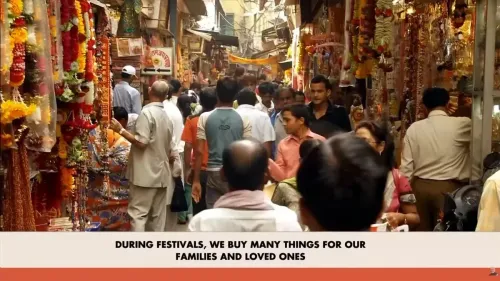
Vocal for Local is the citizen-behaviour strand of the initiative, asking Indians to prefer domestically produced goods.
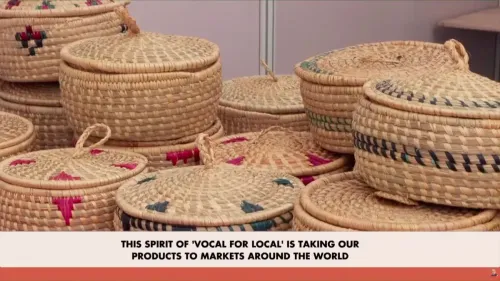
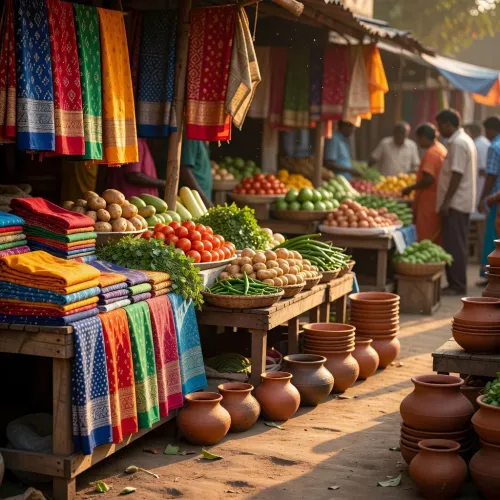
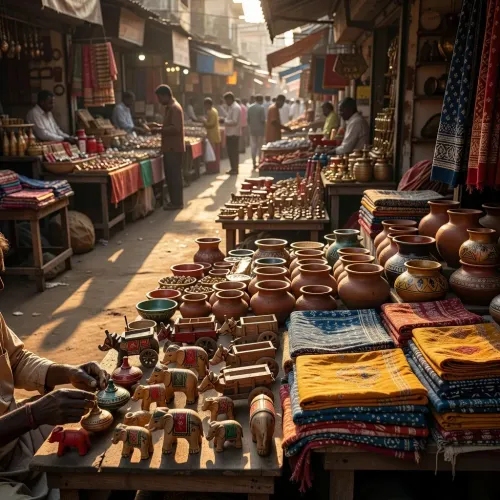
Primary beneficiaries of the campaign include MSMEs, local manufacturers, and traditional artisans .
The policy lineage runs from Make in India (2014) through Atmanirbhar Bharat to production-linked incentive schemes across sectors.
Every rupee spent on a locally made product is a vote for a self-reliant India — that is the crisp logic Union Environment Minister Bhupender Yadav put forward on Sunday, October 25, 2026, in a post on X timed to Mann Ki Baat, Prime Minister Narendra Modi's monthly radio address to the nation.
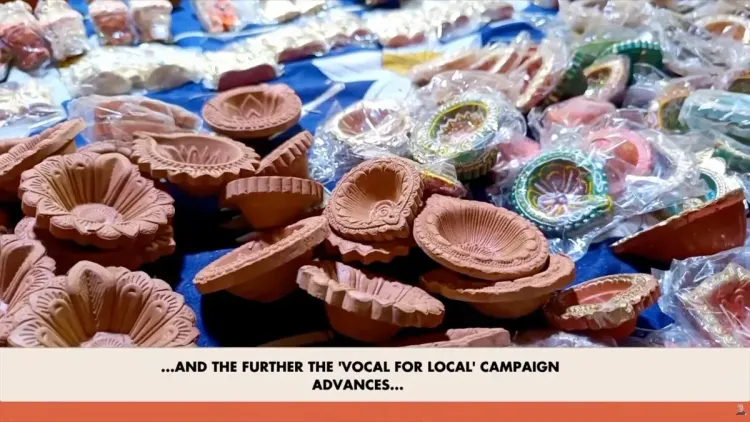
Yadav wrote in Hindi: 'जितना Vocal for Local अभियान आगे बढ़ेगा, उतनी ही तेजी से आत्मनिर्भर भारत का सपना भी पूरा होगा.' — 'The further the Vocal for Local campaign advances, the faster the dream of an Atmanirbhar Bharat will be realised.'
From a pandemic pledge to a governing philosophy
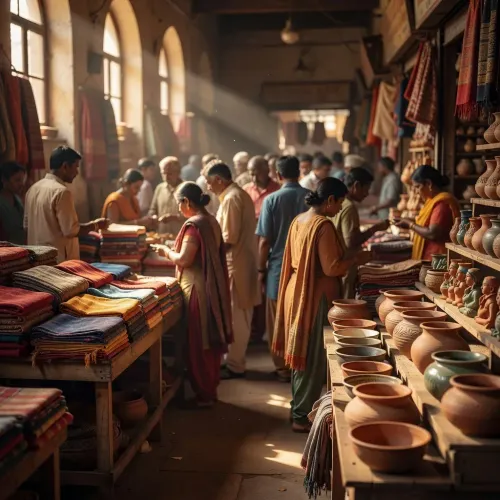
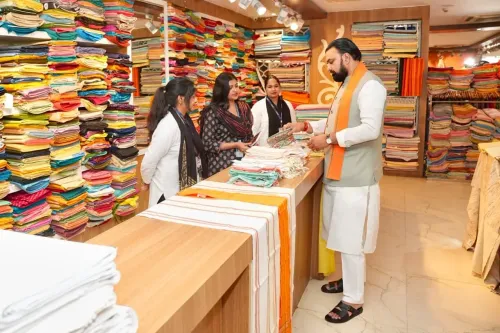
Atmanirbhar Bharat Abhiyan was launched by Prime Minister Narendra Modi in May 2020 alongside a special economic package designed to cushion India from pandemic-era supply-chain shocks and reduce its dependence on imports. The Vocal for Local strand of that initiative was not merely a slogan — it was a direct ask of every citizen: choose the domestic over the imported, from handloom textiles to electronics.
Modi has returned to the theme repeatedly across Mann Ki Baat episodes since 2020, making it one of the programme's most consistent policy refrains. Yadav's post, tagged #MannKiBaat, situates the campaign firmly within that ongoing national conversation — a minister amplifying the Prime Minister's message in real time.
Why MSMEs and artisans have the most at stake
The beneficiaries of a thriving Vocal for Local ecosystem are concrete and identifiable: India's millions of MSMEs, domestic manufacturers, and traditional artisans who compete daily against cheaper or better-marketed imports. For them, every bump in consumer preference for local goods translates into orders, jobs, and survival. The campaign is also the citizen-facing layer of a broader industrial policy architecture that includes production-linked incentive (PLI) schemes across sectors from semiconductors to pharmaceuticals.
That architecture traces its lineage back further still — to the Make in India campaign launched in 2014, which first reframed domestic manufacturing as a national aspiration rather than a default fallback. Atmanirbhar Bharat deepened the logic; Vocal for Local gave it a behavioural, grassroots dimension.
Mann Ki Baat as a policy amplifier
The timing of Yadav's post is itself a signal. Mann Ki Baat episodes have historically served as soft-launch pads for government campaigns — the programme's wide radio reach into semi-urban and rural India makes it uniquely effective at converting a ministerial talking-point into everyday vocabulary. When a senior cabinet minister publicly echoes the programme's themes on social media, the messaging loop tightens: broadcast radio reaches one audience, X reaches another, and the campaign gains composite visibility.
Whether this post precedes a fresh policy push — a new incentive for local procurement, a budget line, or a sector-specific scheme — is the question worth watching. The pattern of the past six years suggests Mann Ki Baat attention is rarely the end of a story. It is usually the beginning.
Point of View
Online audience, reinforcing government continuity on economic self-reliance. The Vocal for Local campaign has evolved from a pandemic-era rallying cry into a durable pillar of BJP's economic nationalism narrative — one that bridges macro-industrial policy (PLI schemes, Make in India) with individual consumer choice. Tagging the post to Mann Ki Baat also signals that the government views the programme not merely as a communication exercise but as a live policy instrument. Analysts will watch whether this renewed ministerial attention translates into a concrete procurement or incentive announcement in the near-term budget or sector-policy cycle.
NationPress
25 Oct 2026
Frequently Asked Questions
What is the Vocal for Local campaign in India?
Vocal for Local is a government-backed movement encouraging Indians to buy domestically produced goods, launched as a citizen-facing pillar of the Atmanirbhar Bharat Abhiyan in 2020. It aims to boost demand for products made by Indian MSMEs, artisans, and manufacturers.
What is Atmanirbhar Bharat and when was it launched?
Atmanirbhar Bharat, or Self-Reliant India, is a national initiative announced by Prime Minister Narendra Modi in May 2020 with a special economic package. Its goals include reducing import dependence, strengthening domestic supply chains, and boosting manufacturing across key sectors.
What did Bhupender Yadav say about Vocal for Local?
On October 25, 2026, Yadav posted on X that the further the Vocal for Local campaign advances, the faster the dream of an Atmanirbhar Bharat will be realised, timing the message to coincide with Mann Ki Baat.
What is Mann Ki Baat and who hosts it?
Mann Ki Baat is a monthly radio programme hosted by Prime Minister Narendra Modi in which he addresses policy initiatives and public issues directly to citizens. It has been a key platform for promoting the Vocal for Local and Atmanirbhar Bharat campaigns since 2020.
How does Vocal for Local relate to Make in India?
Make in India, launched in 2014, first reframed domestic manufacturing as a national priority. Atmanirbhar Bharat deepened that vision in 2020, and Vocal for Local added a grassroots behavioural dimension — asking every citizen to actively choose Indian-made products.