Yadav fires back: Rahul Gandhi has no proof, only a 'feeling'

Synopsis
Union Environment Minister Bhupender Yadav publicly challenged Congress leader Rahul Gandhi on October 15, 2026, asserting Gandhi has no evidence of electoral malpractice — only a vague 'feeling' — reigniting the long-running BJP-Congress dispute over EVM integrity and electoral credibility.
Key Takeaways
Union Environment Minister Bhupender Yadav posted on October 15, 2026 directly challenging Rahul Gandhi over electoral malpractice claims.
Yadav asserted Gandhi has no proof — only a 'feeling' that something is wrong with the electoral process.
The exchange continues a decade-long pattern of BJP-Congress disputes over Electronic Voting Machines (EVMs) and election integrity since 2014 .
The BJP's consistent counter-strategy is to demand concrete, verifiable evidence before accepting opposition claims of irregularities.
Any formal response from the Election Commission of India or related court filings would be the next significant development.
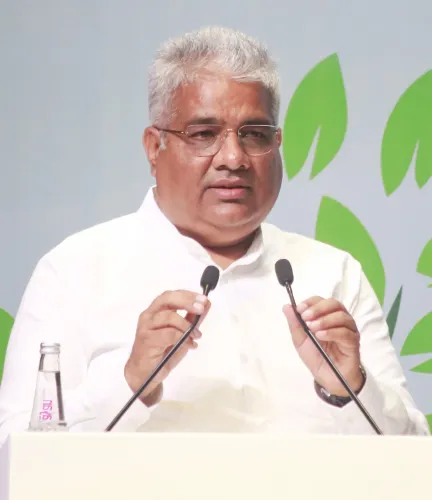
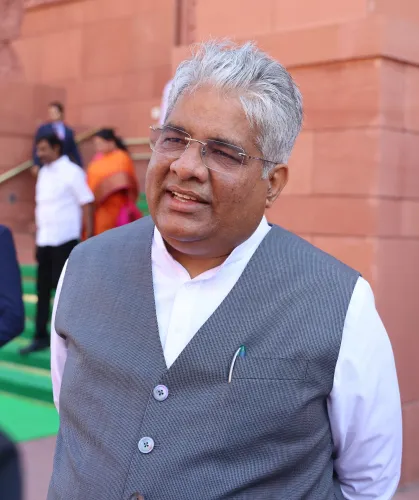
A sharp political broadside landed on Thursday, October 15, 2026, when Union Environment Minister Bhupender Yadav took direct aim at Congress leader Rahul Gandhi, declaring that Gandhi possesses no evidence of electoral malpractice — only, in Yadav's words, a 'feeling' that something is wrong.
The charge: allegation without evidence
Yadav's post cuts straight to the bone of a recurring BJP counter-argument: that opposition claims of electoral fraud are emotion-driven rather than evidence-backed. By zeroing in on the word 'feeling', the senior BJP leader frames Gandhi's concern not as a legal or institutional challenge but as a political intuition — one the ruling party argues deserves no serious weight without corroborating proof.
The framing is deliberate. In Indian political discourse, accusations of electoral malpractice carry enormous stakes, touching the credibility of the Election Commission of India and the integrity of the Electronic Voting Machine system that has been at the centre of BJP-Congress disputes across multiple election cycles since 2014.
BJP vs Congress: a decade of EVM sparring
Rahul Gandhi, as Leader of the Indian National Congress, has repeatedly raised concerns about the electoral process, particularly around EVMs and alleged irregularities during counting and polling phases. The BJP has consistently responded by demanding concrete evidence and pointing to clean chits issued by courts and election authorities.
That pattern — Congress flags concern, BJP demands proof — has played out in state elections, Lok Sabha cycles, and now, once again, in the run-up to or aftermath of a fresh polling exercise. Yadav's post is the latest volley in that long-running exchange. It is combative, but it is also entirely on-brand for a party that has made 'where is the evidence?' its standard rhetorical posture against EVM critics.
What the Election Commission has said — and what comes next
The Election Commission of India has, on repeated past occasions, defended the integrity of EVMs and the electoral process, inviting political parties to raise specific technical objections through formal channels. Any formal response from the Commission — or a court filing on the specific claim Gandhi is alleged to have made — would be the next meaningful development to watch.
Until then, Yadav's post does exactly what such posts are designed to do: put Gandhi on the back foot, shift the burden of proof publicly, and reinforce the BJP's narrative that the opposition cries foul without receipts.
The real test is not on X — it is whether any evidence surfaces that changes the terms of this debate.
Point of View
Forcing Congress into a position where raising concern without a court filing or technical audit can be easily dismissed. The longer the BJP holds that rhetorical high ground, the harder it becomes for Gandhi to move the public beyond sentiment. Whether Gandhi's 'feeling' eventually finds legal or institutional form will determine if this exchange matters beyond the news cycle.
NationPress
15 Oct 2026
Frequently Asked Questions
What did Bhupender Yadav say about Rahul Gandhi and elections?
On October 15, 2026, Union Environment Minister Bhupender Yadav posted on X stating that Rahul Gandhi has no proof of electoral malpractice and is acting only on a 'feeling' that something is wrong.
What is the BJP-Congress dispute over EVMs about?
Since 2014, the Congress party and other opposition groups have repeatedly raised concerns about Electronic Voting Machines, alleging potential tampering or irregularities. The BJP has consistently denied these claims and demanded formal, verifiable evidence.
Has Rahul Gandhi formally challenged election results in court?
Congress leaders including Rahul Gandhi have raised EVM-related concerns publicly and through party channels, but any specific court filings related to this latest exchange have not been confirmed in available records.
What is the Election Commission of India's position on EVM integrity?
The Election Commission of India has on multiple past occasions defended the integrity and tamper-proof nature of EVMs, and has invited political parties to raise specific technical objections through official, formal channels.
Why does Bhupender Yadav speak on electoral issues if he is Environment Minister?
Bhupender Yadav is both Union Minister of Environment, Forest and Climate Change and a senior BJP leader, which means he regularly engages in broader political and electoral discourse on behalf of the party beyond his ministerial portfolio.