Yadav: India-New Zealand FTA kicks in on Dussehra
Synopsis
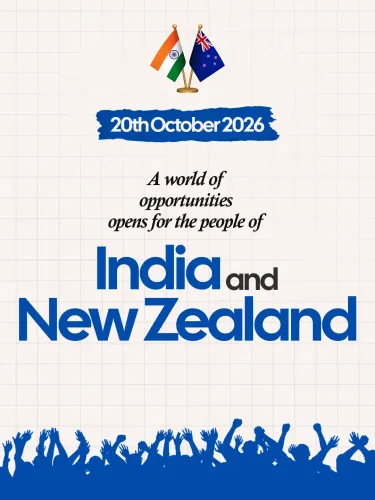
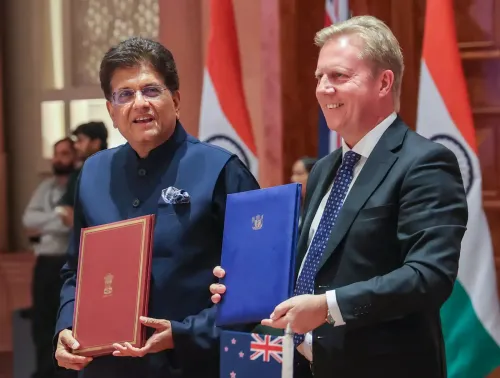
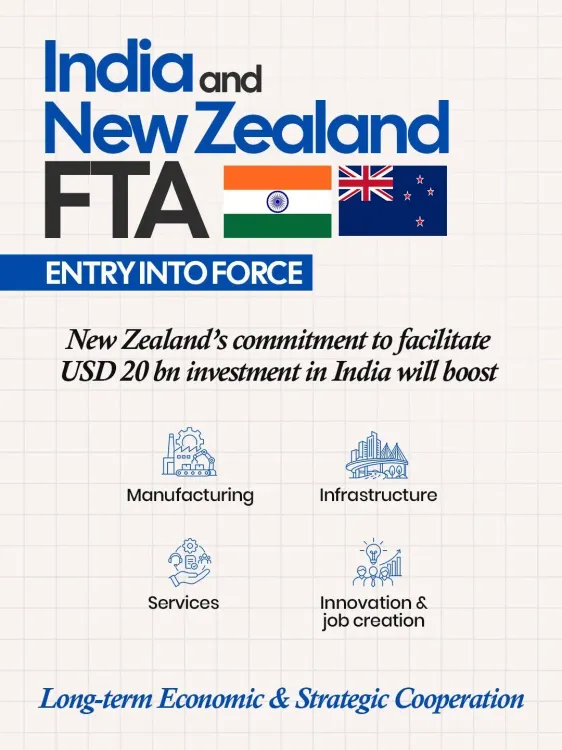
The India-New Zealand Free Trade Agreement enters into force on 20 October 2026, announced Union Minister Bhupender Yadav on Dussehra. The deal, framed as PM Modi's economic diplomacy milestone, promises new openings for Indian farmers, businesses, professionals and youth.
Key Takeaways
The India-New Zealand FTA comes into force on 20 October 2026 , coinciding with Dussehra.
Union Minister Bhupender Yadav announced the development on X , crediting PM Narendra Modi's vision.
The agreement is intended to reduce tariffs and expand trade in goods, services and investment between the two countries.
It follows the India-UAE CEPA and India-Australia ECTA , both concluded in 2022 , as part of India's accelerated FTA push.
Key beneficiaries cited include Indian farmers, businesses, professionals and youth .
Utilisation rates and joint committee reviews on tariff concessions will be critical indicators of the deal's real-world impact.
On the eve of Dussehra, India's trade calendar gets a landmark entry: Union Environment Minister Bhupender Yadav announced on Monday, 19 October 2026 that the India-New Zealand Free Trade Agreement comes into force on 20 October 2026 — a deal he described as opening 'fresh possibilities for our farmers, businesses, professionals and youth.'
A festive date with trade history
Timing a major economic milestone to coincide with Dussehra — the festival that marks the triumph of good over evil — is deliberate political symbolism, and Yadav leaned into it fully. 'This Dussehra, there is more to celebrate,' he wrote, crediting the agreement to Prime Minister Narendra Modi's vision of economic diplomacy. The FTA is designed to reduce tariffs and expand two-way flows in goods, services, and investment between the world's most populous nation and an Oceania economy with which India has historically had modest but growing trade ties.
Where India's FTA sprint has been heading
The New Zealand deal is the latest milestone in one of the most assertive phases of Indian trade policy in decades. The Modi government concluded the India-UAE Comprehensive Economic Partnership Agreement (CEPA) in 2022 and the India-Australia Economic Cooperation and Trade Agreement (ECTA) also in 2022, signalling a deliberate pivot toward fast-tracking bilateral deals across the Indo-Pacific and Gulf. New Zealand fits squarely in that arc — a developed, standards-compliant market in a region India is working to deepen its economic footprint in.
Who gains when the agreement goes live
Indian farmers stand to benefit from preferential access for agricultural exports into a high-income market; businesses gain cleaner rules on goods trade; professionals and youth could see easier movement of skilled workers and services, a segment India has consistently pushed for in every FTA negotiation. For New Zealand, the agreement unlocks a billion-plus-consumer market at a time when its exporters — particularly in dairy, horticulture and advanced services — are actively seeking diversification away from dependence on a single regional partner.
The real test, as with every trade deal, will come in the utilisation rates: whether exporters on both sides actually reroute supply chains and pricing strategies to take advantage of the new tariff schedule, and how soon joint review committees convene to address any early friction.
India enters this Dussehra not just burning the effigy of Ravana — it is lighting a bonfire under old tariff walls too.
Point of View
Prioritising market-by-market deals over the slower multilateral route. Announcing it on Dussehra — a festival of victory — is a calculated optics move that ties economic policy to cultural resonance, a branding template the BJP has used effectively since 2014. The deal also reinforces India's Indo-Pacific pivot: securing preferential access in an Oceania economy signals to the broader region that New Delhi is a serious, rules-based trade partner. The medium-term question is whether implementation depth — especially on services and professional mobility — matches the headline ambition.
NationPress
19 Oct 2026
Frequently Asked Questions
What is the India-New Zealand FTA?
The India-New Zealand Free Trade Agreement is a bilateral deal designed to reduce tariffs and expand two-way trade in goods, services and investment between India and New Zealand. It came into force on 20 October 2026.
When does the India-New Zealand FTA come into effect?
The agreement comes into force on 20 October 2026, as announced by Union Minister Bhupender Yadav.
Who benefits from the India-New Zealand Free Trade Agreement?
Indian farmers, businesses, professionals and youth are among the primary beneficiaries cited, along with New Zealand exporters seeking access to India's large consumer market.
How does this FTA fit into India's broader trade strategy?
It follows the India-UAE CEPA and India-Australia ECTA, both signed in 2022, as part of the Modi government's accelerated push to secure bilateral free trade agreements across the Indo-Pacific and beyond.
What should we watch after the India-New Zealand FTA goes live?
Key indicators will include sectoral trade data, actual utilisation rates of the new tariff concessions by exporters on both sides, and the outcomes of any joint committee reviews established under the agreement.