Bhupender Yadav Meets CBD COP17 President on Biodiversity Goals
Synopsis
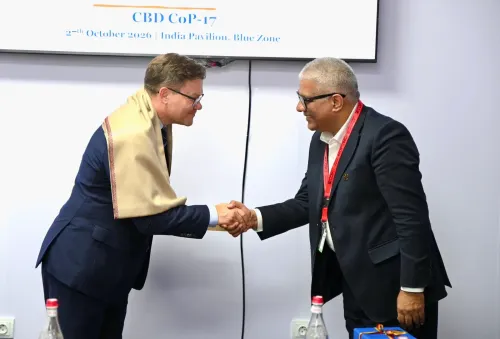
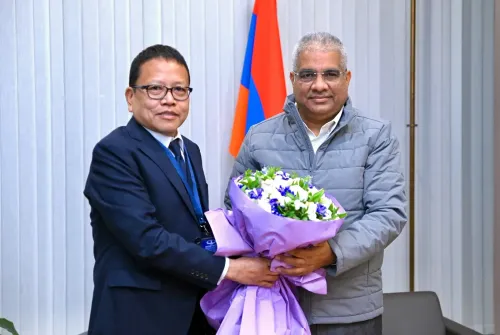
Union Environment Minister Bhupender Yadav met CBD COP17 President Hambardzum Matevosyan on 28 October 2026, focusing on the Kunming–Montreal Global Biodiversity Framework's implementation, its first global review, and resource mobilisation — areas where India has historically advocated strongly for developing-country interests.
Key Takeaways
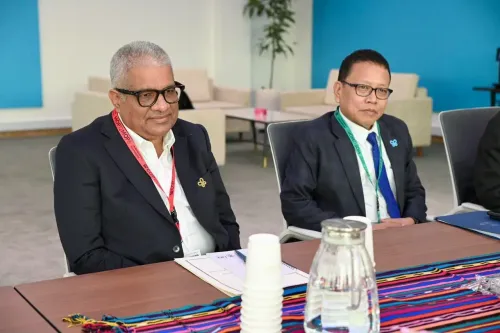
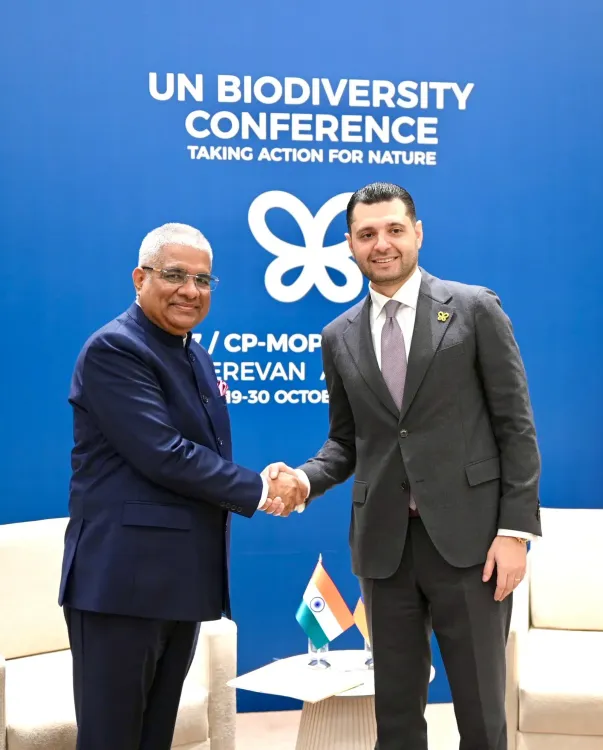
Bhupender Yadav held a bilateral meeting with CBD COP17 President Hambardzum Matevosyan of Armenia on 28 October 2026 on the sidelines of the ongoing conference.
Discussions centred on implementing the Kunming–Montreal Global Biodiversity Framework , adopted at CBD COP15 in Montreal in December 2022 , which contains 23 targets for 2030 .
The first global review of the framework's progress — a key deliverable of COP17 — was a focal point of the conversation.
Resource mobilisation and means of implementation for developing countries formed a critical part of the agenda, consistent with India's long-standing position in CBD negotiations.
India has been a CBD signatory since 1994 and hosted COP11 in Hyderabad in 2012 , giving it deep institutional stakes in the framework's success.
Yadav reaffirmed India's commitment to 'constructive engagement with all parties' in advancing the framework and building a future where 'people and nature thrive together.'
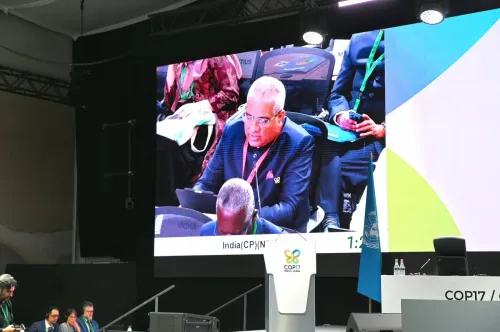
On the sidelines of CBD COP17, Union Environment Minister Bhupender Yadav sat down with the conference's presiding officer to push one of the planet's most consequential unfinished agendas — translating a landmark biodiversity pact into real-world action before the decade runs out.
Yadav held what he described as a 'very engaging discussion' on Wednesday, 28 October 2026 with Hambardzum Matevosyan, Minister of Environment of Armenia and President of CBD COP17. The conversation zeroed in on three pressure points: effective implementation of the Kunming–Montreal Global Biodiversity Framework, the first-ever global review of that framework's progress, and — the perennial sticking point — resource mobilisation and means of implementation for developing nations.
What the Kunming–Montreal Framework Actually Demands
Adopted at CBD COP15 in Montreal in December 2022, the Kunming–Montreal Global Biodiversity Framework set 23 binding targets for 2030 — a blueprint often compared in ambition to the Paris Agreement, but for nature. It covers everything from protecting 30 per cent of land and oceans to halting species extinction rates, cutting harmful subsidies, and channelling finance to biodiversity-rich developing nations. The first global review of how parties are actually meeting these targets sits squarely on the COP17 agenda — making this week's conversations far more than diplomatic courtesy calls.
India's Long Game at the CBD Table
India has been a party to the Convention on Biological Diversity since 1994 and has consistently played a dual role: an active custodian of some of the world's richest biodiversity, and a sharp advocate for developing-country interests on finance and technology transfer. The country hosted CBD COP11 in Hyderabad in 2012, where the landmark Hyderabad Declaration on biodiversity finance was adopted — a precedent that still shapes how India frames its asks in these rooms. That institutional memory travels with Yadav to every multilateral biodiversity negotiation.
In his post, the Minister underlined that 'India remains committed to constructive engagement with all parties and partners' in advancing the framework and in shaping what he called 'a shared future where people and nature thrive together.' The framing is deliberate — positioning India as a bridge-builder rather than a blocker at a moment when north-south tensions over who pays for biodiversity protection remain unresolved.
Why Resource Mobilisation Is the Real Battle at COP17
The Kunming–Montreal Framework set a target of mobilising at least $200 billion per year for biodiversity by 2030, with developed countries committing to deliver $20 billion annually to developing nations by 2025. Whether those commitments are being met — and how the first global review will measure and report on them — is the live wire running through COP17. Yadav's bilateral with the COP President is a signal that India intends to keep resource mobilisation and implementation support at the top of the agenda, not buried under procedural debates.
With the first global review under way and finance pledges overdue for scrutiny, what gets agreed in the corridors this week could determine whether the world's biodiversity goals remain aspirational — or become enforceable.
Point of View
But hold developed countries accountable for the finance that makes implementation possible. With the first global review of the Kunming–Montreal Framework now live, this COP marks the earliest credible moment to assess whether 2022's headline pledges are translating into on-the-ground action — and India, with its biodiversity credentials and negotiating experience, is well-positioned to shape that narrative. The choice to publicise the meeting through social media also reflects a domestic signalling function, projecting India's global environmental leadership to an audience at home.
NationPress
28 Oct 2026
Frequently Asked Questions
What is CBD COP17 and where is it being held?
CBD COP17 is the 17th Conference of the Parties to the Convention on Biological Diversity, with Armenia holding the presidency under Environment Minister Hambardzum Matevosyan. The specific host city has not been confirmed in publicly available records as of the date of this report.
What is the Kunming–Montreal Global Biodiversity Framework?
The Kunming–Montreal Global Biodiversity Framework is a landmark international agreement adopted at CBD COP15 in Montreal in December 2022. It sets 23 targets for 2030, including protecting 30 per cent of the planet's land and oceans and mobilising at least $200 billion per year for biodiversity.
What is the 'first global review' of the Kunming–Montreal Framework?
The first global review is a formal assessment under the CBD process to evaluate how well member countries are implementing the 23 targets agreed in the Kunming–Montreal Framework since its adoption in 2022. It is a key agenda item under the COP17 presidency.
What is India's position on resource mobilisation at CBD negotiations?
India has consistently argued that developed countries must deliver adequate and predictable finance, technology transfer, and capacity-building support to enable developing nations to implement the Kunming–Montreal Framework's targets. This position dates back at least to the Hyderabad Declaration adopted at CBD COP11 in 2012.
Has India previously hosted a CBD Conference of the Parties?
Yes. India hosted CBD COP11 in Hyderabad in 2012, during which the Hyderabad Declaration on biodiversity finance was adopted, setting a precedent for the country's active role in shaping global biodiversity finance discussions.