Yadav Presents India's National Statement at CBD COP17 in Yerevan
Synopsis
Union Environment Minister Bhupender Yadav presented India's National Statement at CBD COP17 in Yerevan, Armenia, calling for a science-based, risk-proportionate approach to synthetic biology and showcasing domestic schemes including MISHTI, Amrit Dharohar, and Mission LiFE as proof of India's biodiversity commitments.
Key Takeaways
Union Environment Minister Bhupender Yadav delivered India's National Statement at COP17-CBD in Yerevan, Armenia on October 27, 2026 .
India advocated a science-based, risk-proportionate, and precautionary approach to synthetic biology and biosafety at the CBD.
Domestic schemes cited include MISHTI (mangroves), Amrit Dharohar (wetlands), Soil Health Card Scheme (launched 2015), Mission LiFE , Ek Ped Ma Ke Naam , and the International Big Cats Alliance (IBCA) .
India endorsed the Kunming-Montreal Global Biodiversity Framework at CBD COP15 in 2022 , committing to protect 30% of land and ocean by 2030.
COP17 serves as a key stocktake on implementation of that framework; India's domestic budget allocations for biodiversity schemes will be closely watched.
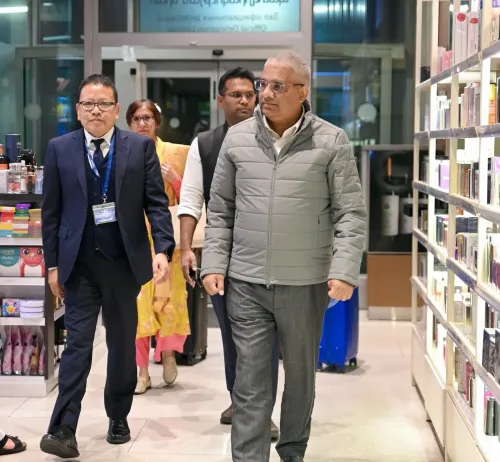
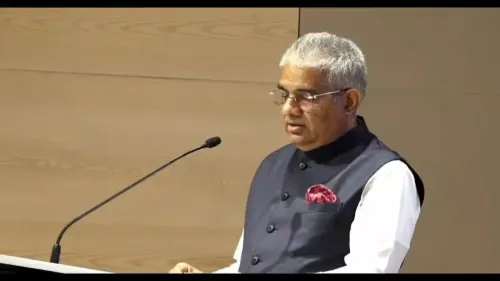
On the global stage for biodiversity, Union Environment Minister Bhupender Yadav took the floor at Yerevan, Armenia on Tuesday, October 27, 2026, delivering India's National Statement at the 17th Conference of the Parties to the Convention on Biological Diversity (COP17-CBD) — and placed a firm Indian stake in one of the meeting's most contested debates: synthetic biology.
India's Line on Synthetic Biology and Biosafety
At a forum where gene-editing tools and engineered organisms are reshaping conservation science, India did not hedge. Yadav articulated a threefold position: approaches to synthetic biology must be science-based, risk-proportionate, and precautionary. That formulation is deliberate — it accepts the science while insisting that caution govern deployment, a stance India has consistently maintained across successive CBD negotiations on emerging biotechnologies.
The Convention on Biological Diversity, signed in 1992, governs three pillars: conservation of biological diversity, sustainable use of its components, and fair sharing of benefits arising from genetic resources. Synthetic biology — the design and redesign of living systems — has emerged as one of the CBD's sharpest fault lines, pitting innovation-driven economies against those wary of uncontrolled ecological release.
The Domestic Portfolio Yadav Carried to Yerevan
The minister's statement was not merely a position paper — it was a portfolio presentation. Yadav cited a cluster of schemes operating under Prime Minister Narendra Modi's direction as evidence of India's on-ground commitment to biodiversity and ecosystem restoration.
Among them: the Mangrove Initiative for Shoreline Habitats and Tangible Incomes (MISHTI), which links coastal forest restoration directly to fisher and farming livelihoods; 'Amrit Dharohar', the wetlands conservation programme; and the Soil Health Card Scheme, launched nationwide in 2015 to map soil fertility and steer farmers toward sustainable inputs. The Ek Ped Ma Ke Naam ('Plant a Tree for Mother') campaign and the Mission LiFE (Lifestyle for Environment) initiative — first announced at UNFCCC COP26 in Glasgow in 2021 — also featured as markers of India's behavioural and policy shift toward sustainable consumption.
The International Big Cats Alliance (IBCA), India's multilateral platform for protecting the world's seven big cat species, rounded out the list — a relatively new vehicle that India has been actively promoting as a conservation-diplomacy instrument.
India's Long Arc at the CBD
India's engagement with the CBD carries weight accumulated over decades. The country hosted CBD COP11 in Hyderabad in 2012, where it anchored the 'Hyderabad Pledge' on biodiversity finance. More recently, India endorsed the Kunming-Montreal Global Biodiversity Framework at CBD COP15 in Montreal in 2022 — a landmark agreement committing nations to protect 30 percent of land and ocean by 2030. Yerevan's COP17 is, in effect, the first major stocktake of that framework's implementation.
Each scheme Yadav named maps onto one or more of the Kunming-Montreal targets: MISHTI addresses coastal and marine ecosystems; Amrit Dharohar covers inland wetlands; the Soil Health Card touches sustainable agriculture and land degradation. Whether the pace of domestic implementation matches international pledges will be the harder question that follows ministers home from Armenia.
What Follows the Yerevan Statement
The real test of India's COP17 posture will emerge in upcoming Union Budget allocations for MISHTI and Amrit Dharohar, and in national reports filed under the Kunming-Montreal Framework. A government that speaks science-based caution on synthetic biology in Yerevan will be watched closely for whether regulatory frameworks at home keep pace with that promise.
India has rarely been a passive voice at multilateral environmental forums — and Yadav's statement in Yerevan signals it does not intend to start now.
Point of View
Mission LiFE, IBCA — into India's multilateral identity, ensuring that international platforms amplify domestic policy rather than constrain it. The explicit call for a 'risk-proportionate and precautionary' framework on synthetic biology positions India as a moderating voice between biotech-permissive developed nations and more restrictive developing ones — a diplomatically useful middle lane. With the Kunming-Montreal Framework now in its implementation phase, India's credibility at future COPs will hinge on whether budget allocations for these schemes hold. The harder editorial question is whether the policy architecture Yadav described in Yerevan is advancing fast enough to meet the 2030 biodiversity targets India has signed onto.
NationPress
27 Oct 2026
Frequently Asked Questions
What is CBD COP17 and where is it being held?
CBD COP17 is the 17th Conference of the Parties to the Convention on Biological Diversity, a major UN biodiversity treaty meeting held in Yerevan, Armenia in 2026. It serves as a key review of progress under the Kunming-Montreal Global Biodiversity Framework agreed in 2022.
What did Bhupender Yadav say about synthetic biology at COP17?
Yadav stated that India advocates a science-based, risk-proportionate, and precautionary approach to synthetic biology and biosafety — supporting innovation while calling for caution over the uncontrolled release of engineered organisms into ecosystems.
What is the MISHTI scheme mentioned by Yadav?
MISHTI stands for Mangrove Initiative for Shoreline Habitats and Tangible Incomes. It is an Indian government programme that links coastal mangrove restoration with livelihood generation for fishing and farming communities living along the shoreline.
What is Mission LiFE and when was it launched?
Mission LiFE (Lifestyle for Environment) was announced by India at UNFCCC COP26 in Glasgow in 2021 . It promotes pro-planet behavioural choices and sustainable consumption patterns among citizens as part of India's broader environmental commitments.
What is the Kunming-Montreal Global Biodiversity Framework?
The Kunming-Montreal Global Biodiversity Framework was adopted at CBD COP15 in Montreal in 2022 . It commits signatory nations — including India — to protect 30 percent of the world's land and ocean by 2030 and to halt and reverse biodiversity loss.