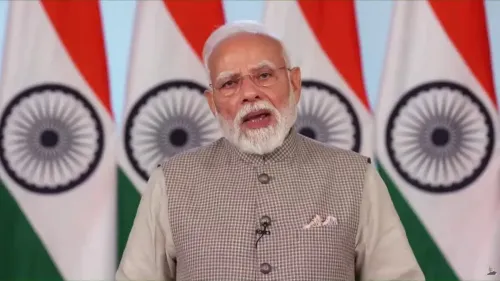
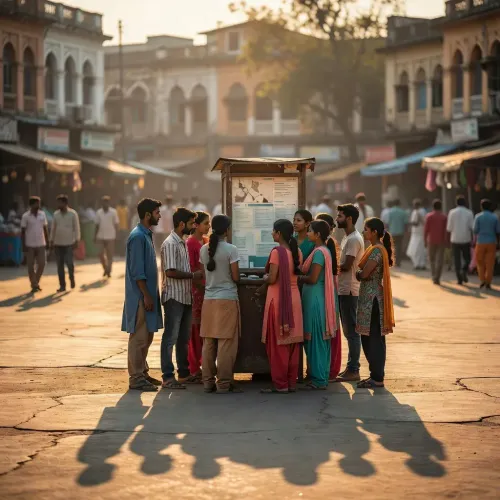
Yadav Urges Youth: Stay Drug-Free to Build Viksit Bharat
Synopsis
Union Environment Minister Bhupender Yadav called on Indian youth — the 'Amrit generation' — to stay drug-free, framing sobriety as essential to realising the Viksit Bharat 2047 vision and harnessing India's demographic dividend for national development.
Key Takeaways
Union Environment Minister Bhupender Yadav posted a Hindi-language appeal to Indian youth on 2 August 2026 , urging them to remain drug-free.
He invoked the Viksit Bharat @2047 vision, framing youth sobriety as a prerequisite for India reaching developed-nation status by the centenary of independence.
The term Amrit Peedhi (Amrit generation) connects the message to the broader BJP government communication framework around India's demographic dividend.
The post aligns with the Nasha Mukt Bharat Abhiyan , the government's flagship anti-drug campaign launched in August 2020 by the Ministry of Social Justice and Empowerment.
Yadav emphasised that India needs youth 'energy, imagination, and talent' — positioning drug prevention as a national-interest issue, not merely a social one.
India's demographic dividend carries a condition attached — and Union Environment Minister Bhupender Yadav spelled it out plainly on Sunday, 2 August 2026: the country's young people cannot fulfil their historic role if substance abuse stands in the way.
Posting in Hindi, Yadav addressed India's youth directly: 'You are the Amrit generation of India. In the next 20-25 years, you will give direction to your own lives and you alone will carry the country to the destination of Viksit Bharat by 2047. The country needs your energy, your imagination, and your talent. That is why it is very important to keep yourself drug-free — for the country and for your own life.'
The Amrit Generation and the 2047 Deadline
The phrase Amrit Peedhi — 'Amrit generation' — is no casual flourish. It anchors directly to the Viksit Bharat @2047 vision that Prime Minister Narendra Modi first outlined in his Independence Day address of August 2022, framing the centenary of independence as a hard deadline for India to reach developed-nation status. Every young Indian alive today will be in their prime working years by 2047, making this cohort the literal engine of that ambition. Yadav's message frames drug-free living not as a moral lecture but as a national-interest imperative.Nasha Mukt Bharat Abhiyan: The Policy Spine Behind the Post
The appeal draws its institutional weight from the Nasha Mukt Bharat Abhiyan, the government's flagship anti-drug campaign launched in August 2020 by the Ministry of Social Justice and Empowerment. The programme targets substance abuse hotspots across India, focusing outreach on colleges, community centres, and vulnerable districts. Yadav's post reinforces that policy spine by connecting the campaign's core ask — youth sobriety — directly to the country's long-range development goals, a framing that has become characteristic of the BJP-led government's communication strategy: social challenges recast as inputs to economic destiny. The argument is simple and deliberate. India's much-cited demographic dividend — the largest youth population on earth — only pays off if that population is healthy, skilled, and productive. Substance abuse, in this framing, is not merely a personal tragedy; it is a drag on national output and a threat to the 2047 timeline itself. With parliamentary discussions on youth-focused anti-drug measures continuing and the Nasha Mukt Bharat Abhiyan expanding its district-level reach, the political and policy pressure on this issue is only set to grow — and India's Amrit generation is being told, in no uncertain terms, that the country is counting on them to show up clean.Point of View
' senior ministers reinforce a consistent identity frame that makes young Indians stakeholders in a civilisational project, not merely recipients of a government scheme. The move also keeps the Nasha Mukt Bharat Abhiyan politically visible without requiring a new policy announcement. For the BJP, connecting demographic strength to discipline is a durable electoral and governance strategy — one that resonates in both urban college campuses and rural districts where substance abuse is an acute concern.
NationPress
2 Aug 2026
Frequently Asked Questions
What did Bhupender Yadav say about Indian youth and drugs?
Union Environment Minister Bhupender Yadav urged Indian youth to stay drug-free, saying the country needs their energy, imagination, and talent to achieve the Viksit Bharat 2047 goal of becoming a developed nation.
What is the Viksit Bharat 2047 vision?
Viksit Bharat @2047 is Prime Minister Narendra Modi's vision to make India a fully developed nation by 2047, the centenary of independence — first outlined in his Independence Day address of August 2022.
What is the Nasha Mukt Bharat Abhiyan?
The Nasha Mukt Bharat Abhiyan is a government anti-drug campaign launched in August 2020 by the Ministry of Social Justice and Empowerment, targeting substance abuse among youth across vulnerable districts in India.
Who is Bhupender Yadav?
Bhupender Yadav is a senior BJP leader from Rajasthan serving as India's Union Minister of Environment, Forest and Climate Change.
Why does the government link drug-free living to Viksit Bharat 2047?
The government argues that India's demographic dividend — its massive young population — can only drive economic development if youth are healthy and productive; substance abuse is framed as a direct threat to the country's 2047 development targets.