PM Modi calls Gen Z India's 'Amrit Peedhi', launches drug-free youth campaign
Synopsis
Modi's address to Gen Z was more than an anti-drug appeal — it framed drug addiction explicitly as a national security threat, warning that hostile nations target Indian youth as part of a 'terror agenda'. Backed by 125 spiritual organisations and the Kashi Declaration, the 100-Sunday campaign is the Centre's most structured attempt yet to give the drug-free mission both political urgency and cultural depth.
Key Takeaways
PM Modi launched the 'Nasha Mukt Yuva for Viksit Bharat Sankalp Abhiyaan' on 2 August in New Delhi .
He called India's Gen Z the 'Amrit Peedhi' — the generation that will shape India by 2047 .
The campaign spans 100 Sundays , featuring sports events, walkathons, meditation sessions, and awareness drives.
125 spiritual organisations are participating, guided by the Kashi Declaration — a five-year drug-free roadmap adopted in July 2025 .
Modi warned that hostile nations use drug trafficking as part of a 'terror agenda' targeting Indian youth.
He urged families and university faculty to identify warning signs early and seek professional help without stigma.
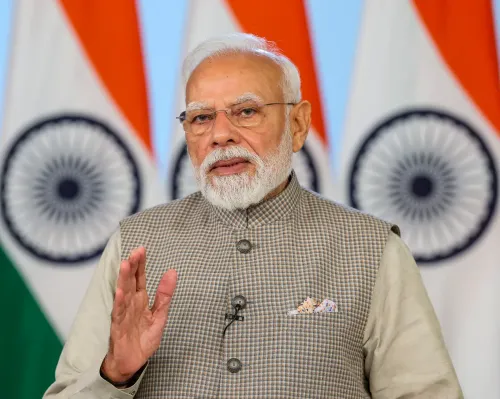
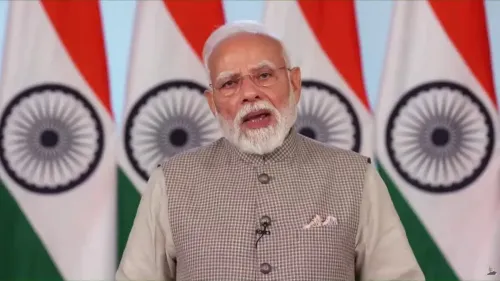
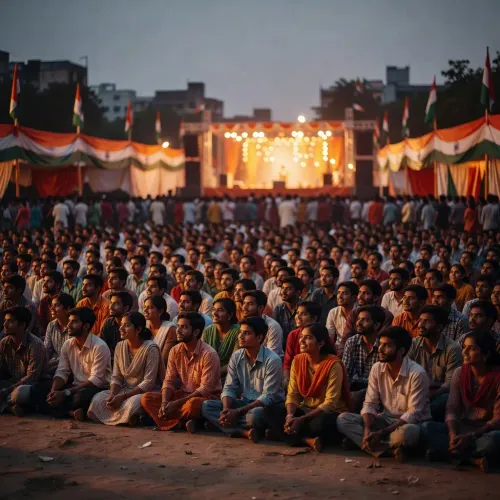
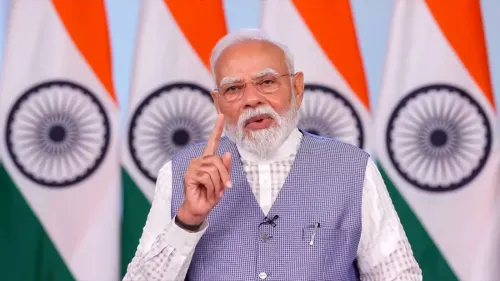
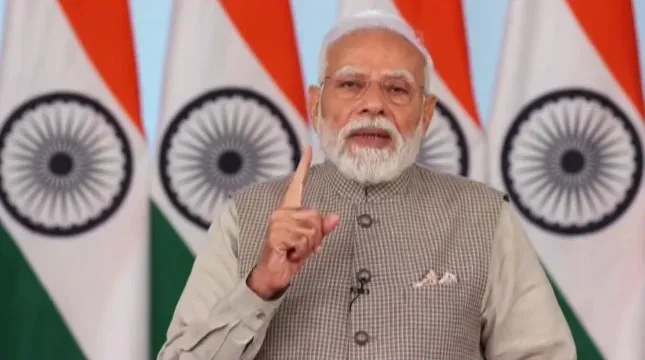
Prime Minister Narendra Modi on Sunday, 2 August addressed the country's youth — Gen Z — at the launch of the 'Nasha Mukt Yuva for Viksit Bharat Sankalp Abhiyaan' in New Delhi, calling them India's 'Amrit Peedhi' and urging them to stay free of drugs in order to drive the nation toward its Viksit Bharat 2047 goal. The campaign marks a national scale-up of a pilot initiative first launched from Varanasi in 2024.
What Modi Said to Gen Z
Speaking directly to young Indians, Modi said: 'In the next 20-25 years, you will give a direction to your lives. You will be the ones who will take India towards the resolution of Viksit Bharat till 2047, and you will be the ones sitting at the top of the peak, fully savouring the fruits of that achievement. The country needs your energy, creative imagination and talent. Hence, for the country and your own lives, keep yourselves away from drugs.'
He underscored that when a young person falls prey to addiction, the loss extends beyond the individual. 'When a young person falls prey to drug addiction, it is not just that individual who loses; a dream is lost,' he said, warning that 'national strength also weakens' and that hostile nations actively conspire to trap Indian youth in addiction as part of a broader 'terror agenda'.
The Campaign: 100 Sundays, 100 Steps
Modi announced that the next 100 Sundays will each mark a concrete step toward a drug-free India under this initiative. Planned activities include sports events, walkathons, meditation sessions, cultural programmes, and awareness campaigns. The campaign draws on the Kashi Declaration — a five-year roadmap for a drug-free India adopted in July 2025 at the Youth Spiritual Summit in Varanasi — and has the active participation of 125 spiritual organisations across the country.
Modi noted his personal connection to the initiative: 'As an MP from Kashi, I am happy that last year, this project was launched from the holy land of Kashi as a pilot project. Therefore, in addition to scientific clarity, it also possesses spiritual energy, the blessings of saints, and cultural heritage.'
On Rehabilitation and Family Responsibility
The Prime Minister called on families and educators to take proactive roles. He urged parents not to let social stigma prevent them from seeking help: 'Do not hide it behind the pressure of social reputation. Those who need help should seek support. Talk openly with them, take the help of experts, and make efforts to free your child from addiction with the support of medical professionals.'
He outlined behavioural warning signs for parents to watch — changes in conduct, social withdrawal, staying locked in rooms, returning home late, or making unusual financial demands. He also appealed to college and university faculty: 'Along with academic studies, please talk to students about the dangers of drugs.'
Broader Significance
The campaign arrives as drug abuse among Indian youth has drawn increasing policy attention, with multiple state governments reporting rising cases of substance dependency among adolescents and young adults. By anchoring the initiative in both the Viksit Bharat 2047 framework and the spiritual legacy of Varanasi, the Centre is attempting to give the anti-drug push both policy weight and cultural resonance. Notably, the involvement of 125 spiritual organisations signals an effort to reach communities where institutional outreach has historically been limited.
With guidelines for the 100-Sunday rollout expected to be operationalised immediately, the campaign's real test will be whether it translates grassroots energy into measurable reductions in youth drug dependency across states.
Point of View
Designed to give the campaign a national-security urgency that routine awareness drives lack. Yet the 100-Sunday structure, while symbolically potent, sidesteps the harder questions: enforcement against supply chains, state-level rehabilitation infrastructure, and measurable outcome targets. The Kashi Declaration's five-year roadmap exists, but no independent monitoring body has been named. Without accountability metrics, this risks becoming another well-attended campaign that moves sentiment without moving statistics.
NationPress
16 Sept 2026
Frequently Asked Questions
What is the 'Nasha Mukt Yuva for Viksit Bharat Sankalp Abhiyaan'?
It is a national anti-drug campaign launched by Prime Minister Narendra Modi on 2 August, targeting India's youth — particularly Gen Z — with the goal of building a drug-free India as part of the Viksit Bharat 2047 vision. The campaign runs across 100 Sundays and includes sports events, walkathons, meditation sessions, and awareness drives.
What is the Kashi Declaration?
The Kashi Declaration is a five-year roadmap for a drug-free India, adopted in July 2025 at the Youth Spiritual Summit in Varanasi. It forms the ideological and programmatic backbone of the current campaign, with 125 spiritual organisations committed to its implementation.
Why did PM Modi call drug addiction a 'terror agenda'?
Modi warned that hostile nations deliberately target Indian youth through drug trafficking to weaken national strength, describing it as part of their terror agenda. He urged youth to protect their potential by staying away from drugs, framing personal choices as acts of national service.
What warning signs did PM Modi ask parents to watch for?
Modi listed behavioural changes such as social withdrawal, hiding their face, staying locked in rooms, returning home late, and making unusual financial demands as potential indicators of drug use. He urged parents to communicate openly and consult medical professionals without letting social stigma delay action.
How does this campaign connect to Viksit Bharat 2047?
Modi positioned drug-free youth as a prerequisite for achieving Viksit Bharat — India's development target for its centenary of independence in 2047. He told Gen Z that they would be the ones to reach that milestone and that their energy, imagination, and talent were essential to getting there.