Yamuna water to reach Shekhawati: Rajasthan CM Bhajanlal flags ₹34,000 crore project
Synopsis
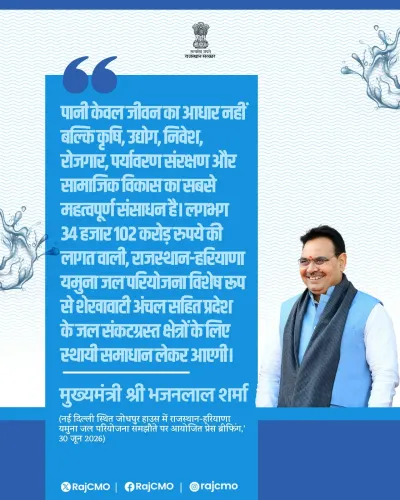
After decades of waiting, Shekhawati — one of Rajasthan's most water-stressed regions — is finally seeing groundwork for the ₹34,000 crore Yamuna Water Project. With an ₹800 crore reservoir foundation laid and three pipeline corridors planned from Hathnikund Barrage, CM Bhajanlal Sharma is staking his government's development credentials on delivering water to Sikar, Churu and Jhunjhunu.
Key Takeaways
Rajasthan CM Bhajanlal Sharma announced on 1 October 2026 that the Yamuna Water Project , estimated at more than ₹34,000 crore , will supply drinking water to Sikar , Churu , Jhunjhunu and surrounding areas.
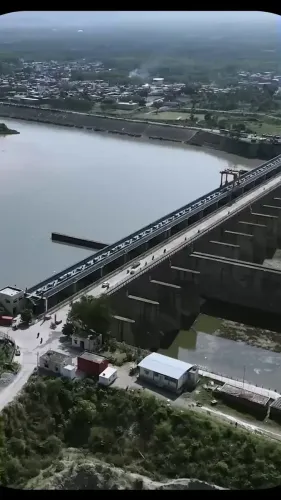
Water will be drawn from the Hathnikund Barrage through three pipelines ; Rajasthan's share from Renuka , Lakhwar and Kishau dams will flow year-round.
Foundation stone for an ₹800 crore artificial reservoir at Hansiyawas was laid on Wednesday ; construction to start shortly.
83 development projects worth ₹1,277 crore were inaugurated or foundation-stoned across Churu , Jhunjhunu and Sikar .
State has completed 3.82 lakh PMAY-G houses and provided tap water to more than 15 lakh rural households under Jal Jeevan Mission .
Government is conserving more than 660 havelis under the Shekhawati Haveli Conservation Scheme to boost tourism and local employment.
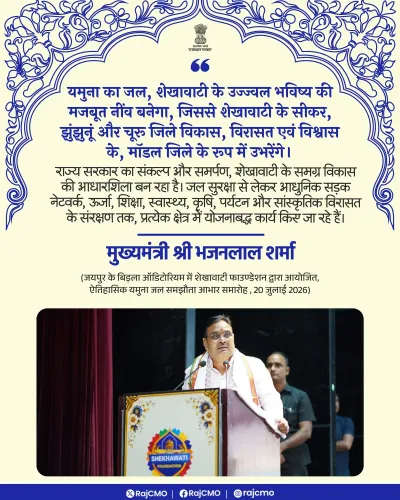
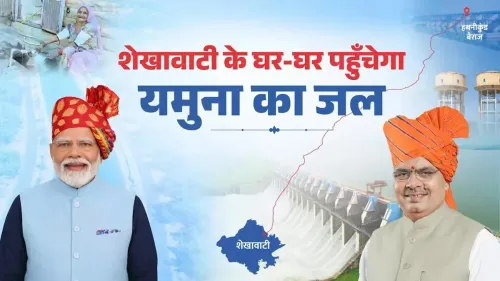
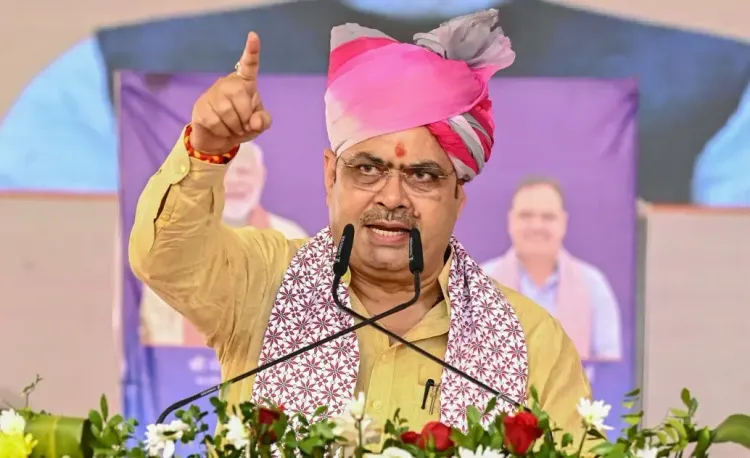
Rajasthan Chief Minister Bhajanlal Sharma on Thursday, 1 October 2026, declared that the decades-long wait for Yamuna water in the Shekhawati region is finally nearing its end, as the state moves forward with a project estimated to cost more than ₹34,000 crore. Under the Yamuna Water Project, drinking water will be piped from the Hathnikund Barrage to Sikar, Churu, Jhunjhunu and surrounding areas through three dedicated pipelines.
Key Developments in the Shekhawati Water Push
In a concrete first step, the foundation stone for an ₹800-crore artificial reservoir at the Hansiyawas complex was laid on Wednesday. Chief Minister Sharma described the reservoir as a critical enabling infrastructure that will facilitate the larger Yamuna Water Project. Construction is expected to commence shortly, according to official statements.
Sharma also confirmed that Rajasthan's allocated share of water from the Renuka, Lakhwar and Kishau dams in the Upper Yamuna Basin would flow uninterrupted, including during the non-monsoon period — addressing a long-standing concern in the water-scarce region.
What Sharma Said at Fatehpur
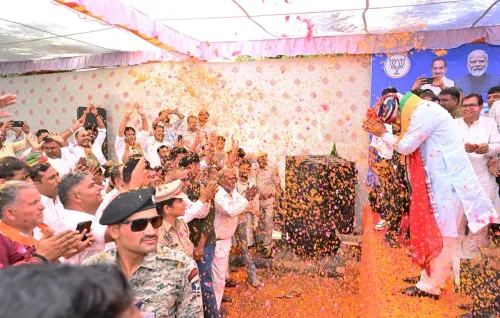
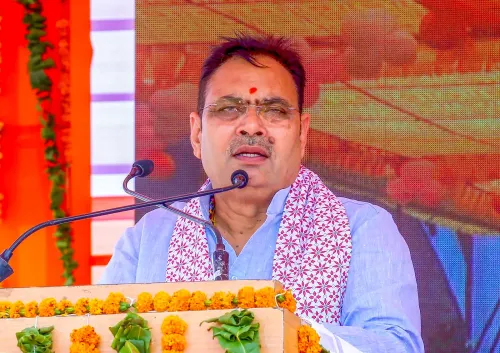
The Chief Minister was addressing a ceremony in Fatehpur organised under the Seva Sankalp Abhiyan (Service Pledge Campaign) with the theme 'Public Service is Service to God.' He credited the 'double-engine' government — the state working in tandem with Prime Minister Narendra Modi's Centre — for resolving inter-state water disputes that had lingered for years.
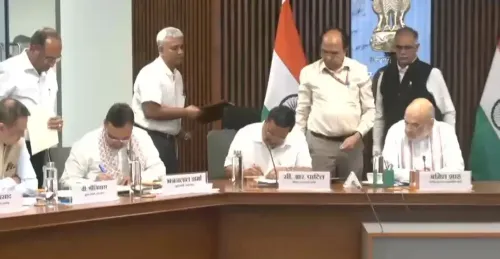
Sharma cited 10 inter-state water agreements resolved nationally, including the Ramjal Setu Link Project, the Yamuna Water Agreement, the Narmada Water Agreement and the Kishau Multipurpose Project — all of which carry direct relevance for Rajasthan.
₹1,277 Crore in Projects for Churu, Jhunjhunu and Sikar
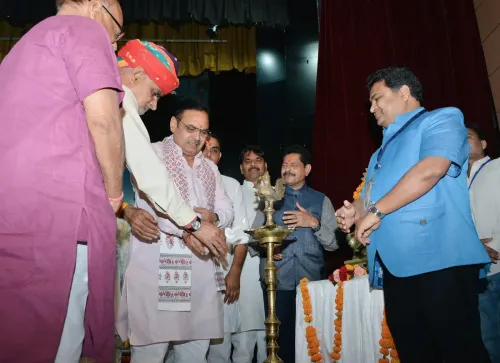
During the event, Sharma inaugurated and laid foundation stones for 83 development projects worth ₹1,277 crore across the three Shekhawati districts. These included six Energy Department projects costing approximately ₹296 crore, alongside initiatives in Medical Education, School and Sanskrit Education, Minority Affairs, Public Works and Animal Husbandry.
Notable projects include the construction of the ITI Mandawa building, the District Transport Office building in Khetri, a Basketball Academy at Sikar District Stadium, and the Padihara-Loha rural drinking water supply scheme in Ratangarh. Foundation stones were additionally laid for projects under the Medical and Health, Public Works and Energy Departments.
Broader Development Scorecard Presented
Sharma presented a wide-ranging account of state government activity. More than 15 lakh rural households in Rajasthan have received tap-water connections under the Jal Jeevan Mission. Under the Pradhan Mantri Awas Yojana-Gramin (PMAY-G), 3.82 lakh houses have been completed, with construction under way on another 4.53 lakh houses.
On employment, the Chief Minister said appointments had been made to more than 1.89 lakh posts against a target of 4 lakh government jobs, with recruitment for 1.22 lakh additional posts ongoing and a calendar released for 1.25 lakh more. More than 18.5 lakh women have become Lakhpati Didis, he said, and the Kisan Samman Nidhi amount for farmers has been raised to ₹9,000. The state also claims to currently offer the highest Minimum Support Price (MSP) for wheat in the country.
The state government is also funding conservation of more than 660 havelis across Jhunjhunu, Churu and Sikar under the Shekhawati Haveli Conservation Scheme, with officials saying the initiative is expected to boost tourism and generate local employment.
This comes amid a broader push to position Shekhawati — historically marginalised on water and infrastructure — as a development priority in the BJP government's term. Jhabar Singh Kharra, Minister of State (Independent Charge) for Urban Development and Local Self-Government, called the Yamuna Water Agreement a 'significant development' for the region and reiterated the government's commitment to accelerating water and energy projects. With groundwork now formally under way, the real test will be whether timelines and cost estimates hold as construction scales up.
Point of View
And delivering water there would be a tangible win for the BJP government ahead of future electoral cycles. But ₹34,000 crore inter-state infrastructure projects in India have a long history of timeline slippage and cost overruns, and this one involves multiple upstream dam agreements that are still in varying stages of implementation. The foundation stone for a single ₹800 crore reservoir is a start, not a completion. What matters now is whether Rajasthan can hold the Centre and Haryana to firm delivery schedules on Hathnikund flows — something no Rajasthan government has managed to do consistently in the past.
NationPress
1 Oct 2026
Frequently Asked Questions
What is the Yamuna Water Project for Shekhawati in Rajasthan?
The Yamuna Water Project is a ₹34,000 crore scheme to supply drinking water from the Hathnikund Barrage to the Shekhawati districts of Sikar, Churu and Jhunjhunu through three pipelines. CM Bhajanlal Sharma announced forward movement on the project on 1 October 2026, with groundwork beginning at the Hansiyawas reservoir site.
What is the Hansiyawas reservoir and why was its foundation stone laid?
The Hansiyawas artificial reservoir, estimated to cost ₹800 crore, is a key storage facility that will enable the Yamuna Water Project to function effectively in the Shekhawati region. Its foundation stone was laid on Wednesday as the first concrete infrastructure step toward bringing Yamuna water to the three districts.
Which districts in Rajasthan will benefit from the Yamuna Water Project?
The project is designed to supply drinking water primarily to Sikar, Churu and Jhunjhunu districts, along with surrounding areas, which together form the historically water-scarce Shekhawati region.
What other development projects were announced for Shekhawati on 1 October 2026?
CM Sharma inaugurated and laid foundation stones for 83 development projects worth ₹1,277 crore across Churu, Jhunjhunu and Sikar. These include six Energy Department projects worth ₹296 crore, an ITI Mandawa building, a Basketball Academy at Sikar District Stadium, and a rural drinking water scheme in Ratangarh.
How many government jobs has Rajasthan filled under CM Bhajanlal Sharma's administration?
According to CM Sharma, appointments have been made to more than 1.89 lakh posts against a target of 4 lakh government jobs. Recruitment for 1.22 lakh additional posts is ongoing, and a calendar has been released for another 1.25 lakh posts.