CM Yogi calls UP Aam Mahotsav 2026 a global stage for farmers
Synopsis
The Chief Minister's Office of Uttar Pradesh quoted CM Yogi Adityanath on 3 July 2026 calling the UP Aam Mahotsav 2026 a national platform for farmers to showcase produce and gain global reach through a structured buyer-seller meet, building on the state's ODOP and agricultural export policy framework.
Key Takeaways
CM Yogi Adityanath described UP Aam Mahotsav 2026 as a platform for farmers from across India, not just Uttar Pradesh.
The festival includes a formal Buyer-Seller Meet designed to connect farmers directly with domestic and global buyers.
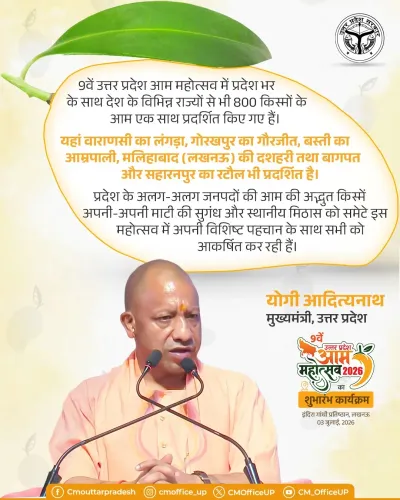
Uttar Pradesh is India's largest mango-producing state, with GI-tagged varieties from districts including Malihabad and Saharanpur .
The event aligns with the state's One District One Product (ODOP) scheme launched in 2018 and the UP Agricultural Export Policy 2019 .
The buyer-seller format aims to reduce middlemen and improve price realisation for mango growers.
Export orders generated and MoUs signed during the 2026 edition will be key metrics to watch.
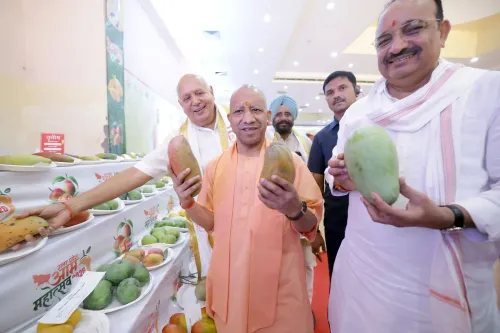
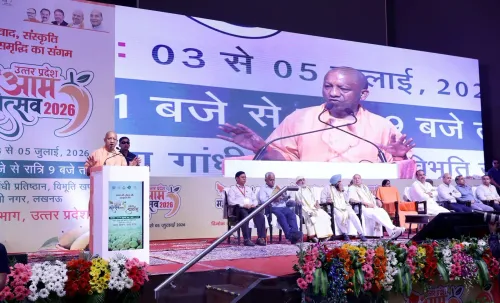
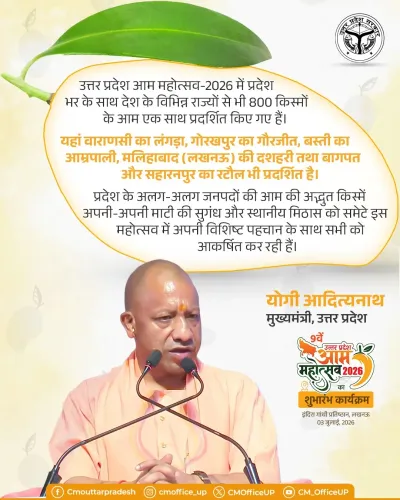
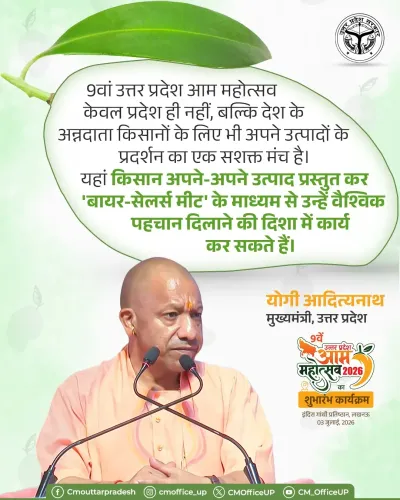
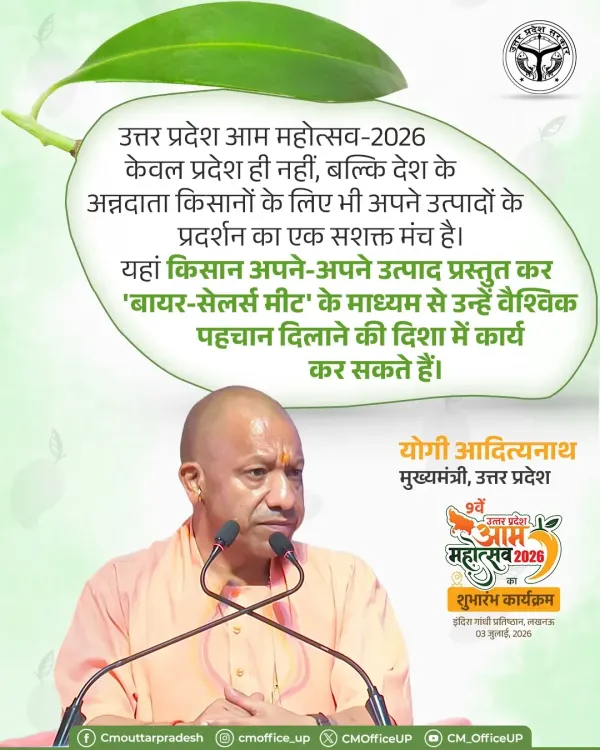
The Chief Minister's Office of Uttar Pradesh, quoting Chief Minister Yogi Adityanath, on Friday, 3 July 2026, described the Uttar Pradesh Aam Mahotsav 2026 as a powerful platform for farmers across the country to showcase their produce and connect with global buyers through a dedicated buyer-seller meet.
Context
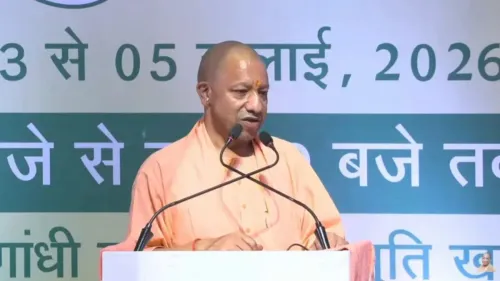
The official post quotes CM Yogi Adityanath as saying that the Uttar Pradesh Aam Mahotsav 2026 is not merely a state-level celebration but a platform for annadata kisaan (providers of food — farmers) from across India to present their products. He added that farmers can use the 'Buyer-Seller Meet' format at the festival to 'give their products global recognition.' The mango festival is organised by the Uttar Pradesh government as part of its broader effort to position the state's horticultural output on domestic and international markets.
Policy Backdrop
Uttar Pradesh is India's largest mango-producing state, with districts such as Malihabad, Saharanpur, and Lucknow known for geographically indicated varieties. The state government launched the One District One Product (ODOP) scheme in 2018 to brand and market distinctive district-level agricultural and handicraft products, including mangoes, for domestic and export markets. The Uttar Pradesh Agricultural Export Policy 2019 further identified mangoes as a priority crop and proposed buyer-seller meets and festivals as instruments to expand the global footprint of UP's produce.
The Aam Mahotsav format fits squarely within this policy architecture. By embedding a structured buyer-seller meet inside a cultural festival, the state aims to reduce dependence on middlemen and improve price realisation for growers of GI-tagged mango varieties.
Stakeholders and Impact
The primary beneficiaries of the buyer-seller meet mechanism are mango farmers and horticulture exporters who gain direct access to domestic and international buyers without intermediary layers. By framing the event as a national platform — open to farmers from across India, not just Uttar Pradesh — the Chief Minister's statement signals an intent to position the Mahotsav as a broader agricultural trade event rather than a purely regional showcase. This approach mirrors horticulture promotion strategies adopted by other major fruit-producing states, but the integration of a formal buyer-seller meet distinguishes it from ceremonial mango festivals held elsewhere.
What's Next
Key indicators to watch from the 2026 edition include total farmer and exporter participation, the volume and value of export orders generated, and any memoranda of understanding signed during the buyer-seller meet. Follow-up scrutiny in the state assembly and among agricultural advocacy groups is likely to focus on actual income gains recorded by farmers who participate in the mechanism, as well as whether the global linkages translate into sustained export contracts beyond the festival period.
Point of View
The Yogi administration is building a narrative of institutional continuity in farm-income policy. The buyer-seller meet mechanism, if it generates verifiable export contracts, could serve as a replicable model that other states benchmark against. The real test, however, lies in post-event data on income gains for smallholder mango farmers, which will determine whether the initiative is substantive policy or primarily a branding exercise.
NationPress
2 Oct 2026
Frequently Asked Questions
What is the UP Aam Mahotsav 2026?
The UP Aam Mahotsav 2026 is a state-organised mango festival in Uttar Pradesh that showcases horticultural produce and includes a buyer-seller meet to help farmers connect with domestic and international buyers.
What is the Buyer-Seller Meet at the UP Aam Mahotsav?
The Buyer-Seller Meet is a structured trade session within the Aam Mahotsav where mango farmers and horticulture exporters can directly negotiate with buyers, aiming to reduce middlemen and improve price realisation.
What did CM Yogi Adityanath say about Aam Mahotsav 2026?
CM Yogi Adityanath said the UP Aam Mahotsav 2026 is not just a state platform but a powerful stage for farmers from across India to present their products and work towards giving them global recognition through the buyer-seller meet.
How does the Aam Mahotsav relate to the One District One Product scheme?
The Aam Mahotsav supports the ODOP scheme launched in 2018, which brands and markets distinctive district-level products including GI-tagged mangoes from Uttar Pradesh for domestic and export markets.
Which districts in UP are known for mango production?
Key mango-producing districts in Uttar Pradesh include Malihabad, Saharanpur, and Lucknow, which are known for geographically indicated mango varieties.