Yogi Adityanath slams past govts for neglecting Musahar, Vantangia communities
Synopsis
Yogi Adityanath didn't just release a book — he used the occasion to relitigate UP's political history, alleging Musahar community members starved to death under a Samajwadi Party government while a foodgrain scam ran alongside. The '50 weeks of Yogi Ki Pati' milestone gave him a platform to contrast that past with his administration's claimed delivery for the Vantangia, Kol and Tharu communities.
Key Takeaways
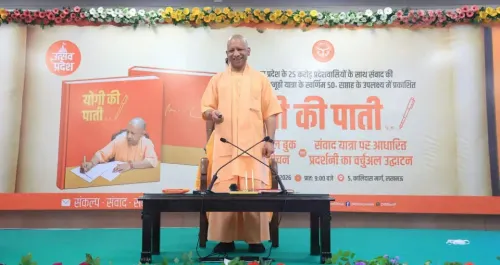
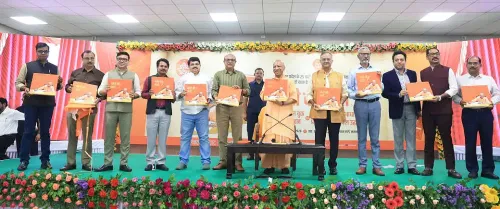
UP CM Yogi Adityanath released a coffee table book on 16 November 2026 marking 50 weeks of the 'Yogi Ki Pati' initiative in Lucknow .
He alleged that around a dozen Musahar community members died of hunger in Kushinagar during the previous Samajwadi Party government.
Thousands of families across 54 Vantangia settlements have received civic rights, housing and utilities since 2017 , he claimed.
He said approximately 1.60 crore schoolchildren are receiving free uniforms, bags, books, shoes and socks, with 96% infrastructure saturation in Basic Education Council schools.
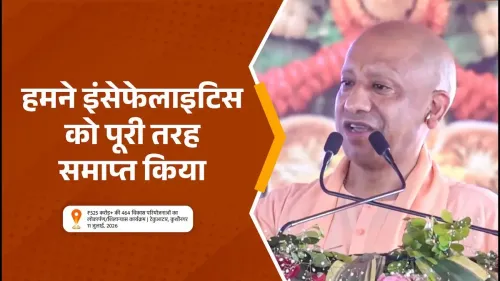
Adityanath claimed sustained interventions have eradicated encephalitis and ended child deaths from the disease in eastern UP.
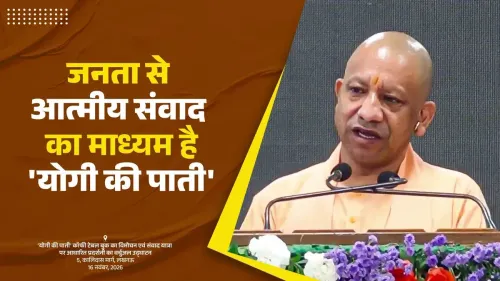
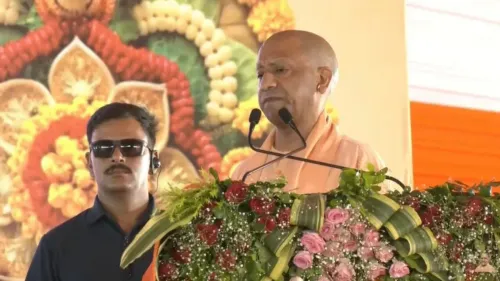
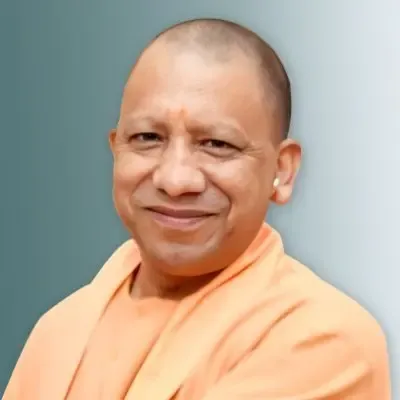
Uttar Pradesh Chief Minister Yogi Adityanath on Monday, 16 November 2026, launched a pointed critique of previous state governments, alleging that successive regimes had left marginalised communities — including the Musahar, Vantangia, Kol and Tharu — without basic civic rights, food security or shelter for decades after Independence. He made the remarks in Lucknow while releasing a coffee table book marking more than 50 weeks of 'Yogi Ki Pati', a government communication initiative aimed at directly reaching the state's 25 crore people.
What 'Yogi Ki Pati' Is and Why It Was Launched
Adityanath described 'Yogi Ki Pati' as more than a newsletter — framing it as an intimate dialogue between the government and ordinary citizens that surfaces the concerns, struggles and aspirations of communities often excluded from mainstream public discourse. He also virtually inaugurated an exhibition at his official residence documenting the initiative's journey. The stated aim, he said, is to ensure that information about government welfare schemes reliably reaches eligible beneficiaries rather than getting lost in administrative channels.
The Vantangia Community: From Forest Settlements to Civic Rights
Adityanath cited the Vantangia community as a defining example of what he called sensitive governance. He recalled witnessing Vantangia families in Maharajganj walking barefoot in torn clothes toward district headquarters to protest their deprivation during a visit in 2005-06. He said he subsequently raised the issue of forest rights before the then Prime Minister Manmohan Singh and the Union Environment and Forests Ministry. After assuming the Chief Minister's office in 2017, he claimed to have prioritised securing their rights. Today, he said, thousands of families across 54 Vantangia settlements have received civic rights and access to basic facilities including permanent housing, electricity, drinking water and ration cards.
Attack on Previous Regimes Over Musahar Deaths and Hunger
Taking a direct swipe at the previous Samajwadi Party government, Adityanath alleged that around a dozen Musahar community members had died of hunger in Kushinagar during the tenure of Mulayam Singh Yadav, even as a foodgrain scam was allegedly under way. He contrasted that period with the present, asserting that Musahar families today receive land leases, housing and a range of welfare benefits. Similarly, he said thousands of Kol community families in Chitrakoot, who had lived in mud houses and thatched structures for decades, were now being provided permanent homes under the Mukhyamantri Awas Yojana.
Encephalitis Elimination and Education Gains in Eastern UP
The Chief Minister also highlighted the state's campaign against encephalitis in eastern Uttar Pradesh, recalling what he described as overcrowded wards and inadequate facilities at BRD Medical College in Gorakhpur before 2017. He claimed that sustained government interventions had eradicated the disease and ended child deaths from encephalitis in the region. On education, Adityanath cited Operation Kayakalp, direct benefit transfers for schoolchildren, and the establishment of Atal Awasiya Vidyalayas and modern CM Composite Schools. He said approximately 1.60 crore children were receiving uniforms, school bags, books, shoes and socks, with around 96 per cent saturation achieved in basic infrastructure at Basic Education Council schools.
What Comes Next
Adityanath reaffirmed that 'Yogi Ki Pati' would continue as a platform to communicate welfare initiatives, with specific emphasis on improving uptake of schemes such as the Ayushman Card, Ration Card and Destitute Women Pension. The broader message, he said, was that providing dignity and constitutional rights to deprived communities is a government responsibility — not an act of charity. The initiative's continuation signals an intent to use direct communication as a political and administrative tool ahead of the state's future electoral cycle.
Point of View
But it is an assertion made without independent verification at this event; accountability journalism demands scrutiny of both the past claims and the present ones. On encephalitis, the reduction in deaths is documented, but 'eradication' is a strong claim for a vector-borne disease; independent health data should be the benchmark, not political assertion. The deeper question is whether communication outreach translates to saturation of scheme benefits — and whether the 25 crore target is a reach number or a reality.
NationPress
16 Nov 2026
Frequently Asked Questions
What is 'Yogi Ki Pati' and why is it significant?
'Yogi Ki Pati' is a government communication initiative launched by the Uttar Pradesh administration to establish direct outreach with the state's 25 crore residents, sharing information about welfare schemes, governance milestones and community stories. The initiative crossed 50 weeks in November 2026, marked by the release of a coffee table book and a virtual exhibition at the Chief Minister's official residence in Lucknow.
What did Yogi Adityanath allege about the previous Samajwadi Party government?
Adityanath alleged that around a dozen Musahar community members died of hunger in Kushinagar during the tenure of Mulayam Singh Yadav, claiming a foodgrain scam was simultaneously under way. He contrasted that period with his administration's welfare delivery for Musahar families, including land leases and housing benefits.
What has the UP government done for the Vantangia community?
According to Adityanath, thousands of Vantangia families spread across 54 settlements — who had lived in forests without housing, electricity, drinking water or ration cards for decades — have received civic rights and basic facilities since 2017. He said he had first raised their cause before then-PM Manmohan Singh after visiting Maharajganj in 2005-06.
Has encephalitis been eradicated in eastern Uttar Pradesh?
Adityanath claimed that sustained government interventions have eradicated encephalitis and ended child deaths from the disease in eastern UP, contrasting current conditions with what he described as overcrowded wards and inadequate facilities at BRD Medical College in Gorakhpur before 2017. Independent health data remains the definitive measure of this claim.
How many children are benefiting from UP's education welfare schemes?
Adityanath stated that approximately 1.60 crore children are receiving free uniforms, school bags, books, shoes and socks under state schemes, with around 96 per cent saturation in basic infrastructure at Basic Education Council schools. Initiatives cited include Operation Kayakalp, Atal Awasiya Vidyalayas and CM Composite Schools.