YSRCP leaders detained in Visakhapatnam over tribal students' relocation protest

Synopsis
Police detained two senior YSRCP leaders in Visakhapatnam before they could reach parents protesting the mid-year displacement of 480 tribal students from a 20-year-old residential school. The school is one of four being handed to private institutions for NEET and IIT coaching conversion — a move affecting nearly 2,000 tribal children across Andhra Pradesh and drawing sharp political backlash.
Key Takeaways
Former Andhra Pradesh Deputy Chief Minister Pushpa Sreevani and former minister Balaraju of the YSRCP were detained by police in Visakhapatnam on 1 September .
480 tribal students were relocated mid-academic year from the Marikavalasa Tribal Welfare Residential School , operational since 2004 .
The school is being converted into a Centre of Excellence offering NEET and IIT coaching in partnership with private institutions.
Three other Gurukulams — at Meghadrigedda , Tadikonda , and Kota — face similar conversions, collectively affecting nearly 2,000 students .
Around 70 students reportedly obtained Transfer Certificates amid uncertainty; parents' formal resolution opposing the shift was overruled.
YSRCP has demanded the government halt the relocations, restore the school at its existing site, and disclose the private-institution terms for CoE conversion.
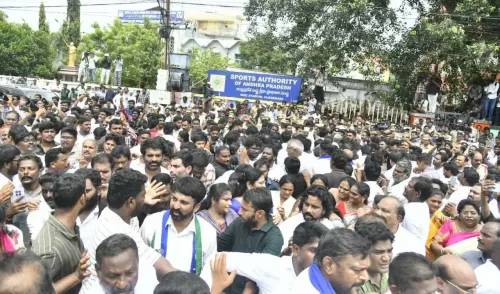
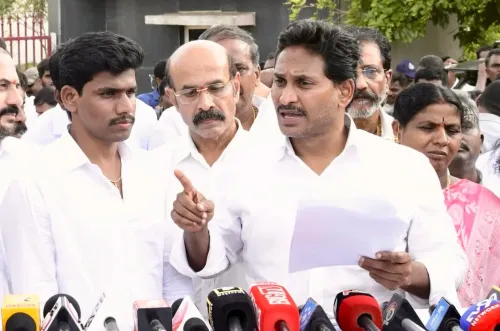
YSR Congress Party (YSRCP) leaders, including former Andhra Pradesh Deputy Chief Minister Pushpa Sreevani and former minister Balaraju, were detained by police in Visakhapatnam on Tuesday, 1 September while attempting to reach a protest site where parents were demonstrating against the mid-year relocation of 480 tribal students from the Marikavalasa Tribal Welfare Residential School. The detentions have intensified a political standoff over the Telangana-Andhra Pradesh coalition government's decision to convert four tribal residential schools into Centres of Excellence.
What Triggered the Protest
The controversy stems from the state government's decision to convert the Marikavalasa AP Tribal Welfare Residential Boys' English Medium School — operational since 2004 — into a Centre of Excellence (CoE) offering specialised NEET and IIT coaching in partnership with private institutions. To facilitate the conversion, all 480 students, including Class 10 pupils, were shifted mid-academic year to residential institutions at Sabbavaram, Srikrishnapuram, Devarapalli, Parvathipuram, and other locations.
Parents had formally opposed the relocation, with the Parents Committee reportedly passing a resolution urging authorities to retain the school at its existing site. Despite those objections, officials proceeded with the shift under police presence. Around 70 students had reportedly obtained Transfer Certificates amid uncertainty over the school's future.
Detentions at the Protest Site
According to the YSRCP, Pushpa Sreevani and Balaraju were intercepted and taken into custody before they could reach the Marikavalasa Tribal Gurukulam protest site. Following an altercation with police personnel, both leaders were escorted away in a police vehicle. Protests have also been staged at the ITDA office in Paderu, while talks between parents and officials have so far failed to produce a resolution.
Scale of the Conversions
Marikavalasa is one of four Gurukulams being converted into CoEs involving private institutions. The others are located at Meghadrigedda in Visakhapatnam, Tadikonda in Guntur, and Kota in Nellore — collectively affecting nearly 2,000 students. Critics argue the scale of the disruption, spanning multiple districts and thousands of tribal children, demands far greater public consultation than the government has provided.
YSRCP's Demands and Political Response
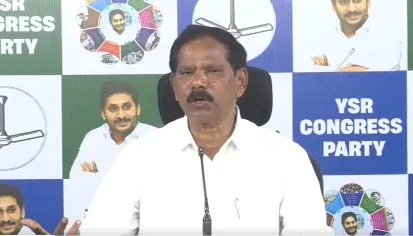
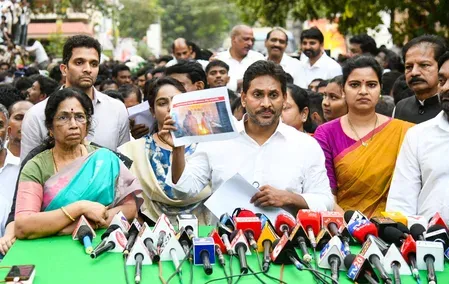
The YSRCP strongly condemned the Telugu Desam Party (TDP)-led coalition government for displacing tribal students in the middle of the academic year and deploying police against those supporting the agitating parents. YSRCP spokesperson Konda Rajeev said the party, under the leadership of YS Jagan Mohan Reddy, 'stands firmly with the tribal students of Marikavalasa and will continue fighting for their rights and education.'
Rajeev described the police's handling of Pushpa Sreevani — a former Tribal Welfare Minister — as 'disgraceful and condemnable,' adding: 'Using the police machinery to suppress those questioning the government has become a disturbing pattern under the coalition government.'
The party demanded that the government immediately reconsider the relocation decision, allow affected students to resume education without further disruption, and publicly disclose the terms under which the Gurukulams are being handed over to private institutions for CoE conversion. It also called for the 20-year-old Marikavalasa school, which serves students from Class 5 to Intermediate, to be retained at its existing location — and for any new Centre of Excellence to be built on alternative land.
What Happens Next
With talks between parents and officials having broken down and political leaders now being detained, the standoff shows little sign of resolution. The government has not publicly responded to the YSRCP's demands or clarified the contractual terms with private institutions running the proposed CoEs. Advocacy groups and tribal welfare organisations are likely to increase pressure as the academic year progresses and the displaced students' situation becomes more acute.
Point of View
Under police cover and over a formally registered parental objection, raises serious questions about due process and tribal welfare obligations under the Constitution. The broader pattern — four Gurukulams across multiple districts, nearly 2,000 students, private-institution partnerships whose terms remain undisclosed — suggests a policy being rolled out without adequate public accountability. The YSRCP's political interest in the issue is obvious, but the substantive grievances of the parents deserve independent scrutiny regardless of who is amplifying them.
NationPress
16 Oct 2026
Frequently Asked Questions
Why were YSRCP leaders detained in Visakhapatnam?
Former Andhra Pradesh Deputy Chief Minister Pushpa Sreevani and former minister Balaraju were detained by police on 1 September while travelling to the Marikavalasa Tribal Gurukulam to meet parents protesting the relocation of 480 tribal students. Police stopped them before they could reach the protest site and escorted them away in a police vehicle.
Why were tribal students relocated from Marikavalasa school?
The Andhra Pradesh government selected the Marikavalasa Tribal Welfare Residential Boys' English Medium School for conversion into a Centre of Excellence offering specialised NEET and IIT coaching in partnership with private institutions. To facilitate this, 480 students were shifted mid-academic year to residential schools at Sabbavaram, Srikrishnapuram, Devarapalli, Parvathipuram, and other locations.
How many students are affected by the Gurukulam conversions in Andhra Pradesh?
Four Gurukulams are being converted into Centres of Excellence — at Marikavalasa and Meghadrigedda in Visakhapatnam, Tadikonda in Guntur, and Kota in Nellore — collectively affecting nearly 2,000 students. The Marikavalasa school alone had 480 students, including Class 10 pupils, at the time of relocation.
What are the YSRCP's demands over the Marikavalasa school issue?
The YSRCP has demanded that the government immediately reverse the relocation decision, allow displaced students to continue their education at the original Marikavalasa site, and publicly disclose the contractual terms under which Gurukulams are being transferred to private institutions. The party also called for any new Centre of Excellence to be built on alternative land rather than displacing an established school.
What is a Centre of Excellence (CoE) in the context of Andhra Pradesh tribal schools?
In this context, a Centre of Excellence is a specialised residential institution offering focused coaching for competitive entrance examinations such as NEET and IIT-JEE, run in partnership with private educational institutions. The Andhra Pradesh government is converting four existing tribal residential Gurukulams into CoEs as part of this initiative.