Yuva Morcha waves black flags at Chennithala, Priyanka Gandhi in Kozhikode
Synopsis
The BJP's Yuva Morcha took its black flag campaign to Kozhikode on 27 September, confronting both Kerala Home Minister Ramesh Chennithala and Wayanad MP Priyanka Gandhi Vadra in separate incidents within hours. The protests are an explicit counter to Youth Congress workers waving black flags at Union Home Minister Amit Shah in Kollam a day earlier — and Yuva Morcha has already promised to escalate further across the state.
Key Takeaways
Yuva Morcha staged black flag protests in Kozhikode on 27 September 2026 against Kerala HM Ramesh Chennithala and Wayanad MP Priyanka Gandhi Vadra .
The first protest occurred near Janakikadu, Kuttiady ; the second near Thambalamanna, Thiruvambady .
Thiruvambady police arrested district president V.V.
Sreehari and general secretary Nithin Madhusoodanan , among others.
The demonstrations follow Youth Congress workers waving black flags at Union HM Amit Shah in Kollam a day earlier.
BJP alleged the Kollam protest exposed a security lapse; Yuva Morcha has vowed to intensify protests against Congress leaders across Kerala .
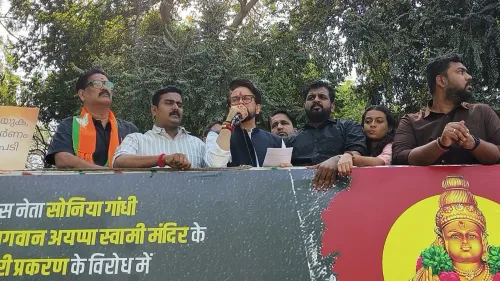
Bharatiya Janata Yuva Morcha activists staged back-to-back black flag protests against Kerala Home Minister Ramesh Chennithala and Wayanad MP Priyanka Gandhi Vadra in Kozhikode district on Sunday, 27 September 2026, just a day after Youth Congress workers showed black flags to Union Home Minister Amit Shah in Kollam. Police intervened at both locations, detaining multiple activists including senior district leaders.
Protest Against Chennithala's Convoy
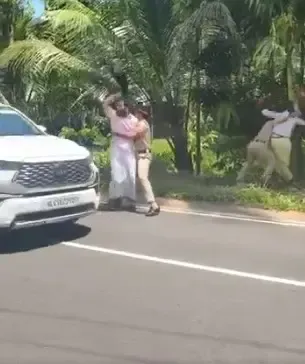
The first demonstration unfolded near Janakikadu in the Kuttiady area as Chennithala's convoy travelled to attend public programmes. Protesters rushed onto a narrow stretch of road and waved black flags at the vehicles. Police personnel at the scene moved swiftly, arresting the activists and clearing the route.
Black Flags for Priyanka Gandhi in Thiruvambady
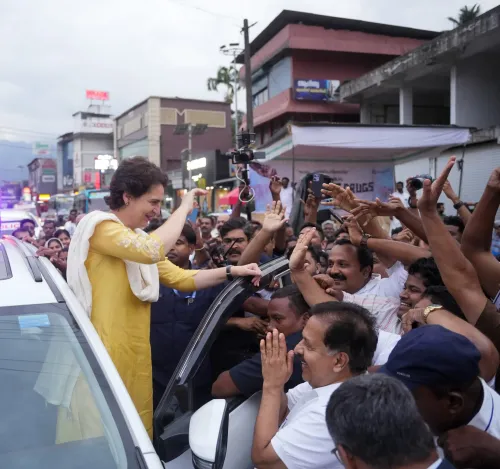
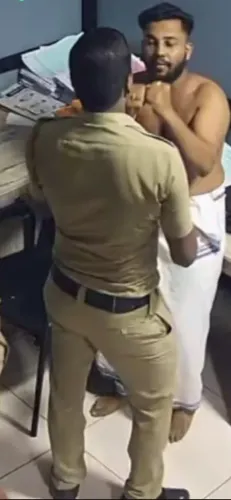
The second protest took place near Thambalamanna in Thiruvambady as Priyanka Gandhi Vadra's convoy passed through the area. Activists had positioned themselves by the roadside and stepped forward with black flags despite a security escort comprising personnel from the Central Reserve Police Force (CRPF) and Kerala Police. Thiruvambady police arrested several Yuva Morcha leaders, including district president V.V. Sreehari and general secretary Nithin Madhusoodanan.
The Tit-for-Tat Context
The Bharatiya Janata Party (BJP) had alleged that the Youth Congress protest against Home Minister Shah in Kollam exposed a serious lapse in the Union minister's security. The Yuva Morcha has since escalated demonstrations against Congress leaders across Kerala, framing them explicitly as a counter-response. Activists had also previously waved black flags at the convoy of Kerala Minister K. Muraleedharan in Kollam. The Yuva Morcha posted on X: 'Tit-for-Tat: Yuva Morcha Shows Black Flags to Priyanka Gandhi,' signalling an organised, coordinated push.
Security Concerns Along Political Routes
The successive incidents have drawn attention to the vulnerability of political convoys when protesters breach cordons on public roads. At both Kozhikode locations, activists positioned themselves along routes in advance, approaching vehicles as they passed — a pattern that raises questions about route intelligence and deployment planning. The episodes come amid a broader BJP-Congress confrontation that has intensified in Kerala following the Kollam incident.
What Comes Next
Yuva Morcha has declared it intends to intensify protests against Congress leaders in the coming days, suggesting the demonstrations could spread to more districts. The arrested activists at both Kozhikode sites are expected to face charges related to obstructing convoys and unlawful assembly. With both parties now locked into an escalating cycle of symbolic protests, the political temperature across Kerala is set to rise further ahead of the next electoral cycle.
Point of View
Including one with CRPF cover, is a pattern that can escalate dangerously beyond symbolism. The BJP's 'tit-for-tat' framing is politically effective but also locks both organisations into an escalation spiral with no obvious off-ramp. Kerala's political culture has historically absorbed such confrontations, but the targeting of a sitting Union minister's security detail as a baseline for a counter-campaign sets an uncomfortable precedent.
NationPress
27 Sept 2026
Frequently Asked Questions
Why did Yuva Morcha wave black flags at Priyanka Gandhi and Ramesh Chennithala in Kozhikode?
Yuva Morcha said the protests were a direct response to Youth Congress workers waving black flags at Union Home Minister Amit Shah in Kollam a day earlier. The BJP had alleged that incident exposed a serious lapse in Shah's security, and Yuva Morcha framed its Kozhikode demonstrations as a 'tit-for-tat' counter-campaign against Congress leaders.
Who was arrested during the Kozhikode protests on 27 September?
Thiruvambady police arrested several Yuva Morcha leaders during the protest near Priyanka Gandhi Vadra's convoy, including district president V.V. Sreehari and general secretary Nithin Madhusoodanan. Police at the Kuttiady site also arrested activists who confronted Ramesh Chennithala's convoy.
Where exactly did the two protests take place in Kozhikode?
The protest against Kerala Home Minister Ramesh Chennithala took place near Janakikadu in the Kuttiady area, while the second demonstration against Priyanka Gandhi Vadra occurred near Thambalamanna in Thiruvambady.
What are Yuva Morcha's plans after the Kozhikode protests?
Yuva Morcha has stated it plans to intensify demonstrations against Congress leaders across Kerala in the coming days. The organisation has already staged similar black flag protests against Kerala Minister K. Muraleedharan in Kollam and has signalled a broader, sustained campaign.
Did the protests pose any security concerns?
Yes, activists approached Priyanka Gandhi Vadra's convoy despite an escort from the CRPF and Kerala Police, and rushed onto a narrow road stretch near Chennithala's vehicles. The incidents have raised questions about route security and the ability to prevent protesters from closing in on political convoys.