Is AI India’s ‘next oil’?

Synopsis
Artificial intelligence is at a transformative stage, and India's approach towards data could define its role in the upcoming industrial revolution. Sunil Pal from AMD emphasizes the importance of infrastructure and strategic planning at the India AI Impact Summit. Discover how India can harness AI's potential to become a global leader in this tech revolution.
Key Takeaways
AI is at a pivotal moment globally.
India must treat data as its next oil.
Infrastructure development is crucial for AI growth.
India has a vast talent pool in AI.
Long-term investment in energy is necessary.
Washington, Feb 14 (NationPress) Artificial intelligence is experiencing a pivotal moment on the global stage, and India must regard data as its “next oil” if it aims to spearhead the forthcoming industrial revolution, asserted Sunil Pal, Head of AI GPU Allocation at AMD, in anticipation of the India AI Impact Summit in New Delhi.
“2026 is set to be the year of AI,” Pal shared with IANS, characterizing the technological surge that initiated with the launch of ChatGPT in 2022 as akin to “the fourth industrial revolution.”
He noted that nations are in a race to harness value in a sector projected to soar to $1.7 trillion by 2031.
“Everyone is exploring ways to capitalize on AI,” he remarked, emphasizing that “data is the key.”
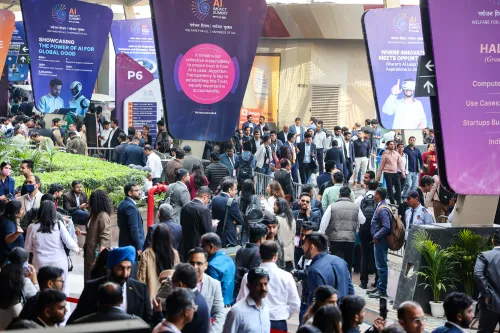
Pal stated that the summit in India is timely, as governments and corporations worldwide are assessing how to expand AI infrastructure and applications.
He highlighted three areas in which India excels: “AI talent and engineering depth,” a “global digital backbone,” and a transition from “services to a strategic innovation hub.”
India boasts one of the largest pools of AI and digital engineering talent, he noted, allowing companies to “scale AI rapidly and cost-effectively.”
He pointed out the country's role in overseeing global enterprise platforms, cybersecurity operations, analytics, and AI development. Indian tech firms, according to him, are “well-positioned to recognize shifting trends and adapt accordingly.”
India is also progressing “into AI research, product engineering, semiconductor design, and global capability centers,” he mentioned. With a population of 1.2 billion people, the nation has a built-in scale advantage.
However, Pal cautioned that infrastructure will be crucial in determining whether India can transform this potential into leadership.
“Building data centers hinges on power availability,” he stated. “Electricity, and high-quality electricity, is essential.”
He urged governments to adopt a long-term perspective and invest in reliable, affordable energy sources, including hydro, nuclear, wind, and solar power. “This is not a short-term endeavor,” he remarked, stressing the need for a holistic, long-term approach.
Establishing data centers necessitates extensive planning, land acquisition, and regulatory approvals. Pal noted that even in the United States, such projects undergo rounds of public consultations and approvals. Similar processes in India will take time.
Nevertheless, he underscored that compute infrastructure is not confined to a particular location. It can be deployed in one region of the country and utilized elsewhere or even globally through the internet.
Regarding global competition, Pal indicated that the United States currently holds a stronger position in AI, but “China is not lagging.” He recalled his visit to Beijing in 2018 and was impressed by the level of automation and AI implementation even then.
China’s approach, he noted, reflects a “concentrated effort.” However, he reiterated that AI is still in its early stages globally. “AI is just beginning,” he said, adding that countries from Singapore to Dubai and across Europe are progressing rapidly.
For India, the challenge lies in remaining vigilant and engaged. “You must keep your eyes and ears open,” he advised, assessing how AI can integrate into an economy already among the largest in the world.
Pal also countered the notion that AI is merely a cost-saving measure. “It is becoming a revenue enabler through hyper-personalization, predictive insights, and digital business models,” he stated.
In the healthcare sector, he elaborated, AI can narrow down choices and expedite research phases. Processes that once required extensive teams and lengthy timelines can now be streamlined. “The machines are learning exceptionally fast,” he said.
At the same time, he warned that data quality is paramount. “If you input poor information, the output will be poor.”
Looking five years ahead, Pal admitted he lacks a “crystal ball,” but he believes the technology remains in its “infancy.” He likened AI’s present state to the early days of the steam engine, the internet, and the smartphone.
Each of those innovations, he asserted, redefined industries and birthed trillion-dollar companies. AI, in his opinion, signifies a similar inflection point.
“Failing to adopt will leave you behind, and nobody wants to be left behind,” he cautioned.
Describing the India AI Impact Summit as “a positive development,” Pal noted that New Delhi’s initiatives in semiconductors and digital infrastructure are long overdue. He drew a parallel to the oil-rich economies of the 20th century.
“Data is the next oil,” he affirmed. With the right ecosystem, talent, and infrastructure, he suggested that India can transform that resource into enduring economic strength.
The India AI Impact Summit comes on the heels of similar events in London and France, coinciding with a global surge in investments in AI chips, data centers, and research. India has introduced incentives for semiconductor manufacturing and digital infrastructure, aiming to establish itself as a significant player in the global AI value chain.
As geopolitical competition intensifies over advanced technologies, New Delhi is striving to leverage its engineering capabilities and digital scale to position itself as a central hub in the next phase of AI-driven growth.
Point of View
It's evident that India is at a critical juncture in its technological evolution. The emphasis on AI as the 'next oil' is not just a metaphor; it reflects the potential for economic growth and innovation. However, this potential is contingent upon robust infrastructure and strategic energy initiatives. It's imperative that we, as a nation, remain engaged and proactive in embracing AI to ensure we don't fall behind in the global race.
NationPress
18 Sept 2026
Frequently Asked Questions
What is the significance of AI in India's economy?
AI is poised to be a transformative force in India’s economy, potentially making it a leader in the next industrial revolution. The emphasis on data as a vital resource highlights its importance in driving innovation and growth.
How can India leverage its talent in AI?
India possesses one of the largest pools of AI talent, which can be harnessed to scale AI solutions rapidly and effectively across various sectors, including healthcare, finance, and beyond.
What challenges does India face in AI development?
Key challenges include infrastructure development, particularly in energy supply for data centers, and ensuring data quality to maximize AI's potential.
What does the future hold for AI globally?
AI is still in its early stages worldwide, with significant advancements expected as countries invest in technology. The competition is fierce, and nations must adapt quickly to stay relevant.
Why is data compared to oil?
Data is likened to oil because, like oil drove the industrial revolution, data will drive the next wave of economic growth and innovation in the digital age.