Could AI-Enabled Stethoscopes Revolutionize Heart Disease Diagnosis?

Synopsis
A groundbreaking study published in The Lancet reveals that AI-enabled stethoscopes can significantly enhance early detection rates for heart diseases. With the integration of advanced algorithms, these devices promise to revolutionize cardiovascular diagnostics, although successful implementation in clinical workflows remains essential. Discover how this innovation could transform healthcare practices.
Key Takeaways
AI-enabled stethoscopes enhance early heart disease detection.
Significantly faster diagnosis of cardiovascular conditions .
Need for effective integration into clinical workflows.
Trial involved over 205 NHS practices and 1.5 million patients.
Potential barriers include workflow challenges and tech adoption.
New Delhi, Jan 29 (NationPress) With the increasing impact of artificial intelligence (AI) in the realm of healthcare, a recent extensive clinical trial featured in The Lancet has revealed that an AI-driven stethoscope can significantly enhance the early identification of various heart ailments.
A group of researchers from Spain discovered that the AI-enabled stethoscope assisted physicians in recognizing initial signs of severe heart issues such as heart failure, arrhythmias, and valve disorders in primary care settings.
The research indicated that the adoption of this technology allowed for a markedly quicker and more frequent diagnosis—nearly double the cases of new heart failure and three times the identification of irregular heart rhythms—demonstrating the effectiveness of the device.
“Primary care is experiencing an increasing workload alongside constrained resources, making it the perfect candidate for the efficiencies that artificial intelligence (AI) can offer. The capability of AI to enhance diagnostic precision through decision support systems or image analysis is evident. Nevertheless, the integration of such tools into the daily workflow of primary care remains a challenge,” stated corresponding author Sergio Cinza-Sanjurjo from Santiago de Compostela University, Spain.
The TRICORDER trial stands as the inaugural cluster randomized controlled implementation trial (RCIT) of clinical AI technology on a nationwide scale, encompassing 205 UK NHS general practices and over 1.5 million registered patients across the UK.
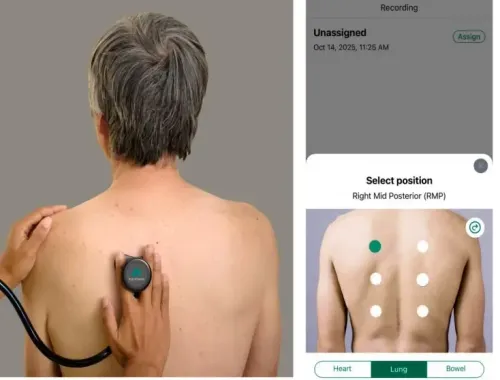
This AI stethoscope incorporates three algorithms tailored to detect heart failure, irregular heart rhythms, and valve disorders during standard appointments.
Throughout the 12-month study period, nearly 13,000 AI-assisted cardiac examinations were conducted by doctors.
While the overall rates of heart failure detection were comparable between both groups (1,342 new cases in the AI group versus 1,984 in the standard care), subgroup analysis indicated that patients evaluated with the AI stethoscope experienced notably higher detection rates compared to those examined without the AI tool.
This trial implies that AI technologies such as smart stethoscopes could facilitate earlier detection of heart issues during routine care, provided that they are seamlessly integrated into everyday clinical practices.
Despite the robust accuracy of the algorithms, the practical benefits heavily relied on clinician involvement and the integration of workflows.
Several practices reported a decline in the usage of the AI stethoscope over time, attributing it to additional steps in routine tasks and limited integration with electronic health records as significant obstacles.
Point of View
I recognize the growing role of AI in healthcare. The study on AI-enabled stethoscopes is a significant advancement, promising to enhance early heart disease detection. However, success hinges on integrating these technologies effectively into clinical practices. The broader implications for primary care and patient outcomes warrant attention as we navigate this evolving landscape.
NationPress
29 Sept 2026
Frequently Asked Questions
How does the AI-enabled stethoscope work?
The AI-enabled stethoscope uses advanced algorithms to detect conditions like heart failure, arrhythmias, and valve disease during routine examinations, enhancing diagnostic accuracy.
What were the key findings of the TRICORDER trial?
The TRICORDER trial demonstrated that the AI stethoscope significantly improved early detection rates for heart diseases, allowing for faster diagnoses compared to traditional methods.
What challenges does AI technology face in primary care?
Despite its potential, the integration of AI tools into primary care workflows remains challenging due to clinician engagement and existing operational processes.