Can AI-powered digital stethoscopes bridge screening gaps?
Synopsis
Discover how AI-enabled digital stethoscopes are revolutionizing TB screening in remote areas. This innovative technology promises to enhance detection rates and democratize access to healthcare, particularly in underserved regions.
Key Takeaways
AI-enhanced stethoscopes can significantly improve TB screening accuracy.
Digital technology can bridge access gaps in underserved areas.
AI has the potential to identify previously undetectable acoustic biomarkers.
Reducing costs and enhancing accessibility are crucial in TB detection efforts.
Global collaboration is essential for further development and validation.
New Delhi, Feb 6 (NationPress) As tuberculosis (TB) remains the most lethal infectious disease worldwide, a recent study has revealed that artificial intelligence (AI)-powered digital stethoscopes could effectively close significant screening gaps, particularly in remote areas.
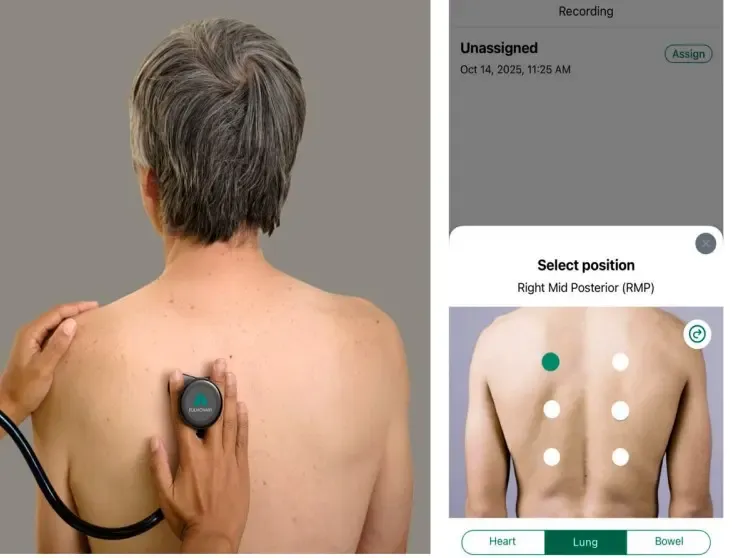
In a commentary featured in the journal Med (Cell Press), leading global experts argued that the integration of stethoscopes with digital technology and AI presents a superior solution to the obstacles encountered in screening programs, such as under-detection, exorbitant costs, and unequal access.
“AI-enhanced digital stethoscopes have shown remarkable accuracy and practicality in identifying lung and cardiovascular issues, yielding promising outcomes in initial TB research. It is crucial to train and validate this tool in diverse, high-burden environments to fully realize its potential,” stated corresponding author Madhukar Pai from McGill University, Canada, alongside researchers from the UAE, Germany, and Switzerland.
Despite advancements in screening and diagnostic technologies, approximately 2.7 million individuals with TB were overlooked by existing programs, according to the World Health Organization (WHO). Standard symptom screenings are also likely to miss individuals with asymptomatic or subclinical TB.
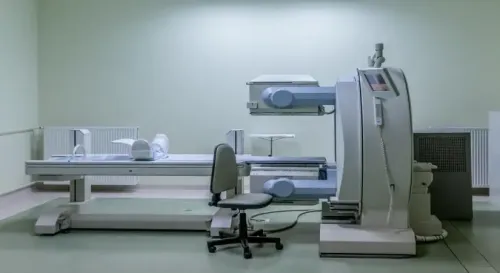
While the WHO has recently endorsed several AI-driven computer-aided detection (CAD) software and ultra-portable radiography equipment, the high operational costs and initial hardware investments deter widespread adoption.
This is particularly challenging in primary care settings and among pregnant women due to radiation risks.
Researchers noted that AI has demonstrated significant promise for screening, with applications extending beyond CAD for TB from radiographs.
“One innovative application of AI in disease screening is the interpretation of acoustic (sound) biomarkers, which can potentially identify sounds that may appear nonspecific or are inaudible to human ears,” they elaborated, emphasizing the potential of AI in recognizing and interpreting cough biomarkers and lung auscultation for analyzing breath sounds.
Studies from nations heavily burdened by TB, such as India, Peru, South Africa, Uganda, and Vietnam, indicated that AI-enabled auscultation could serve as a valuable TB screening and triage instrument.
“AI digital stethoscopes might emerge as beneficial alternatives to imaging-based methods for TB screening, with the capacity to democratize healthcare access for populations underserved by radiography,” the researchers noted.
“Crucially, AI digital stethoscopes provide a scalable, affordable, and patient-centered solution that could help us achieve TB case detection objectives,” they added.
Point of View
It is clear that the integration of AI technology in healthcare is not just a trend but a necessity. With TB remaining a global health crisis, the promise of AI-driven solutions like digital stethoscopes could significantly alter the landscape of disease detection, making healthcare more accessible to those who need it most.
NationPress
27 Sept 2026
Frequently Asked Questions
What is the role of AI in digital stethoscopes?
AI enhances digital stethoscopes by improving their ability to detect and analyze lung and cardiovascular abnormalities, thus aiding in the early diagnosis of conditions like TB.
How can digital stethoscopes improve TB screening?
Digital stethoscopes equipped with AI can identify acoustic biomarkers of disease, potentially improving detection rates, especially in hard-to-reach areas.
Why are current TB screening programs insufficient?
Current programs often miss cases due to under-detection and high costs, leaving millions undiagnosed, particularly those with asymptomatic TB.
What challenges do healthcare providers face with existing screening methods?
High operational costs and concerns about radiation exposure in traditional imaging methods limit their use, especially in primary care and among vulnerable populations.
What impact could AI digital stethoscopes have on healthcare access?
AI digital stethoscopes could democratize access to TB screening, providing a low-cost, scalable solution for populations that are currently underserved.