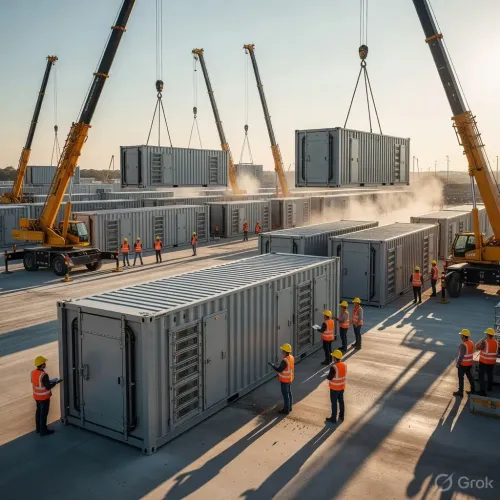
Alibaba Cloud launches Brazil data centres, eyes Latin America AI push

Synopsis
Alibaba Cloud opened two data centres in Brazil on 27 August 2026, its first in South America, bringing its global footprint to 106 availability zones across 31 regions and directly challenging Amazon and Microsoft with agentic AI services in one of the world's fastest-growing digital economies.
Key Takeaways
Alibaba Cloud launched two data centres in Brazil on 27 August 2026 , its first in South America .
The facilities offer “agentic AI services” alongside secure cloud infrastructure for enterprises, start-ups, developers, and public institutions.
Alibaba Cloud now operates 106 availability zones across 31 regions globally, according to the company.
The Brazil launch follows the opening of a Mexico facility in early 2025 , Alibaba 's first in Latin America .
Allen Guo , Alibaba Cloud 's general manager for Latin America and vice-president of international business , described Brazil as “one of the world’s most dynamic digital economies.” Local partner 4Linux is part of Alibaba Cloud 's growing ecosystem in the region.
Alibaba Cloud has opened its first data centres in Brazil, marking the Hangzhou-based technology giant's most significant step yet into South America as it races to extend its artificial intelligence infrastructure footprint across emerging markets. The announcement, made on Thursday, 27 August 2026, positions Alibaba Group Holding as a direct competitor to Amazon and Microsoft in one of the world's fastest-growing digital economies.
What was announced
The new Brazilian venture will operate two data centres offering local enterprises secure cloud infrastructure and a suite of “agentic AI services,” according to the company. The facilities are engineered for low latency, resilience, and data governance, catering to mission-critical workloads across enterprises, start-ups, developers, and public institutions.
Allen Guo, Alibaba Cloud's general manager for the Latin America region and vice-president of international business, said: “Brazil is one of the world’s most dynamic digital economies and a new market central to Alibaba Cloud's expansion in Latin America.”
Why it matters
The Brazil launch brings Alibaba Cloud's global footprint to 106 availability zones across 31 regions, according to the company. It follows the opening of a Mexico facility in early 2025, which was Alibaba's first data centre anywhere in Latin America. The rapid sequencing of these openings signals a deliberate strategy to lock in enterprise relationships before US-headquartered rivals consolidate their own regional positions.
The move also reflects the broader pressure on Chinese technology firms to diversify revenue geographically, as the US-China AI rivalry intensifies and domestic growth opportunities face structural headwinds.
The competitive backdrop
Amazon Web Services and Microsoft Azure already operate local cloud regions in Brazil, making it one of the most contested cloud markets in Latin America. Alibaba Cloud's entry with a dedicated agentic AI portfolio — rather than generic compute — suggests it is targeting the AI workload segment specifically, where differentiation is still possible.
Local technology integrators, including 4Linux, are reportedly part of Alibaba Cloud's growing partner ecosystem in the region, which the company said would help connect Brazilian enterprises to its global network.
What’s next
With a presence now established in both Mexico and Brazil — the two largest economies in Latin America — Alibaba Cloud is expected to deepen its regional partner network and expand its agentic AI service catalogue. The company's stated ambition is to power Brazilian enterprises' AI capabilities at scale, and the pace of its infrastructure rollout suggests further regional announcements could follow in the near term.
Point of View
Brazil in August 2026 — reads less like organic market development and more like a deliberate flanking manoeuvre in the US-China tech rivalry, targeting geographies where Washington's export controls have limited reach and where Chinese vendors face fewer political headwinds. The framing around “agentic AI services” is notable: it positions Alibaba not as a commodity compute provider but as an AI solutions vendor, which commands higher margins and stickier enterprise relationships. Mainstream coverage tends to treat these announcements as straightforward expansion stories, but the subtext is a race to establish data sovereignty partnerships with governments and large enterprises before the next round of US technology restrictions redraws the competitive map. The enterprises most exposed to this dynamic are Brazilian multinationals that now face a genuine three-way choice — AWS, Azure, or Alibaba Cloud — with meaningfully different geopolitical implications attached to each.
NationPress
27 Aug 2026
Frequently Asked Questions
What did Alibaba Cloud announce on 27 August 2026?
Alibaba Cloud announced the launch of its first two data centres in Brazil , offering local enterprises cloud infrastructure and agentic AI services. The move brings the company's global network to 106 availability zones across 31 regions.
Why is Alibaba expanding into Brazil and Latin America?
Alibaba Cloud is targeting emerging markets to diversify revenue and extend its AI infrastructure footprint amid an intensifying US-China AI rivalry. Brazil and Mexico — the two largest economies in Latin America — represent high-growth opportunities where the company can compete with Amazon and Microsoft .
How many data centres does Alibaba Cloud now operate globally?
Alibaba Cloud now has a presence in 106 availability zones across 31 regions worldwide, according to the company, following the Brazil launch.
Who are Alibaba Cloud's main competitors in Brazil?
Amazon Web Services and Microsoft Azure both operate local cloud regions in Brazil , making it one of the most contested cloud markets in Latin America . Alibaba Cloud 's entry with a dedicated agentic AI portfolio targets the AI workload segment where differentiation remains possible.
What are agentic AI services and why is Alibaba offering them in Brazil?
Agentic AI services refer to AI systems capable of autonomously executing multi-step tasks on behalf of users or enterprises. Alibaba Cloud is positioning this offering as a higher-value alternative to generic compute, aiming to build stickier relationships with Brazilian enterprises, start-ups, developers, and public institutions.