Sam Altman Calls for a New Kind of Computer
Synopsis
OpenAI CEO Sam Altman posted on X on 27 July 2026 that he wants 'a new kind of computer,' amplifying industry debate over whether conventional hardware can support the next generation of AI workloads. The remark signals growing pressure on semiconductor and device makers to rethink personal computing from the ground up.
Key Takeaways
Sam Altman , chief executive of OpenAI , posted on 27 July 2026 that he wants 'a new kind of computer,' describing the idea as 'big.' The remark reflects a widely held view in the AI industry that conventional CPU and GPU architectures are insufficient for modern AI inference workloads.
The conversation follows the November 2022 launch of ChatGPT, which rapidly exposed hardware constraints across the industry.
Semiconductor firms and AI developers are the primary stakeholders watching for any follow-up product or partnership announcement from OpenAI.
A shift toward AI-native personal computing could have significant implications for markets like India , where mass-market hardware adoption is accelerating.
OpenAI chief executive Sam Altman expressed enthusiasm on Monday, 27 July 2026, for a fundamentally different kind of personal computing device, posting on X that the idea 'feels big' and that he wants 'a new kind of computer.' The brief but pointed remark has drawn significant attention from the AI and technology community, arriving at a moment when the limits of conventional hardware are a central concern for the industry.
Context
Altman's post — 'agreed feels big, i want a new kind of computer' — reads as a reply or endorsement of a broader conversation already underway on the platform. While the exact thread context remains unclear, the sentiment aligns with a recurring theme in AI circles: that the CPU and GPU architectures underpinning today's personal computers were not designed with large-scale AI inference in mind. The public release of ChatGPT in November 2022 accelerated this realisation, as demand for responsive, on-device AI workloads quickly exposed the constraints of existing silicon.
For Altman, whose company OpenAI sits at the centre of the generative AI wave, the call for new hardware is not merely speculative. The gap between what AI models can do in the cloud and what users can run locally on personal devices remains wide, and closing it would require rethinking the machine itself — from memory hierarchies to chip design to form factor.
Policy Backdrop
The global semiconductor industry has been in the midst of a realignment since the AI boom began in earnest. Governments, including those of the United States and India, have invested heavily in domestic chip manufacturing capacity, recognising that compute infrastructure is now a strategic asset. India's own semiconductor mission, backed by thousands of crore in public funding, reflects this shift.
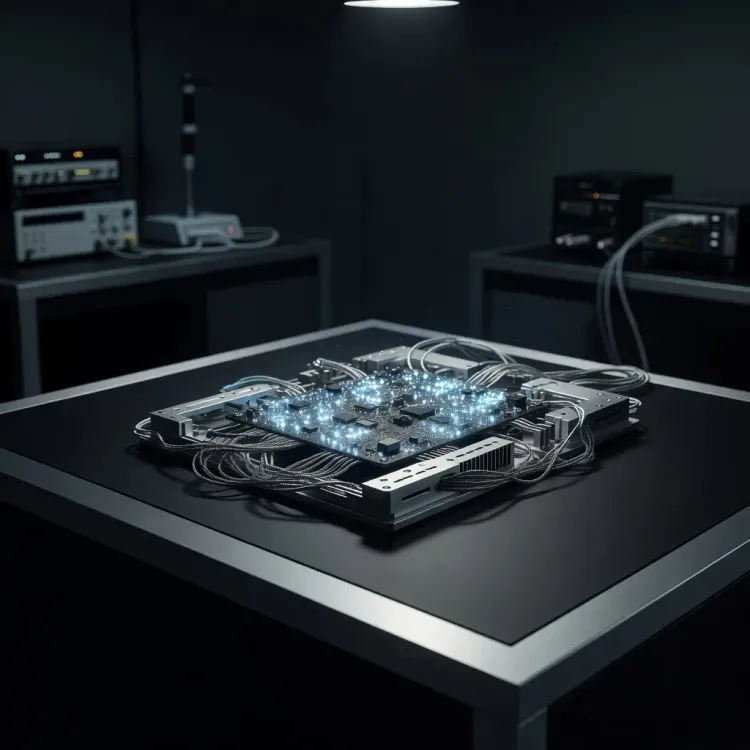
Within the industry, the push toward custom silicon — purpose-built chips optimised for AI inference rather than general-purpose computation — has gained momentum. Altman's remark, even in its brevity, signals that the conversation has moved beyond chip speed to the question of what a personal computing device should fundamentally look like in an AI-native world.
Stakeholders and Impact
AI developers stand to benefit most immediately from hardware that can run large models efficiently at the edge — on a laptop, a phone, or an entirely new device category. Semiconductor firms, both established players and startups, are watching statements like Altman's closely, as endorsement from the head of one of the world's most influential AI companies can shape investment and product roadmaps.
For everyday users, the promise of a 'new kind of computer' points toward devices that could handle sophisticated AI tasks locally, without relying on cloud connectivity — with implications for privacy, latency, and cost. In a market like India, where hundreds of millions of users are coming online on mid-range hardware, a rethink of the personal computing form factor could have outsized impact.
What's Next
Attention will now turn to whether Altman or OpenAI follow up with specifics — whether through a product announcement, a partnership with a chip or device maker, or a more detailed articulation of what this 'new kind of computer' might look like. Any signal from OpenAI's hardware or research partners in the coming weeks will be closely watched by developers, investors, and policymakers alike.
The broader pattern is clear: progress in generative AI has consistently outpaced the hardware designed to run it, and the industry's most prominent voices are now openly calling for a new architecture. Altman's post may be brief, but it reflects a conviction that the next era of personal computing has yet to be built.
Point of View
Device makers, and investors. It also fits a broader arc in which AI capability has repeatedly lapped the hardware meant to deliver it, forcing the industry to confront whether incremental silicon improvements are enough. The next move — whether a product, a partnership, or a research disclosure — will determine whether this post marks the start of something concrete or remains a compelling but unfulfilled aspiration.
NationPress
25 Oct 2026
Frequently Asked Questions
What did Sam Altman say about a new computer?
Sam Altman posted on X on 27 July 2026 that he wants 'a new kind of computer,' agreeing with a sentiment that the idea 'feels big.' The post signals his view that current personal computing hardware is inadequate for the AI era.
Why does OpenAI want new computer hardware?
Conventional CPU and GPU architectures were not designed for large-scale AI inference. As generative AI models have grown more powerful, the gap between cloud-based AI capability and what personal devices can run locally has widened, driving calls for purpose-built AI hardware.
What is a new kind of computer for AI?
In the context of the AI industry, a 'new kind of computer' typically refers to a personal device built around custom silicon, new memory architectures, and form factors optimised for running AI models efficiently without relying on cloud connectivity.
How does Sam Altman's post affect semiconductor companies?
Statements from the OpenAI CEO carry significant weight with chip designers and device makers. An endorsement of next-generation AI hardware from Altman can influence investment priorities and product roadmaps across the semiconductor industry.
What does AI hardware development mean for India?
India is investing heavily in domestic semiconductor manufacturing and has a large and growing base of users on mid-range personal devices. A new generation of AI-optimised personal computers could expand access to sophisticated AI tools for hundreds of millions of Indian users.