ANRF launches patent filing training portal for researchers and innovators
Synopsis
India's Anusandhan National Research Foundation is stepping beyond funding into capacity-building — its new digital portal targets one of the most persistent gaps in Indian research: the ability to file patents and publish findings. For a country that lags China and South Korea on domestic patent filings, this is a ground-level intervention that could matter more than headline grant numbers.
Key Takeaways
The Anusandhan National Research Foundation (ANRF) has announced a digital portal for patent filing training and research paper writing support .
The portal targets researchers, students, and innovators across India, covering IP protection and publication processes.
The announcement was made by MoS Dr.
Jitendra Singh on 4 June at a Joint Review Meeting of DST, DBT, DSIR, and MoES .
The minister directed structured inter-departmental information-sharing mechanisms to be established across laboratories.
Singh called for greater use of digital platforms and social media to communicate scientific achievements to citizens and startups.
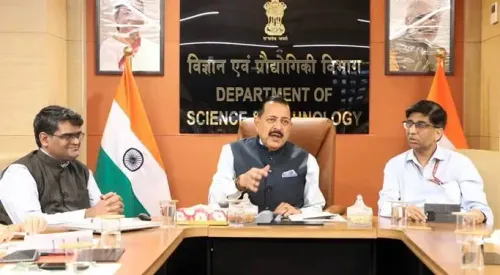
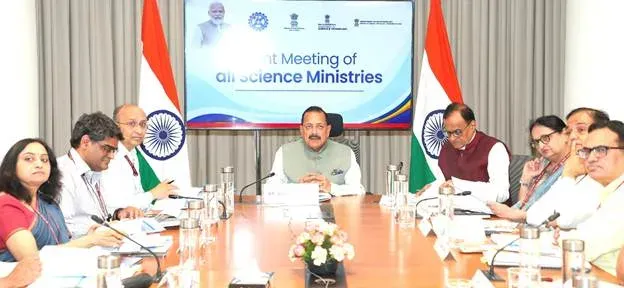
The Anusandhan National Research Foundation (ANRF) has announced a new digital portal designed to support training in patent filing and research paper writing for researchers, students, and innovators across India. Union Minister of State for Science and Technology Dr. Jitendra Singh made the announcement on Thursday, 4 June, underscoring the government's push to strengthen the country's research and innovation ecosystem.
What the Portal Offers
The ANRF-backed platform will provide structured guidance on scientific writing, publication processes, intellectual property (IP) protection, and patent-related procedures. According to Dr. Singh, improved access to these resources is expected to raise the quality of research output and help scientists and innovators convert their work into publishable papers and registered intellectual property assets.
Key Developments at the Joint Review Meeting
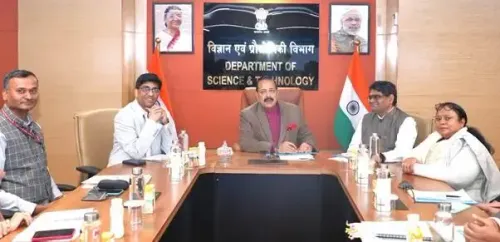
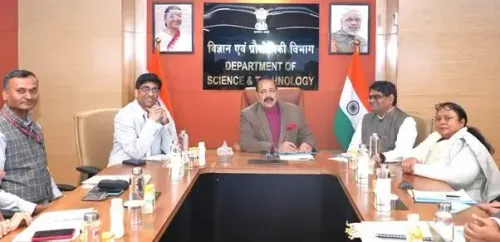
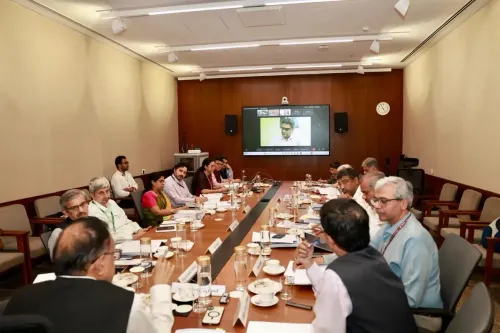
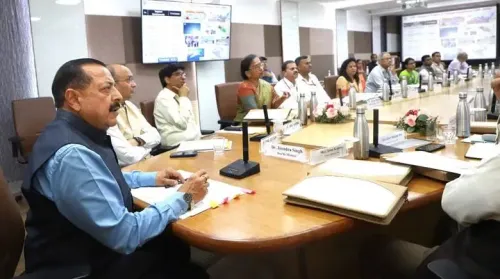
The announcement came during a Joint Review Meeting chaired by Dr. Singh, which brought together senior officials from the Department of Science and Technology (DST), Department of Biotechnology (DBT), Department of Scientific and Industrial Research (DSIR), and the Ministry of Earth Sciences (MoES). The meeting reviewed progress on major scientific initiatives, institutional coordination, science administration reforms, and preparations for upcoming national science programmes.
Notably, the minister directed that structured mechanisms be established for laboratories and institutions to regularly share information on major projects, technological achievements, and institutional capabilities — so that expertise within one department can be effectively leveraged by others.
Push for Collaboration and Digital Outreach
Dr. Singh emphasised that scientific organisations operating under different departments must function in a collaborative and integrated manner to maximise the returns on public investment in science and technology. He also called for greater use of digital platforms, social media, and emerging communication tools to present scientific achievements in ways accessible to citizens, students, startups, and researchers.
The minister suggested that every review mechanism should include rotational presentations of notable scientific achievements from laboratories and institutions — a move aimed at fostering cross-departmental learning and visibility.
Broader Context
India has been working to improve its global ranking in innovation indices, with patent filings from domestic researchers remaining a persistent gap compared to peers like China and South Korea. The new ANRF portal is positioned as a capacity-building intervention targeting this gap at the grassroots level — reaching young researchers and first-time innovators who often lack access to professional IP guidance.
With the ANRF having been formally constituted under its own Act to serve as India's apex science funding body, this portal marks one of its early operational steps toward building a research-ready workforce. Further details on portal access and rollout timelines are expected to be announced in the coming weeks.
Point of View
If overdue, intervention — India's patent-filing culture among academic researchers has long lagged its volume of scientific output. The real question is reach: structured IP training has existed in pockets at premier institutions like IITs and IISc for years, but has rarely penetrated state universities and smaller research bodies where the gap is widest. Whether ANRF's digital platform can bridge that divide depends entirely on language accessibility, active institutional adoption, and follow-through beyond the announcement. The Joint Review Meeting's emphasis on inter-departmental collaboration is also worth watching — India's science ministries have historically operated in silos, and a structural nudge toward integration, if sustained, could meaningfully reduce duplication of research investment.
NationPress
22 Sept 2026
Frequently Asked Questions
What is the ANRF patent filing training portal?
It is a digital platform backed by the Anusandhan National Research Foundation (ANRF) that provides structured training in patent filing, intellectual property protection, scientific writing, and research publication processes. It is aimed at researchers, students, and innovators across India.
Who announced the ANRF portal and when?
Union Minister of State for Science and Technology Dr. Jitendra Singh announced the portal on 4 June at a Joint Review Meeting of DST, DBT, DSIR, and the Ministry of Earth Sciences.
Why does India need a dedicated patent filing training portal?
India's domestic patent filing rates have historically lagged behind countries like China and South Korea despite a large base of scientific researchers. Many researchers, particularly outside premier institutions, lack access to professional IP guidance, making capacity-building portals like this one critical for translating research into registered intellectual property.
Which government departments were represented at the Joint Review Meeting?
The meeting brought together the Department of Science and Technology (DST), Department of Biotechnology (DBT), Department of Scientific and Industrial Research (DSIR), and the Ministry of Earth Sciences (MoES), chaired by Dr. Jitendra Singh.
What other directions did Dr. Jitendra Singh give at the meeting?
Dr. Singh directed the establishment of structured inter-departmental information-sharing mechanisms among laboratories, called for rotational presentations of scientific achievements at review meetings, and urged greater use of digital platforms and social media to communicate science to citizens, students, and startups.