Wheeled robots gain ground at Beijing WRC 2026 over humanoids
Synopsis
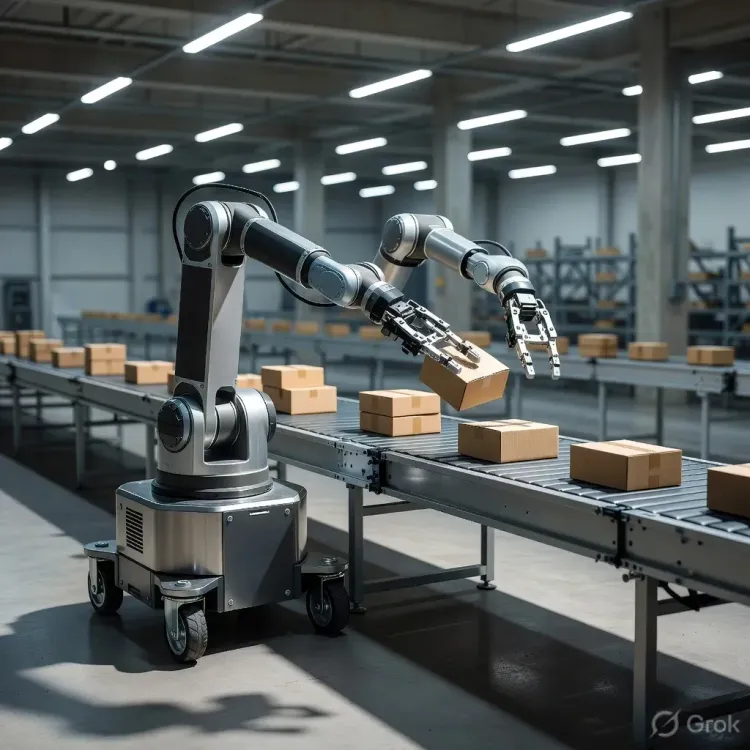
At WRC 2026 in Beijing, wheeled and task-specific robots quietly upstaged humanoid spectacles — with China's X Square Robot claiming its WALL-B sorted 1,816 packages per hour, outperforming US rival Figure AI's bipedal Figure 03 at 1,248. Practicality, it turns out, may beat performance art.
Key Takeaways
World Robot Conference (WRC) 2026 took place in Beijing , with humanoid robots drawing large crowds but wheeled machines gaining serious traction for industrial use.
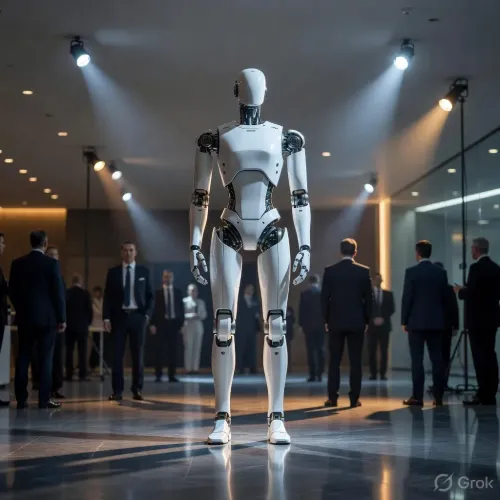
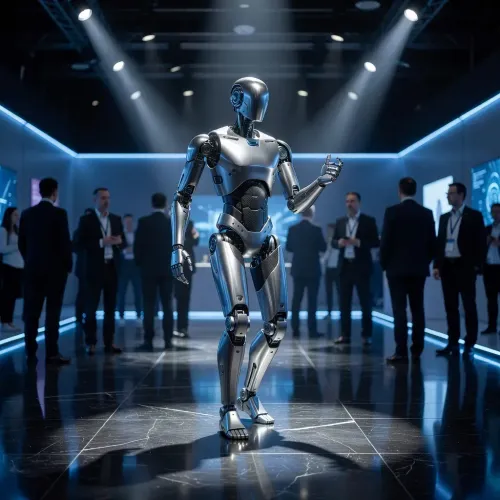
Unitree Robotics showcased bipedal robots playing table tennis and sparring, demonstrating rapid advances in balance and coordination.
X Square Robot 's WALL-B two-armed model sorted 1,816 packages per hour in a controlled test, according to the company.
Figure AI 's bipedal Figure 03 averaged 1,248 parcels per hour in the same benchmark comparison cited by X Square Robot.
AI2 Robotics demonstrated a wheeled robot making coffee and ice cream at the conference, using interchangeable gripper and dexterous-hand end effectors.
Industry voices, including X Square Robot senior engineer Yang Li , argue that industrial buyers prioritise payload, reliability and ROI over bipedal novelty.
At the World Robot Conference (WRC) in Beijing on 23 August 2026, humanoid robots drew crowds but wheeled and task-specific machines emerged as the more compelling industrial proposition, signalling a pragmatic turn in China's rapidly maturing robotics sector.
Humanoids still dazzle, but the floor tells a different story
Unitree Robotics' booth remained one of the conference's biggest attractions, with bipedal models playing table tennis and engaging in fighting demonstrations — a showcase of speed, balance and coordination that would have been unthinkable just a few years ago. Yet beyond that spectacle, the broader exhibition floor painted a contrasting picture: robots sorting parcels, loading production lines and ferrying materials, most of them rolling on wheels rather than walking on legs.
Why it matters: ROI over spectacle
Yang Li, senior engineer at start-up X Square Robot, framed the divide bluntly: 'If wheels can get the job done, do we really need two legs?' He argued that while bipedal robots impress spectators with punching, running and jumping, industrial buyers ultimately prioritise payload capacity, reliability and return on investment. The comment captures a sentiment increasingly voiced across the sector as robots transition from demonstration to deployment.
The competitive backdrop: Chinese vs US performance benchmarks
According to X Square Robot, its two-armed WALL-B embodied model sorted 1,816 packages during a controlled, hour-long test conducted this month — outpacing the bipedal Figure 03 robot from US start-up Figure AI, which handled an average of 1,248 parcels per hour. The comparison, while controlled and company-reported, illustrates how Chinese makers are benchmarking themselves directly against prominent American rivals on hard operational metrics rather than visual flair.
Multi-function robots move beyond the factory floor
AI2 Robotics, another Chinese start-up present at the WRC, demonstrated a wheeled robot preparing coffee and ice cream for conference visitors. The machine deployed different end effectors for different tasks — a gripper on one arm and a dexterous hand on the other — highlighting how modularity and adaptability are becoming as important as locomotion in real-world deployments.
What's next: deployment over demonstration
The shift on display at WRC 2026 suggests the Chinese robotics industry is entering a new phase where commercial viability, not engineering ambition, sets the agenda. Companies that can prove consistent throughput, low downtime and measurable cost savings will be best positioned as enterprise buyers begin scaling up orders. Investors and procurement teams at global logistics and manufacturing firms should watch closely how performance benchmarks from events like WRC translate into contracted deployments over the next 12 to 18 months.
Point of View
However controlled, are shaping procurement conversations at global logistics firms. The real risk for humanoid-first companies is not that the technology fails, but that wheeled and hybrid robots capture the enterprise installed base before bipedal machines achieve cost parity.
NationPress
23 Aug 2026
Frequently Asked Questions
What happened at the World Robot Conference 2026 in Beijing?
The World Robot Conference (WRC) 2026 in Beijing featured humanoid robots as crowd attractions, but wheeled and task-specific robots dominated the industrial exhibits, sorting parcels, loading production lines and serving food to visitors. The event signalled a shift in China's robotics industry from demonstration-focused showcases toward deployment-ready commercial solutions.
How does X Square Robot's WALL-B compare to Figure AI's Figure 03?
According to X Square Robot , its two-armed WALL-B model sorted 1,816 packages per hour in a controlled test, compared with an average of 1,248 parcels per hour for Figure AI 's bipedal Figure 03 . The comparison was company-reported and conducted under controlled conditions this month.
Why are wheeled robots gaining over humanoid robots in industry?
Industrial buyers prioritise payload capacity, reliability and return on investment over visual appeal, according to Yang Li , senior engineer at X Square Robot . Wheeled robots can often match or exceed humanoid performance on specific tasks at lower complexity and cost, making them more attractive for logistics and manufacturing deployments.
What did AI2 Robotics demonstrate at WRC 2026?
AI2 Robotics showed a wheeled robot making coffee and ice cream for conference visitors at WRC 2026 . The machine used interchangeable end effectors — a gripper on one arm and a dexterous hand on the other — to handle multiple task types, illustrating a modular approach to service robotics.
What is Unitree Robotics known for at robot conferences?
Unitree Robotics is known for high-energy bipedal robot demonstrations; at WRC 2026 , its booth featured models playing table tennis and competing in fighting matches. The displays highlighted rapid advances in robotic speed, balance and coordination achieved over the past few years.