Xpeng CEO He Xiaopeng takes direct control of robotics unit ahead of mass production
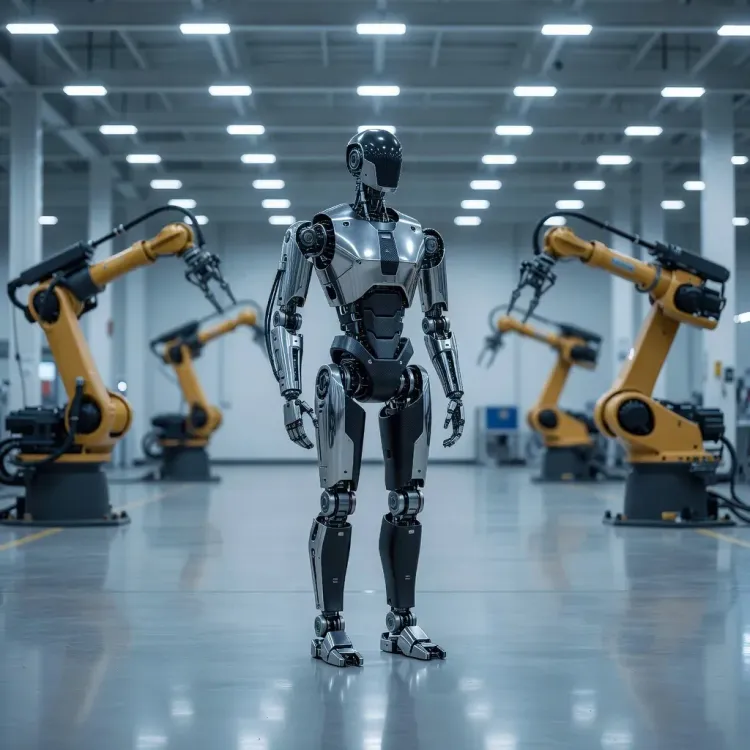
Synopsis
Xpeng CEO He Xiaopeng has personally taken charge of the company's robotics division, calling it a historic turning point as humanoid robot Iron edges toward mass production — a move that reframes Xpeng as a 'physical AI' company, not just an EV maker.
Key Takeaways
He Xiaopeng , chairman and CEO of Xpeng , assumed direct leadership of the company's robotics unit via an internal memo on 11 June 2026 .
He described the division as reaching 'a turning point in its history' on the eve of mass production and commercialisation of humanoid robots.
The flagship humanoid robot, named Iron , is reportedly proceeding on schedule despite recent leadership changes.
Senior director for product planning Shi Xiaoxin resigned from the robotics department citing 'personal career adjustments' , according to National Business Daily .
He disclosed spending at least one full day per week on robotics operations over the past year before formally taking the helm.
Xpeng chairman and CEO He Xiaopeng has assumed personal leadership of the Chinese electric vehicle maker's robotics division, signalling a sharp strategic escalation as the company's humanoid robot Iron approaches mass production. The move, disclosed in an internal memo circulated on Wednesday, 11 June 2026, positions Xpeng to compete directly in the fast-accelerating global humanoid robotics race.
A strategic pivot at a critical juncture
In the memo, He described the robotics unit as having reached 'a turning point in its history', stating it 'ushers in the eve of mass production and commercialisation.' By stepping in as department head, the billionaire founder is making clear that robotics is no longer a side project — it is central to Xpeng's long-term identity as a 'physical AI' powerhouse.
The declaration echoes a broader ambition He has articulated over the past year: to evolve Xpeng beyond electric vehicles into a company that embeds artificial intelligence into physical machines — cars and humanoids alike.
Leadership change follows senior departure
The reshuffle comes on the heels of the resignation of Shi Xiaoxin, the robotics department's senior director for product planning, who stepped down citing 'personal career adjustments', according to a report by Chinese news outlet National Business Daily. An Xpeng representative was quoted as confirming that the flagship humanoid robot Iron was 'moving forward as planned', seeking to reassure stakeholders that the leadership transition would not disrupt the production timeline.
Why it matters
He's hands-on involvement is not entirely new — he disclosed that over the past year he had dedicated at least one full day each week to robotics operations. Formalising that engagement as an official leadership role, however, raises the stakes considerably, both internally and for investors watching Xpeng's diversification play.
The humanoid robotics segment is drawing intense capital and talent globally, with competitors ranging from Tesla's Optimus programme to a clutch of well-funded Chinese startups. Xpeng's advantage lies in its existing autonomous-driving software stack and its experience scaling hardware manufacturing — competencies that transfer directly to humanoid development.
What's next
With mass production described as imminent, the next critical milestones for Xpeng will be the commercial deployment terms for Iron and whether the company can demonstrate unit economics that justify the investment. Investors and industry analysts will be watching closely to see whether He's direct oversight accelerates the timeline or signals deeper operational challenges that required founder intervention.
Point of View
Or that the opportunity is deemed too strategically vital to delegate — and in this case, both readings may be simultaneously true. The timing is notable: China's humanoid robotics sector is entering a brutal consolidation phase, where first-mover manufacturing scale will determine survivors, and a senior product-planning exit just before mass production is exactly the kind of instability that can unravel launch timelines. What mainstream coverage underplays is that Xpeng's real edge is not the robot itself but its autonomous-driving AI stack, which provides a ready-made sensorimotor intelligence layer that pure-play robotics startups must build from scratch. If He can transfer that software moat into Iron's commercialisation, Xpeng could leapfrog better-funded rivals — but the window is narrow and the execution risk is now squarely on the founder's shoulders.
NationPress
29 Jul 2026
Frequently Asked Questions
Why did He Xiaopeng take over Xpeng's robotics unit?
He Xiaopeng took direct charge of Xpeng 's robotics department to personally steer the division through what he called 'a turning point in its history' as it approaches mass production of humanoid robots. The move reflects the strategic centrality of robotics to Xpeng 's long-term vision as a 'physical AI' company.
What is Xpeng's humanoid robot Iron?
Iron is Xpeng 's flagship humanoid robot, currently on track for mass production and commercialisation according to a company representative. An Xpeng spokesperson confirmed the robot was 'moving forward as planned' despite recent leadership changes in the robotics division.
Who is Shi Xiaoxin and why did they leave Xpeng?
Shi Xiaoxin was the senior director for product planning in Xpeng 's robotics department and resigned citing 'personal career adjustments' , according to a report by National Business Daily . The departure preceded He Xiaopeng 's formal assumption of leadership over the unit.
How does Xpeng's robotics push fit into its broader strategy?
Xpeng is pursuing a diversification strategy that extends its electric vehicle and autonomous-driving expertise into humanoid robotics under the umbrella of 'physical AI.' He Xiaopeng has reportedly dedicated at least one full day per week to robotics operations over the past year, underlining how seriously the company treats the pivot.
How does Xpeng compare to rivals in humanoid robotics?
Xpeng competes in a crowded field that includes Tesla 's Optimus programme and multiple well-funded Chinese robotics startups. Xpeng 's differentiator is its existing autonomous-driving software stack, which can potentially be adapted for humanoid sensorimotor control — giving it a development head-start over pure-play robotics entrants.