Ayush Ministry reviews global health codes for Ayurveda, Siddha, Unani systems
Synopsis
India is building a globally standardised coding vocabulary for Ayurveda, Siddha, and Unani clinical interventions — backed by a formal WHO agreement. If adopted internationally, these codes could integrate traditional medicine into global insurance, research, and digital health systems for the first time.
Key Takeaways
The Ministry of Ayush held a high-level review on 25–26 May 2025 to develop ICHI and NHIC codes for Ayurveda, Siddha, and Unani systems.
The initiative is backed by a formal MoU and Donor Agreement between the Ministry of Ayush and the WHO .
The goal is a globally standardised coding vocabulary enabling cross-border data exchange, clinical research, and insurance integration.
WHO SEARO representatives participated, signalling active international engagement.
Separate coding frameworks — NHICA , NHICS , and NHICUM — were presented for Ayurveda, Siddha, and Unani respectively.
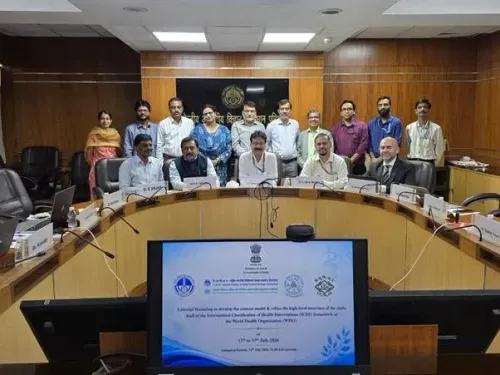
The Ministry of Ayush on Wednesday, 27 May 2025, announced the conclusion of a high-level review meeting and consultative discussions held on 25 and 26 May in online mode, focused on developing the International Classification of Health Interventions (ICHI) and National Health Intervention Codes (NHIC) for Ayurveda, Siddha, and Unani (ASU) systems of medicine. The initiative, backed by a formal agreement with the World Health Organisation (WHO), aims to create a globally standardised coding vocabulary for traditional medicine clinical interventions.
Background and Strategic Objective
The effort follows a landmark Memorandum of Understanding (MoU) and Donor Agreement signed between the Ministry of Ayush and the WHO. The core objective is to build a scientifically robust, internationally aligned classification system for ASU clinical interventions that can enable cross-border data exchange, support clinical research, and improve interoperability across global healthcare systems — including integration with insurance frameworks.
This comes amid a broader global push to formally recognise and integrate traditional medicine into mainstream health data infrastructure, a priority the WHO has championed through its Traditional Medicine Strategy.
What the Government Said
The meeting was chaired by Vaidya Rajesh Kotecha, Secretary, Ministry of Ayush, who stressed the strategic importance of aligning intervention classifications with international standards. He said the initiative would help embed traditional medicine systems into global healthcare frameworks, improve clinical documentation, and strengthen interoperability within digital health ecosystems.
Dr. Kavita Jain, Joint Secretary, Ministry of Ayush, highlighted the significance of standardised intervention terminology for building evidence-based traditional medicine practice. The inaugural session opened with welcome remarks by Dr. N. Srikanth, Deputy Director General of the Central Council for Research in Ayurvedic Sciences (CCRAS).
WHO Participation and Global Relevance
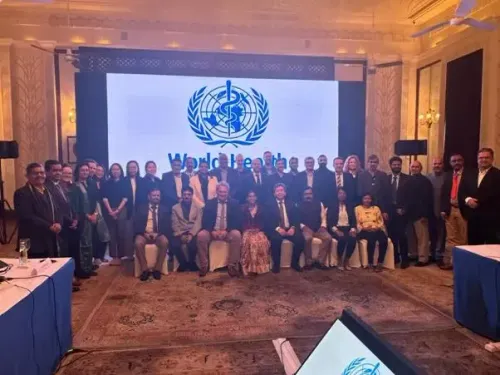
Dr. Pawan Godatwar, Technical Officer at the WHO South-East Asia Regional Office (SEARO), and Dr. Geetha Krishnan, Unit Head at GTMC Jamnagar, participated in the discussions and addressed the global relevance of standardised coding systems for traditional medicine. Their involvement signals active WHO engagement in anchoring ASU systems within internationally recognised health data frameworks.
Technical Presentations on Coding Frameworks
Detailed technical presentations on four-level hierarchical coding directories were delivered by the respective research councils. Prof. Vaidya Rabinarayan Acharya, Director General of CCRAS, presented the Ayurveda coding framework (NHICA). Prof. Dr. N. J. Muthukumar, Director General of CCRS, presented the Siddha intervention classification system (NHICS). Dr. N. Zaheer Ahmed, Director General of CCRUM, presented the Unani coding framework (NHICUM).
Impact on Traditional Medicine Systems
Once finalised, the NHIC frameworks could meaningfully transform how ASU interventions are recorded, billed, and researched — both domestically and internationally. Standardised codes would allow Indian traditional medicine data to interface with global health databases, opening pathways for insurance reimbursement and cross-country clinical studies. The next phase is expected to involve wider stakeholder consultations before the codes are formally submitted for international adoption.
Point of View
Siddha, and Unani interventions in a WHO-compatible framework is more consequential than it appears. Standardised classification is the gateway to insurance reimbursement, clinical trial eligibility, and cross-border health data exchange — all of which have so far been structurally closed to traditional medicine. The real test will be whether the NHIC codes achieve WHO-level international adoption or remain a well-intentioned domestic taxonomy. Past efforts at formalising AYUSH within global health architecture have stalled at the validation stage; this MoU-backed process has more institutional backing than its predecessors, but the path from hierarchical coding directories to globally recognised intervention standards is long and contested.
NationPress
10 Oct 2026
Frequently Asked Questions
What are the ICHI and NHIC codes being developed by the Ayush Ministry?
The ICHI (International Classification of Health Interventions) and NHIC (National Health Intervention Codes) are standardised coding frameworks being developed for Ayurveda, Siddha, and Unani clinical interventions. They are designed to enable cross-border health data exchange, support clinical research, and allow integration with global insurance systems.
What is the role of WHO in this initiative?
The WHO is a formal partner in this initiative through an MoU and Donor Agreement signed with the Ministry of Ayush. WHO representatives from the South-East Asia Regional Office and GTMC Jamnagar participated in the May 2025 discussions, underlining the global relevance of standardised traditional medicine coding.
Which systems of medicine are covered under the NHIC framework?
The framework covers three traditional medicine systems — Ayurveda (NHICA), Siddha (NHICS), and Unani (NHICUM) — each with its own four-level hierarchical coding directory presented by the respective national research councils.
Why does standardised coding matter for traditional medicine?
Standardised codes allow ASU interventions to be documented, billed, and researched in a format compatible with global health databases. This is essential for insurance integration, clinical trial participation, and interoperability with international digital health ecosystems — areas where traditional medicine has historically lacked formal recognition.
Who chaired the Ayush Ministry review meeting on traditional medicine codes?
The meeting was chaired by Vaidya Rajesh Kotecha, Secretary, Ministry of Ayush, who emphasised the strategic importance of internationally aligned intervention classifications for integrating traditional medicine into global healthcare frameworks.