Bengaluru Must Become Agri Tech Hub, Says CM Siddaramaiah
Synopsis
CM Siddaramaiah wants Bengaluru to lead India's agri-tech revolution the way it dominates IT. With Rs 70,000 crore in farm loans, a revived Krishi Bhagya scheme, and a bold AI-in-farming push, Karnataka is betting big — but can policy promises actually stop youth from fleeing agriculture?
Key Takeaways
CM Siddaramaiah inaugurated the Global Agri Tech Summit-2026 in Bengaluru on April 25, 2025 , organised by FKCCI .
The Chief Minister called for Bengaluru to become India's agricultural technology capital , leveraging AI and modern farming innovations.
The Karnataka government has disbursed Rs 70,000 crore in agricultural loans to approximately 83 lakh farmers .
Rs 8,000 crore was allocated for infrastructure development under the Chief Minister's programme in the previous year.
The Krishi Bhagya scheme has been revived by the Siddaramaiah government after allegedly being halted by the previous BJP administration .
Karnataka ranks second among Indian states in terms of dry land extent, making agri-tech investment especially critical for the state.
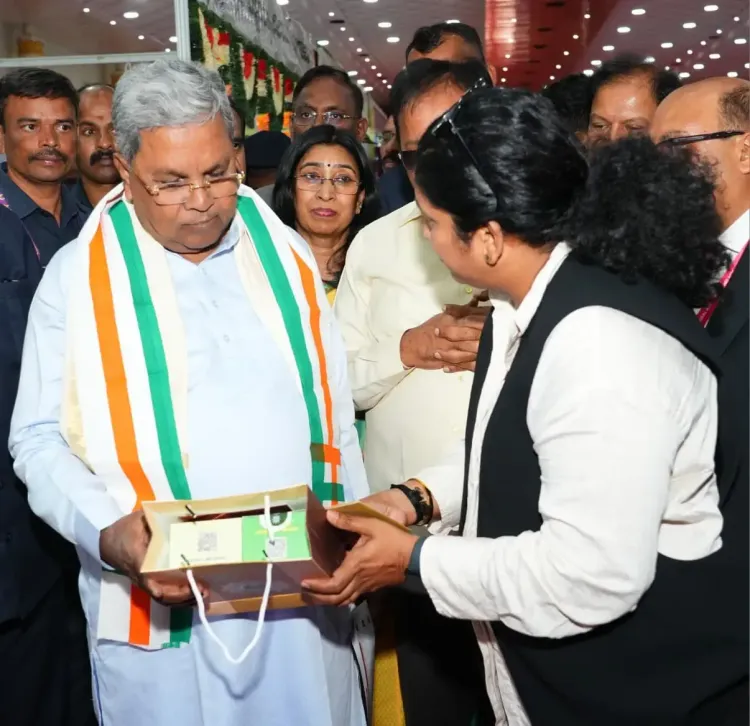
Karnataka Chief Minister Siddaramaiah on Friday, April 25, 2025, declared that Bengaluru must evolve into the nation's agricultural technology capital, mirroring its globally recognised status as an IT powerhouse. Speaking at the inauguration of the Global Agri Tech Summit-2026 in Bengaluru, he stressed that cutting-edge agricultural innovations must penetrate down to the grassroots level, reaching every individual farmer across Karnataka and beyond.
CM Siddaramaiah's Vision for Agri Tech Leadership
Chief Minister Siddaramaiah made a compelling case for positioning Bengaluru as the nerve centre of agricultural technology in India, drawing a direct parallel with the city's dominance in the global information technology sector. He argued that just as Bengaluru transformed into a world-class IT hub, the same ecosystem of innovation, investment, and talent can be channelled into transforming Indian agriculture.
The summit was organised by the Federation of Karnataka Chambers of Commerce and Industry (FKCCI), bringing together stakeholders from agriculture, technology, and industry under one roof. The Chief Minister underscored that platforms like this summit are vital bridges connecting farmers with emerging technologies and modern agricultural practices.
AI and Technology as Pillars of Agricultural Growth
Highlighting the transformative potential of emerging technologies, Siddaramaiah called on the state to aggressively leverage advancements including artificial intelligence (AI) across all sectors to drive comprehensive development. He emphasised that AI-driven agriculture can help optimise crop yields, reduce input costs, and improve supply chain efficiency — outcomes that directly benefit farmers.
The Chief Minister appreciated the exhibition on organic farming and agricultural machinery organised alongside the summit, while suggesting that such exhibitions could be held as standalone events for greater impact and deeper engagement with farming communities.
Krishi Bhagya Scheme Revival and Key Financial Allocations
Addressing concerns about agricultural sustainability, Siddaramaiah referred to the revival of the Krishi Bhagya scheme, a flagship programme designed to support farmers — particularly those with dry land holdings. He alleged that the previous BJP government had suspended the scheme, and his administration has now restored it. Karnataka holds the distinction of ranking second among states with the largest extent of dry land, making this scheme especially critical.
On the financial front, the Chief Minister revealed that agricultural loans worth Rs 70,000 crore have been disbursed to approximately 83 lakh farmers under the current government. Additionally, Rs 8,000 crore was allocated in the previous year for infrastructure development under the Chief Minister's programme, signalling a robust financial commitment to the sector.
Youth Migration from Farming and the Profitability Challenge
One of the most pressing concerns raised by CM Siddaramaiah was the growing trend of youth migration away from agriculture. He noted that young people are increasingly abandoning farming, and argued that this trend would naturally reverse if agriculture became sufficiently profitable and technologically advanced.
He stressed that India remains an agrarian nation at its core, and ensuring the sustainability and profitability of farming must be treated as a national priority. He called upon industries to actively collaborate with the government in strengthening the agriculture sector, rather than treating it as a secondary concern.
Karnataka's Investment Push and Comparative Standing
While acknowledging that Karnataka ranks first in both industry and rural development, Siddaramaiah admitted that investment in the agriculture sector must be scaled up significantly. He argued that only with increased financial and technological investment can agriculture achieve its true economic potential in the state.
This comes amid a broader national conversation about farm income doubling targets and the increasing role of agri-startups in India's economic landscape. Notably, India's agri-tech sector has witnessed significant venture capital interest in recent years, yet the benefits remain largely concentrated in urban and peri-urban areas — a gap that initiatives like the Global Agri Tech Summit-2026 aim to address. As Karnataka prepares its next agricultural policy roadmap, all eyes will be on whether these ambitious declarations translate into measurable outcomes for the state's millions of farmers.
Point of View
And the gap between policy announcements and ground-level farm income remains wide. Disbursing Rs 70,000 crore in loans addresses liquidity but not structural issues like market access, climate risk, or land fragmentation that drive youth away from farming. The revival of the Krishi Bhagya scheme, framed as a correction of BJP's alleged rollback, carries political undertones ahead of future electoral cycles. Until agri-tech investment reaches the same density as IT investment in Karnataka, Bengaluru's new 'capital' claim risks becoming another headline without harvest.
NationPress
16 Sept 2026
Frequently Asked Questions
What did CM Siddaramaiah say at the Global Agri Tech Summit 2026?
CM Siddaramaiah said Bengaluru should become India's agricultural technology capital, similar to its global IT hub status. He called for leveraging AI in farming and stressed that agri innovations must reach every farmer in Karnataka.
What is the Krishi Bhagya scheme in Karnataka?
The Krishi Bhagya scheme is a Karnataka government programme designed to support farmers, especially those with dry land holdings. CM Siddaramaiah stated his government revived the scheme after alleging the previous BJP government had halted it.
How much agricultural loan has Karnataka disbursed to farmers?
The Karnataka government has disbursed agricultural loans worth Rs 70,000 crore to approximately 83 lakh farmers. An additional Rs 8,000 crore was allocated for infrastructure development under the Chief Minister's programme last year.
Who organised the Global Agri Tech Summit 2026 in Bengaluru?
The Global Agri Tech Summit-2026 was organised by the Federation of Karnataka Chambers of Commerce and Industry (FKCCI) in Bengaluru. CM Siddaramaiah inaugurated the event on April 25, 2025.
Why is youth migration from agriculture a concern in Karnataka?
CM Siddaramaiah highlighted that young people are increasingly moving away from farming due to low profitability and limited technological integration. He argued that making agriculture profitable through technology and government schemes would naturally attract youth back to the sector.