Chinese scientists build 'electric eel' sensor for non-contact robot touch
Synopsis
Scientists at China's Xidian University have built a fluoropolymer sensor mimicking the electric eel's hunting radar, letting robots identify an object's material, conductivity, and shape before touching it — a potential game-changer for manufacturing, space robotics, and hazardous inspection.
Key Takeaways
Professor Zhang Weiqiang of Xidian University led the team that developed the biomimetic non-contact sensor, published in Advanced Materials last month.
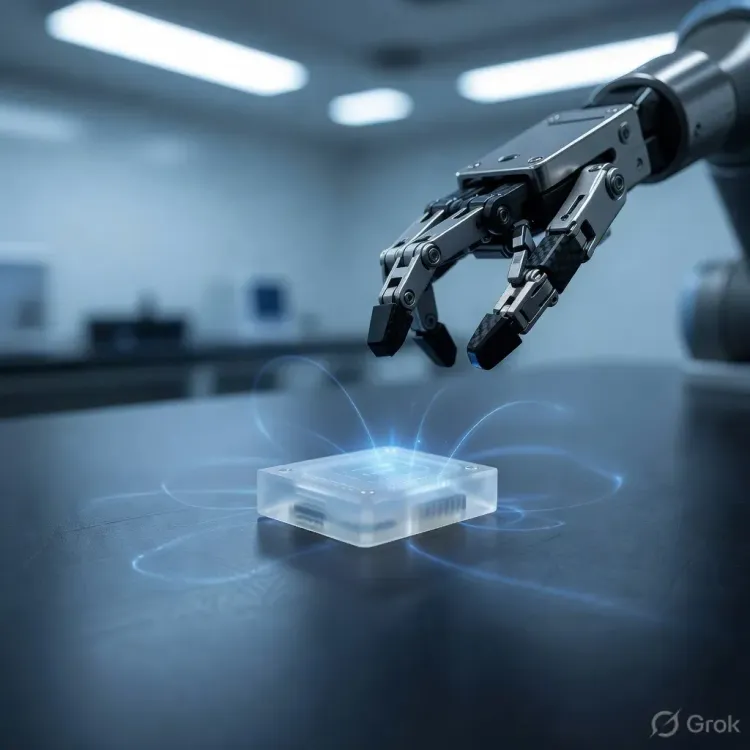
The sensor is made from a specially treated fluoropolymer that holds a static charge, generating a sustained electric field around the device.
It can infer an approaching object's electrical conductivity , dielectric properties , and geometric shape without any physical contact.
Targeted applications include robot manufacturing , space robot operations , and equipment inspection in hazardous environments.
The research was inspired by the electric eel 's natural ability to hunt in pitch-black water using self-generated electric fields.
Chinese researchers have developed a biomimetic sensor that allows robots to detect, identify, and characterise objects without any physical contact, drawing directly from the hunting mechanism of the electric eel. The breakthrough, published last month in the peer-reviewed journal Advanced Materials, was led by Professor Zhang Weiqiang of Xidian University and could redefine how machines interact with their environments in manufacturing, space operations, and hazardous inspection tasks.
Nature's radar, reimagined in silicon
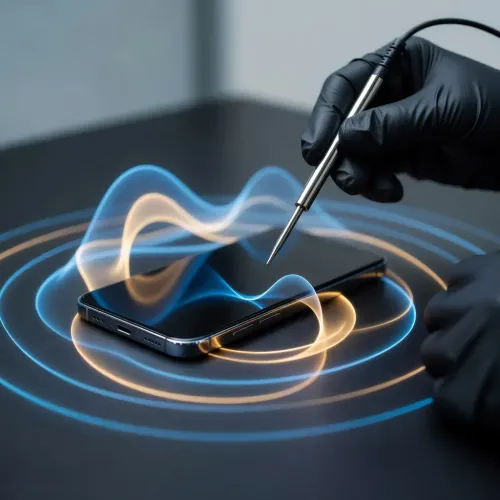
Electric eels navigate and hunt in complete darkness by generating electric fields around their bodies and reading distortions caused by nearby objects — a biological sonar of sorts. The Xidian University team replicated this mechanism in hardware, building a sensor that generates its own steady electric field and monitors perturbations within it.
The sensor is fabricated from a specially treated fluoropolymer that behaves like a miniature static battery. Once charged, it retains that charge over extended periods, sustaining a consistent electric field analogous to, as the researchers describe it, an invisible spider's web around the device.
What the sensor can detect
“When an object draws near, the sensor picks up changes in the field and from those changes, it can infer the object’s electrical conductivity, dielectric properties and geometric shape,” Professor Zhang said in a video interview last week. This means a robot equipped with the sensor can distinguish between materials and surface conditions before a single point of physical contact is made.
“We want the machine to sense an approaching target – distinguish its material and surface condition – before any physical contact,” Zhang said. The capacity to pre-classify an object’s composition and geometry non-invasively is a meaningful leap beyond conventional proximity sensors, which typically register only distance.
Why it matters for robotics
Non-contact sensing addresses one of the persistent pain points in robotic manipulation: the risk of damage when a machine misjudges the fragility or surface texture of an object it is about to grasp. Industries ranging from precision electronics assembly to surgical robotics have long sought sensors that can ‘feel’ before they ‘touch’.
The technology also has direct relevance to space robot operations, where physical contact with unknown surfaces carries outsized risk, and to equipment inspection in environments too dangerous for human technicians. The research team specifically cited these application domains in their work.
The competitive backdrop
China has accelerated investment in robotics and advanced sensing as part of its broader industrial policy push, even as US export controls tighten access to certain semiconductor technologies. Biomimetic sensor research — drawing from biology rather than conventional chip architectures — represents a pathway that sidesteps some of those supply-chain constraints.
Several global robotics players, including firms in Japan, South Korea, and the United States, are pursuing comparable non-contact sensing capabilities, making the race to commercialise this class of technology increasingly competitive.
What’s next
The publication in Advanced Materials marks a peer-reviewed validation of the concept, but the path from laboratory demonstrator to production-ready robot component typically involves years of durability testing, miniaturisation, and integration work. Whether Xidian University pursues commercialisation through spin-offs or industry partnerships will be a key development to watch, as will any follow-on funding from China’s national science and technology programmes.
Point of View
The Xidian University team demonstrates a design philosophy that is increasingly common in Chinese applied research — solving hardware constraints through materials science rather than silicon. If the fluoropolymer sensor scales reliably, it could give Chinese robotics manufacturers a differentiated edge in precision manipulation at a moment when US export controls are squeezing access to leading-edge chips. The commercial timeline remains the critical unknown: peer review is a milestone, not a product launch.
NationPress
1 Oct 2026
Frequently Asked Questions
What is the electric eel robot sensor developed by Chinese scientists?
It is a non-contact sensing device built from a specially treated fluoropolymer that generates a steady electric field, mimicking the electric eel's natural hunting radar. Developed by Professor Zhang Weiqiang at Xidian University , the sensor detects distortions in that field to determine a nearby object's material, conductivity, and shape before any physical contact occurs.
Where was this robot sensor research published?
The research was published last month in the peer-reviewed journal Advanced Materials . The work was led by Xidian University in China and described in a video interview by Professor Zhang Weiqiang last week.
What can this non-contact sensor actually detect?
According to Professor Zhang , the sensor can infer an object's electrical conductivity, dielectric properties, and geometric shape purely from changes in the electric field it generates. This allows a robot to distinguish between different materials and surface conditions before making physical contact.
What are the practical applications of this technology?
The research team specifically cited robot manufacturing , space robot operations , and equipment inspection in hazardous environments as key use cases. Non-contact sensing reduces the risk of damage when robots handle fragile or unknown objects, making it valuable across precision assembly, surgical robotics, and remote inspection tasks.
How does this compare to existing robot proximity sensors?
Conventional proximity sensors typically measure only distance, whereas this fluoropolymer sensor can classify an object's material composition and geometry before contact. The biomimetic approach — drawing from the electric eel's biology rather than standard chip architectures — also offers a potential route around supply-chain constraints affecting conventional sensor components.