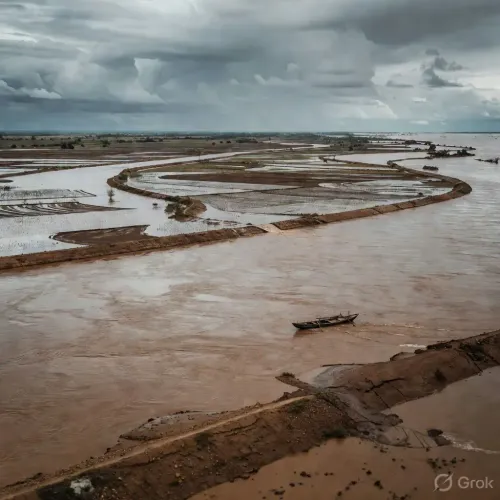
Is Northwest China's climate reverting to Tang dynasty conditions?
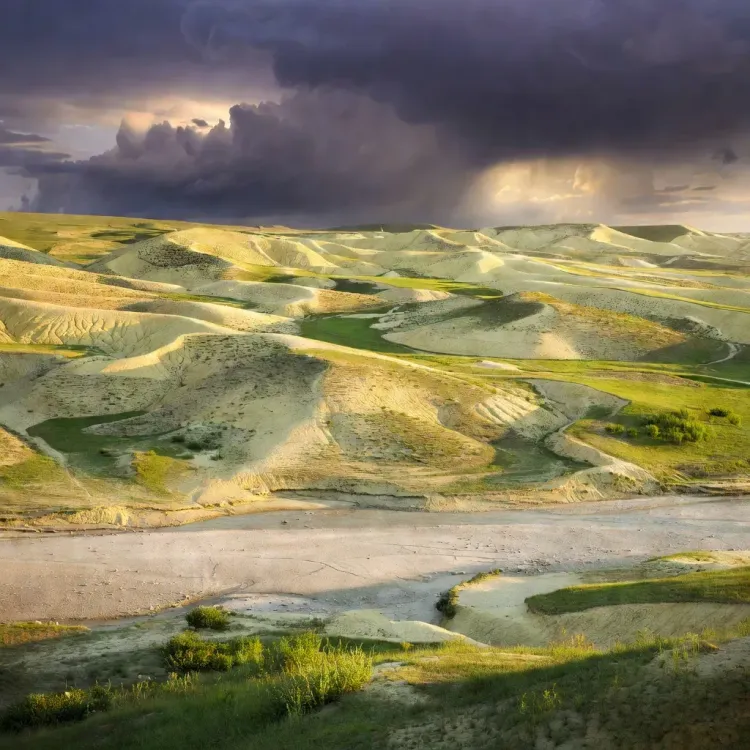
Synopsis
State media in China's Ningxia region are celebrating surging rainfall as a revival of Tang dynasty golden-age conditions — but scientists warn that framing rapid climate change as a historical 'restart' is a dangerous trap that ignores simultaneous flood and drought risks.
Key Takeaways
Ningxia Hui Autonomous Region typically receives just 300mm of rainfall per year; recent surges have prompted state media to declare a 'climate dividend.' The 400mm precipitation line — the boundary between arid and agricultural China — is moving northward, a shift framed as 'heavenly fortune' by the Ningxia Broadcasting News Centre on July 21 .
During the Tang dynasty (618 AD to 907 AD) , northern China temperatures were 1 to 2 degrees Celsius higher than today, and Ningxia served as a granary north of the Great Wall .
A flash flood at a northwest China camping site — linked to the same weather pattern — killed 10 people and injured 23 , illustrating the dual-edged nature of the shift.
Researchers Benjamin Horton and Yu Shiyong from City University of Hong Kong and Jiangsu Normal University caution that historical warm periods brought both benefits and severe disruptions.
Inner Mongolia 's Hulun Lake has recorded rising water levels, reflecting the broader northward moisture migration across the region.
Northwest China is receiving unprecedented rainfall, prompting state media and scientists to debate whether the region is entering a climate shift comparable to the warm, wet conditions of the Tang dynasty (618 AD to 907 AD) — a comparison that experts warn carries significant risks if taken out of context.
Rainfall surge in Ningxia sparks optimism
Local state media in the Ningxia Hui Autonomous Region have been celebrating a marked surge in rainfall in an area that typically averages just 300mm (approximately 12 inches) per year. The Ningxia Broadcasting News Centre declared last month that the northward movement of the rain belt would deliver 'climate dividends', pledging that 'loess soil will turn green and farming area will expand.'
The broadcaster framed the northward march of the 400mm precipitation line — the critical boundary separating China's arid grazing lands from its humid agricultural heartland — as a 'heavenly fortune.' On July 21, it wrote on social media: 'The warming and greening of northwest China is not accidental but the restart of a millennia-long climate cycle.'
The Tang dynasty comparison explained
During the Tang dynasty's so-called 'warm period', temperatures in northern China were reportedly 1 to 2 degrees Celsius (1.8 degrees Fahrenheit) higher than present-day levels. Under those conditions, the territory that is now Ningxia functioned as a granary north of the Great Wall, supporting dense agricultural activity in land that is today largely arid.
The Ningxia broadcaster drew a direct parallel, stating: 'As the rain belt moves northwards, the north is experiencing a warm and humid climate comparable to the prosperous Tang dynasty. Ningxia is the most vivid example of this benefit.'
Why it matters — and the expert warning
Scientists caution that celebrating the shift as an unqualified 'golden age' revival risks obscuring the dangers embedded in rapid climate change. The same warming trend driving increased rainfall in the northwest is also intensifying extreme weather events across China, including flash floods that killed 10 people and injured 23 at a northwest China camping site.
Researchers including Benjamin Horton and Yu Shiyong of City University of Hong Kong and Jiangsu Normal University respectively have highlighted that historical warm periods were not uniformly beneficial — they coincided with droughts, floods, and societal disruptions in different regions simultaneously.
The competitive backdrop — water and land in Inner Mongolia
The rainfall shift is already altering ecosystems well beyond Ningxia. Inner Mongolia's Hulun Lake, one of China's largest freshwater lakes, has seen water levels rise in recent years, a trend linked to the broader northward moisture migration. Agricultural and pastoral communities across the region are recalibrating land use in response.
However, experts warn that treating a short-term precipitation uptick as evidence of a permanent, benign climate restoration is a 'trap' — one that could encourage policy decisions and land development in areas that remain climatically volatile over longer cycles.
What's next
The debate underscores a wider tension in climate communication: how to convey genuine, measurable environmental shifts without fostering complacency or misplaced optimism. As China's northwest continues to green, scientists and policymakers will need to distinguish between cyclical variability and structural climate change — a distinction with major consequences for water security, agriculture, and disaster preparedness across the region.
Point of View
As the camping-site fatalities starkly illustrate. The 400mm precipitation line shift is real and scientifically documented, but it is a symptom of accelerating global warming, not a benign millennial cycle restarting on cue. The deeper risk is that optimistic narratives could shape land-use and infrastructure policy in ways that leave newly 'green' areas catastrophically exposed when the next dry cycle — or an intensified flood season — arrives.
NationPress
17 Sept 2026
Frequently Asked Questions
Is northwest China's climate really becoming like the Tang dynasty?
Rainfall in northwest China has measurably increased, and the 400mm precipitation line is moving northward — conditions that broadly resemble the warmer, wetter Tang dynasty period when temperatures were 1 to 2 degrees Celsius higher than today. However, scientists caution that this parallel is incomplete: the current shift is driven by human-induced climate change, not a natural historical cycle, and brings extreme weather risks alongside any agricultural benefits.
What is the 400mm precipitation line and why does it matter?
The 400mm precipitation line is the annual rainfall boundary that separates China's arid grazing lands in the north and west from its humid, crop-growing heartland to the south and east. Its northward movement means previously arid areas could support agriculture, but it also signals broader climate instability that can produce both droughts and floods.
What did Ningxia state media say about the rainfall surge?
The Ningxia Broadcasting News Centre declared last month that the northward rain belt would bring 'climate dividends', and on July 21 posted on social media that 'the warming and greening of northwest China is not accidental but the restart of a millennia-long climate cycle.' It described Ningxia as 'the most vivid example' of conditions comparable to the prosperous Tang dynasty.
What risks do experts identify in the climate optimism narrative?
Researchers warn that treating a short-term precipitation uptick as a permanent, benign restoration is a 'trap.' The same warming trend driving more rainfall in Ningxia also intensified a flash flood that killed 10 people and injured 23 at a northwest China camping site. Experts including Benjamin Horton and Yu Shiyong note that Tang dynasty warm periods coincided with severe regional droughts and societal disruptions elsewhere.
How is Inner Mongolia affected by the northward moisture shift?
Inner Mongolia's Hulun Lake, one of China's largest freshwater bodies, has seen rising water levels linked to the broader northward migration of moisture. Agricultural and pastoral communities across the region are adjusting land use, but scientists caution that climatically volatile areas could face sharp reversals if the precipitation trend proves cyclical rather than permanent.