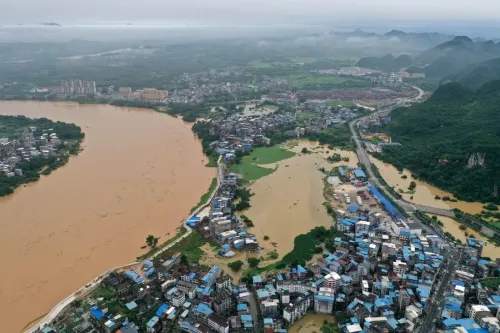
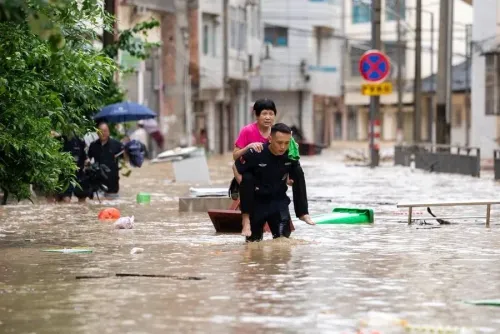
Yangtze flood controls may worsen floods, 500-year study finds
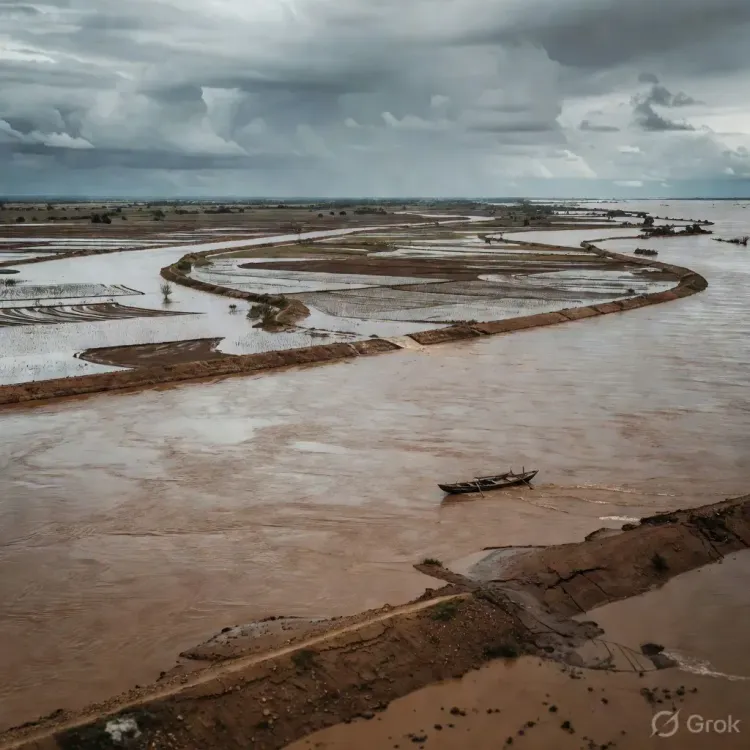
Synopsis
A 500-year reconstruction of Yangtze River floods finds that embankments and lake reclamation — built to protect people — have amplified the magnitude of extreme 100-year floods by up to 18%, directly contradicting the premise of centuries of Chinese flood-control engineering.
Key Takeaways
A study published on Monday, 8 August 2026 in the Proceedings of the National Academy of Sciences found that human flood-control interventions on the Yangtze River have amplified, not reduced, extreme flood risks.
Embankment construction increased the magnitude of 100-year floods by 18 per cent ; lake reclamation for agriculture increased them by a further 8 per cent .
The research reconstructs 500 years of flood variability from 1500 to the present using sediment archives, historical records, and climate reanalysis data.
Flood frequency peaked during the Little Ice Age (1500–1850) , with climate identified as the primary driver — but human interventions compounded climate-induced magnitudes.
The study was produced by scientists from China and Europe , including contributors from Jiangsu Normal University , and has direct implications for flood-infrastructure policy across Asia .
A landmark study spanning 500 years of Yangtze River flood data has found that human engineering interventions — including embankments and lake reclamation — have amplified flood risks rather than suppressed them, challenging the foundational logic of one of the world's most extensive river-management systems. The research, published on Monday in the Proceedings of the National Academy of Sciences of the United States of America, was conducted by a joint team of scientists from China and Europe.
The Core Finding
The researchers reconstructed flood variability along the Yangtze River from 1500 to the present using lake sediment archives, historical documents, and high-resolution climate reanalysis data. Their analysis revealed that while climate remains the primary driver of flood occurrence, human interventions have materially worsened climate-induced flood magnitudes. Constructing embankments amplified the magnitude of 100-year floods — events with a 1 per cent chance of occurring in any given year — by 18 per cent, while lake enclosures built for agricultural use amplified those same floods by 8 per cent.
Why It Matters
'We show that flood frequency peaked during the Little Ice Age [1500−1850] … and that human interventions, particularly embankments and lake reclamation, amplified climate-driven flood magnitudes,' the scientists wrote in their paper. The Yangtze River basin is home to hundreds of millions of people and anchors major urban centres including Wuhan. The paradox the study surfaces — that flood-control infrastructure can intensify the very disasters it was designed to prevent — has direct implications for how governments prioritise and design water-management spending.
Historical Context
For centuries, flood-control along the Yangtze has evolved from ancient dykes to modern mega-projects, most prominently the Three Gorges Dam. The study's 500-year reconstruction provides the longest continuous flood record yet assembled for the river, offering a perspective that shorter instrumental datasets cannot. The team found that the Little Ice Age period of 1500 to 1850 represented the historical peak in flood frequency — a climate signal that human infrastructure subsequently compounded rather than counteracted.
The Competitive Backdrop
The findings arrive as governments across Asia and globally face mounting pressure to climate-proof river infrastructure amid more intense precipitation events linked to climate change. The Yangtze study adds scientific weight to a growing body of research questioning whether hard-engineering approaches to flood control — as opposed to nature-based solutions such as wetland restoration — deliver their intended outcomes over multi-decadal timescales.
What's Next
The research, involving institutions including Jiangsu Normal University and collaborators in Europe, is expected to inform ongoing policy debates around river basin management in China and internationally. As climate projections point to more frequent extreme precipitation events, the question of whether existing embankment and reclamation infrastructure should be retained, modified, or partially reversed is likely to move up the policy agenda.
Point of View
Evidence that embankments can amplify rather than dampen extreme flood magnitudes reframes the entire cost-benefit calculus. What mainstream coverage tends to underplay is the political difficulty of acting on such findings: lake reclamation and embankment networks represent entrenched agricultural and economic interests, making policy reversal slow even when the science is clear. The study's 500-year lens also quietly undermines the assumption that shorter instrumental records — the basis of most current flood-risk modelling — are sufficient to capture the full range of hydrological extremes that infrastructure must be designed to withstand.
NationPress
22 Sept 2026
Frequently Asked Questions
What did the Yangtze River flood study find?
The study found that human interventions along the Yangtze River, specifically the construction of embankments and lake enclosures for agriculture, amplified the magnitude of extreme flood events rather than reducing them. Published in the Proceedings of the National Academy of Sciences on Monday, 8 August 2026 , the research showed that embankments increased the magnitude of 100-year floods by 18 per cent and lake reclamation increased them by 8 per cent .
How far back does the Yangtze flood study go?
The study reconstructs 500 years of flood variability along the Yangtze River , covering the period from 1500 to the present. Researchers used lake sediment archives, historical documents, and high-resolution climate reanalysis data to build one of the longest continuous flood records ever assembled for the river.
What is a 100-year flood and why does it matter here?
A 100-year flood is a flood event with a 1 per cent probability of occurring in any given year — it is a standard benchmark used in infrastructure design and risk assessment worldwide. The finding that embankments amplified these benchmark events by 18 per cent is significant because it suggests current flood-risk models built on hard-engineering assumptions may systematically underestimate actual danger.
Does the Three Gorges Dam make Yangtze flooding worse?
The study focuses specifically on embankments and lake reclamation rather than evaluating the Three Gorges Dam directly. It establishes that human interventions broadly have amplified climate-driven flood magnitudes over a 500-year period; the role of individual structures such as the dam would require separate analysis beyond the scope of this research.
Who conducted the Yangtze flood research?
The research was conducted by a joint team of scientists from China and Europe , with Jiangsu Normal University among the contributing institutions. The paper was published on Monday, 8 August 2026 in the Proceedings of the National Academy of Sciences of the United States of America .