China eyes nuclear-powered tank with 450km railgun by 2045
Synopsis
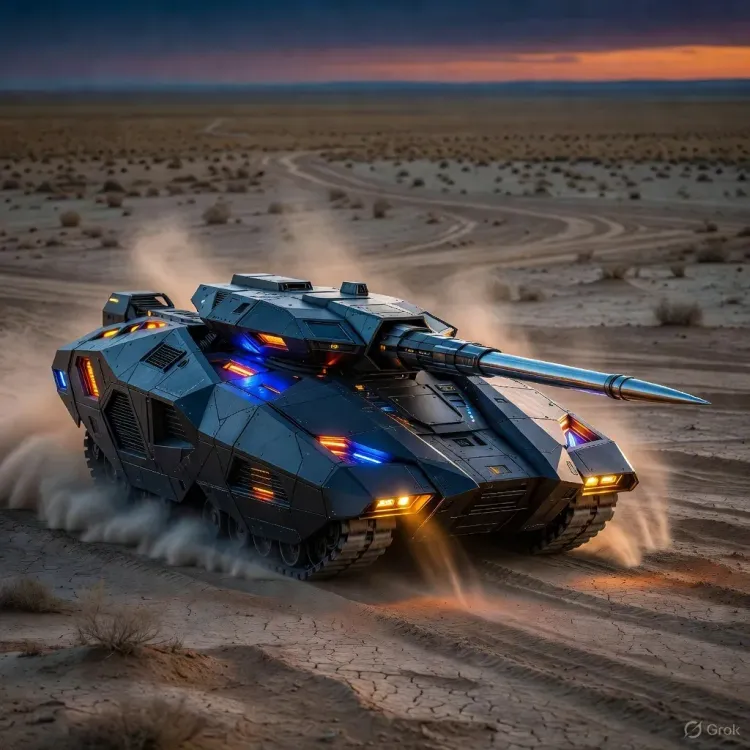
Chinese defence researchers have proposed a 60-tonne nuclear-powered tank with a 50-megajoule railgun capable of hitting targets 450km away — a concept that, if realised after 2045, would outrange any conventional tank gun in history and redefine armoured warfare.
Key Takeaways
Chinese military researchers from Inner Mongolia First Machinery Group and the Beijing Institute of Technology published a nuclear-powered tank concept in June 2026 in the journal Acta Armamentarii .
The proposed vehicle weighs 60 tonnes and is powered by a 10-megawatt-class small modular reactor (SMR) .
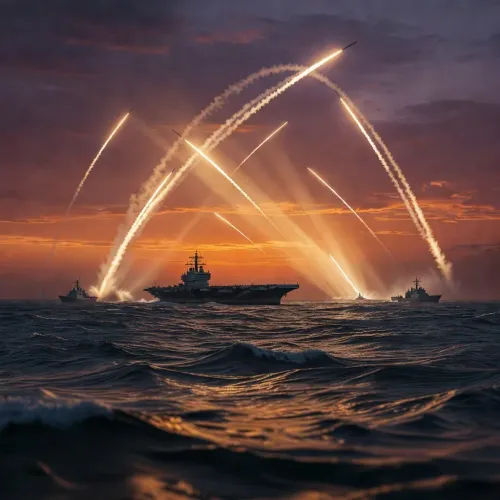
Its 50-megajoule electromagnetic railgun is designed to strike targets up to 450km (280 miles) away — far exceeding any current tank gun's range.
The study was funded by the National Key Laboratory of Special Vehicle Design and Manufacturing Integration Technology .
Researchers place a potential debut after 2045 , acknowledging the concept is in early theoretical development.
Chinese military researchers have proposed a nuclear-powered main battle tank armed with an electromagnetic railgun capable of striking targets up to 450 kilometres (280 miles) away, in a concept that could debut after 2045. The proposal, detailed in a peer-reviewed paper published in June 2026 in the Chinese defence journal Acta Armamentarii, represents one of the most ambitious armoured-vehicle concepts to emerge from China's state-linked research ecosystem.
What the researchers are proposing
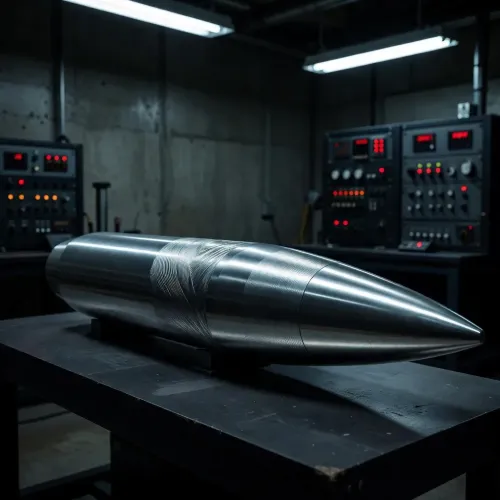
The concept envisions a 60-tonne armoured vehicle powered by a 10-megawatt-class small modular reactor (SMR) and equipped with a 50-megajoule (MJ) electromagnetic railgun. The railgun's 450km range would dwarf the effective range of any conventional tank gun currently in service globally, effectively repositioning the platform from a close-combat weapon to a long-range precision strike system. The paper was authored by researchers from Inner Mongolia First Machinery Group — a cornerstone of China's defence industrial system closely associated with tank and armoured vehicle development — and the Beijing Institute of Technology. The study was funded by the National Key Laboratory of Special Vehicle Design and Manufacturing Integration Technology through a dedicated research project.Why it matters
The integration of a small modular reactor into a ground combat vehicle would solve the energy problem that has historically limited railgun development. Conventional electromagnetic railguns require enormous bursts of electrical power that battlefield generators or battery packs struggle to sustain. A 10-megawatt-class SMR could theoretically provide continuous high-energy firing cycles, making the weapon operationally viable rather than a laboratory curiosity. The 50MJ muzzle energy figure is also significant: for context, the US Navy's experimental railgun programme, now largely shelved, targeted around 32MJ. A 50MJ system would deliver substantially greater projectile velocity and range.The competitive backdrop
The proposal arrives as major military powers reassess the future of armoured warfare following lessons from the Russia-Ukraine conflict, where tanks have proven vulnerable to drone strikes and anti-tank guided missiles. Rather than abandoning the platform, Chinese researchers appear to be betting on a radical capability leap — long-range standoff firepower — to keep the main battle tank relevant through mid-century. Inner Mongolia First Machinery Group is the manufacturer behind China's existing Type 99A and Type 15 tank families, lending the research institution credibility beyond pure academic speculation.What's next
The researchers acknowledge a post-2045 timeline, signalling that the concept remains in early-stage theoretical development. Key engineering hurdles — miniaturising a safe, battlefield-hardened SMR, managing heat dissipation in an enclosed armoured hull, and developing railgun barrel materials that can withstand repeated high-energy firings — remain unsolved at scale. Whether the concept transitions from peer-reviewed paper to a funded prototype programme will depend on China's broader defence budget priorities and progress in civilian SMR technology, where Beijing is already among the world's most active investors. Observers will watch for follow-on funding announcements and whether the concept surfaces in official People's Liberation Army procurement documents in the years ahead.Point of View
And China's aggressive civilian SMR pipeline — it leads the world in reactors under construction — gives this concept a more plausible foundation than similar proposals from nations without that industrial base. The post-2045 timeline also conveniently aligns with Beijing's stated centenary military modernisation goals, suggesting this is as much a political milestone marker as a technical roadmap. If even a fraction of the SMR and railgun sub-technologies mature on schedule, the concept could reshape how peer competitors plan armoured force structures well before a prototype rolls.
NationPress
16 Sept 2026
Frequently Asked Questions
What is China's nuclear-powered tank concept?
Chinese military researchers have proposed a 60-tonne main battle tank powered by a 10-megawatt-class small modular reactor and armed with a 50-megajoule electromagnetic railgun capable of hitting targets up to 450km away. The concept was published in the peer-reviewed journal Acta Armamentarii in June 2026 and is described as a post- 2045 development goal.
Why would a nuclear reactor be used to power a tank?
Electromagnetic railguns require enormous, sustained bursts of electrical power that conventional battlefield generators cannot reliably provide. A 10-megawatt-class SMR would theoretically supply continuous energy for repeated high-power railgun firings, making the weapon operationally viable rather than a one-shot laboratory experiment.
Who conducted this research and who funded it?
The paper was authored by researchers from Inner Mongolia First Machinery Group — a key player in China's tank and armoured vehicle manufacturing — and the Beijing Institute of Technology . Funding came from the National Key Laboratory of Special Vehicle Design and Manufacturing Integration Technology via a special research project.
How does China's proposed railgun compare to other countries' programmes?
The proposed 50-megajoule railgun would surpass the approximately 32-megajoule target of the US Navy's now largely shelved experimental railgun programme. A higher muzzle energy translates directly to greater projectile velocity and range, making the 450km figure significantly beyond anything fielded or in advanced development by other militaries.
When could China's nuclear-powered tank actually be built?
The researchers themselves place a potential debut after 2045 , acknowledging that the concept is in early theoretical stages. Major engineering challenges — including miniaturising a battlefield-safe SMR, managing heat within an armoured hull, and developing railgun barrel materials resilient to repeated high-energy firings — remain unsolved at the required scale.