China-Russia science pact eyes shift in global research power
Synopsis
At a Beijing summit on 20 May 2026, China and Russia signed 40 agreements on science and technology. A University of Southern California professor says the partnership could pressure the US to re-engage globally rather than isolate — potentially redrawing the entire map of international scientific collaboration.
Key Takeaways
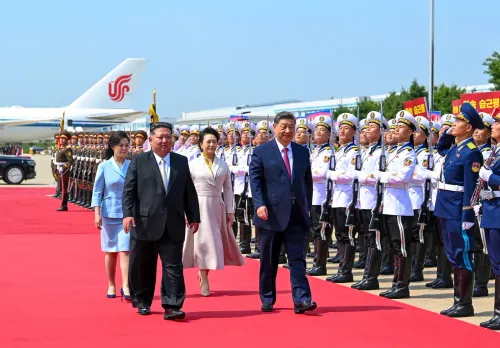
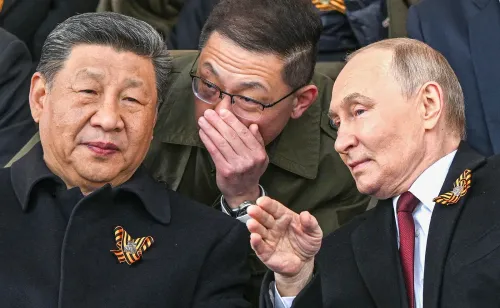
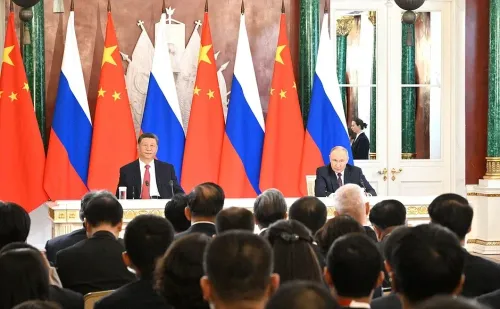
Vladimir Putin and Xi Jinping met in Beijing on Wednesday, 20 May 2026 , signing 40 bilateral agreements covering innovation, technology, energy, science, and education.
Valery Fokin , professor at the University of Southern California , said the China-Russia scientific axis could 'stimulate the US to join rather than to isolate.' Experts described the summit as a potential source of 'structural backbone' for institutionalised scientific cooperation between the two countries.
Key institutions named as likely participants include the Russian Quantum Centre , Federal Centre of Brain Research and Neurotechnologies , Zhejiang University , and the Russian Academy of Sciences Institute of Bioorganic Chemistry .
Analysts say the partnership could signal a shift in the global scientific 'centre of gravity' from West to East , with implications for researchers worldwide.
China and Russia are deepening scientific and technological cooperation following a high-level summit in Beijing on Wednesday, 20 May 2026, with experts saying the partnership could redraw the global research landscape and shift the scientific 'centre of gravity' from West to East. The two nations signed 40 agreements covering innovation, technology, energy, science, and education as Russian President Vladimir Putin and Chinese President Xi Jinping held talks spanning trade, the economy, and education.
What was agreed at the Beijing summit
The Putin-Xi summit produced a sweeping set of bilateral accords, with the 40 signed agreements placing particular emphasis on joint innovation and scientific exchange. The deals span sectors from energy to neurotechnology, and analysts say they lay an institutional foundation for structured research collaboration that has so far been largely informal.
Beyond the headline numbers, the summit is being read as a signal of intent — that Moscow and Beijing are prepared to build a parallel architecture for global science, one that does not depend on Western-led institutions or funding frameworks.
Why it matters for global science
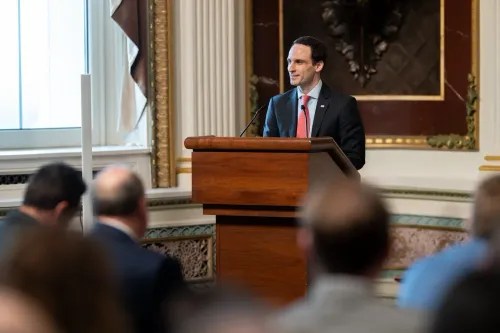
According to experts in both the United States and Russia, a robust China-Russia scientific axis could serve as a counterweight to what they describe as increasing isolation of researchers from geopolitical friction. Valery Fokin, a professor at the University of Southern California, said in an interview on Tuesday that the collaboration 'could stimulate the US to join rather than to isolate.'
Fokin added that he would welcome any alliance — whether Russia-China, Russia-US, US-China, or a trilateral arrangement — arguing that if enough scientific powers took the first step, 'others would have no choice but to join.' The framing positions scientific cooperation as a potential circuit-breaker for geopolitical deadlock.
The competitive backdrop
The summit comes as US science policy has grown increasingly restrictive, with tightened visa scrutiny, export controls on advanced technologies, and reduced federal research budgets creating friction for international collaboration. Institutions such as the Russian Quantum Centre, the Federal Centre of Brain Research and Neurotechnologies, the Russian Academy of Sciences Institute of Bioorganic Chemistry, and Zhejiang University are among the bodies expected to benefit from expanded joint programmes.
The Vyzov Prize, Russia's flagship science award, has in recent cycles highlighted researchers working at the intersection of fields — biotechnology, quantum computing, neuroscience — that are also priority areas in China's national science strategy.
What's next
Experts who spoke ahead of the summit said they hoped the agreements would provide a 'structural backbone' for cooperation that moves beyond bilateral goodwill into funded, institutionalised programmes. Whether the 40 accords translate into measurable research output — joint publications, shared infrastructure, co-developed intellectual property — will be the real test of the partnership's depth.
The most consequential near-term question is whether third-country researchers and institutions, particularly from the Global South, will be drawn into this emerging eastern research network, potentially accelerating the gravitational shift away from US- and Europe-centred science.
Point of View
The erosion of US soft power in science could accelerate faster than export controls or sanctions can compensate. Fokin's framing — that this could 'stimulate' rather than isolate the US — is optimistic, but it also reveals the underlying bet: that competitive pressure, not diplomacy, is the only force that can reverse American scientific retrenchment.
NationPress
19 Sept 2026
Frequently Asked Questions
What did China and Russia agree at the May 2026 Beijing summit?
China and Russia signed 40 bilateral agreements at the Beijing summit on 20 May 2026 , covering innovation, technology, energy, science, and education. The deals were concluded during talks between President Vladimir Putin and President Xi Jinping .
Why does China-Russia science cooperation matter for the US?
According to Valery Fokin , professor at the University of Southern California , a strong China-Russia scientific partnership could pressure the US to re-engage with international collaboration rather than continue on an isolationist path. Fokin argued that if major scientific powers took the first step, 'others would have no choice but to join.'
Which institutions are involved in China-Russia scientific collaboration?
Institutions expected to benefit include the Russian Quantum Centre , the Federal Centre of Brain Research and Neurotechnologies , the Russian Academy of Sciences Institute of Bioorganic Chemistry , and Zhejiang University in China . These bodies work across priority fields such as biotechnology, quantum computing, and neuroscience.
Could China-Russia cooperation shift the global science centre of gravity?
Experts say yes — the partnership could signal a long-term shift in the scientific 'centre of gravity' from West to East . Whether that shift materialises depends on whether the 40 agreements translate into funded, institutionalised programmes rather than remaining declaratory.
What is the Vyzov Prize and how does it connect to this story?
The Vyzov Prize is Russia 's flagship science award, recognising researchers in cutting-edge fields. Its recent focus on biotechnology, quantum computing, and neuroscience aligns closely with China 's national science priorities, underlining the natural overlap that the new bilateral agreements aim to formalise.