China's wearable dopamine patch targets Parkinson's, depression tracking
Synopsis
Scientists at China's Shenyang Institute of Automation have built a painless microneedle patch that monitors dopamine in real time — a potential breakthrough for at-home early detection of Parkinson's disease and depression, published in a peer-reviewed journal in August 2026.
Key Takeaways
Researchers at the Chinese Academy of Sciences' Shenyang Institute of Automation developed a wearable dopamine-sensing patch described as 'rapid and ultrasensitive.' The patch uses microscopic needles to sample sub-dermal fluid painlessly and monitor dopamine levels continuously in real time.
The device targets at-home management of neurological conditions including Parkinson's disease and depression , both linked to abnormal dopamine levels.
Findings were published in the August 2026 issue of peer-reviewed journal Biosensors and Bioelectronics .
The technology remains at the research stage with no commercial timeline announced.
A research team at the Chinese Academy of Sciences' Shenyang Institute of Automation has developed a wearable dopamine sensor described as 'rapid and ultrasensitive,' capable of monitoring the critical neurotransmitter in real time through a skin-worn patch. The device, detailed in the August 2026 issue of peer-reviewed journal Biosensors and Bioelectronics, could enable at-home screening for neurological conditions including Parkinson's disease and depression.
How the patch works
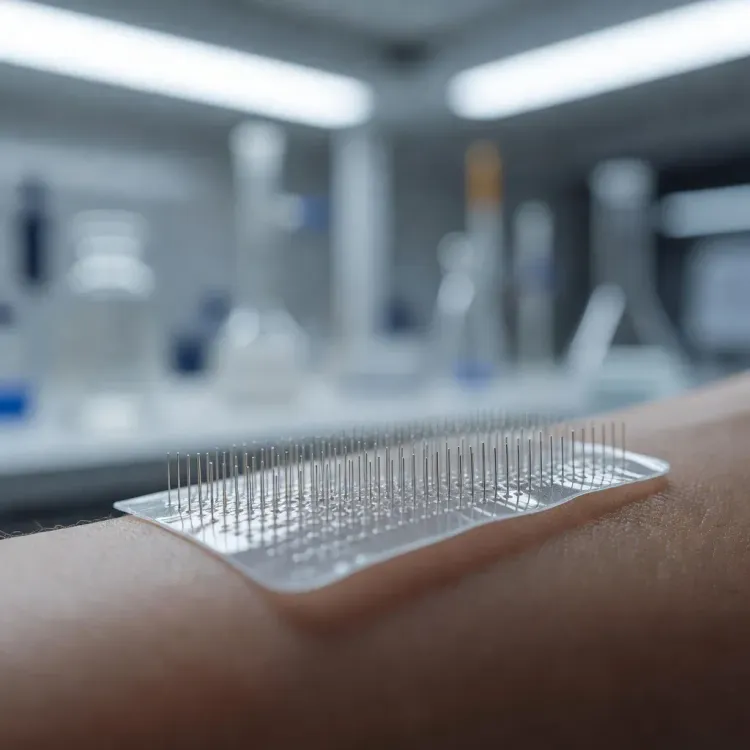
The smart patch uses microscopic needles — a technology known as microneedles — to sample interstitial fluid just beneath the surface of the skin. According to the research team, the process is painless and delivers continuous, real-time readings of dopamine concentrations without requiring blood draws or clinical visits.
The microneedle design is embedded in a hydrogel matrix that stabilises the sensing elements and maintains contact with sub-dermal fluid, enabling consistent measurement over extended wear periods.
Why it matters
Dopamine is a neurotransmitter essential to normal neural function and mental health. Abnormal dopamine levels — whether elevated or depleted — are clinically associated with a range of neurological disorders. Parkinson's disease, which presents with symptoms such as tremors and progressive movement impairment, is understood to result from the brain's inability to produce sufficient dopamine due to the deterioration of dopamine-producing nerve cells.
Current dopamine monitoring typically requires invasive procedures or laboratory analysis, making continuous at-home tracking effectively impossible for most patients. A reliable wearable sensor could shift the diagnostic paradigm significantly.
What the researchers say
'The innovation opens up entirely new technological pathways for the continuous monitoring of neurotransmitters, making early screening for neurological diseases and smart, at-home health management closer to reality,' the scientists wrote in Biosensors and Bioelectronics.
The team did not specify a commercial timeline or clinical trial roadmap in the published findings, and the device remains at the research stage.
The competitive backdrop
The wearable biosensor space has attracted growing investment globally, with companies and academic institutions racing to move beyond heart rate and blood oxygen monitoring toward neurochemical sensing. Continuous glucose monitors have already demonstrated that real-time biochemical tracking via skin-worn devices is commercially viable at scale — dopamine sensing represents a significantly more complex but potentially transformative next frontier.
China's push in bioelectronics research, anchored by institutions such as the Chinese Academy of Sciences, positions the country as a serious contender in next-generation medical wearables alongside US and European research groups.
What's next
Independent clinical validation and regulatory review will be critical steps before any consumer or clinical deployment. Analysts and neurologists will be watching whether the Shenyang Institute of Automation team pursues partnerships with medical device manufacturers or transitions findings into a formal trial programme — milestones that would mark the technology's readiness to move beyond the laboratory.
Point of View
But the leap from lab prototype to regulated medical device is where most biosensor breakthroughs stall — the absence of any clinical trial data or commercialisation roadmap in the published findings is notable. What mainstream coverage underplays is the geopolitical dimension: China is systematically investing in bioelectronics as a strategic sector, and institutions like the Chinese Academy of Sciences are not operating in isolation but as part of a coordinated national push to dominate next-generation medical technology. If the microneedle dopamine sensor clears clinical validation, it could disrupt a diagnostics market currently dependent on expensive, infrequent clinical assessments. The real competitive pressure will fall on Western medtech incumbents who have been slow to move beyond glucose monitoring into neurochemical sensing.
NationPress
10 Oct 2026
Frequently Asked Questions
What is the wearable dopamine patch developed by Chinese scientists?
It is a skin-worn microneedle patch developed by the Chinese Academy of Sciences' Shenyang Institute of Automation that measures dopamine levels in real time by sampling fluid just beneath the skin. The device is described as painless and 'rapid and ultrasensitive,' according to the research team. Findings were published in the August 2026 issue of Biosensors and Bioelectronics .
How could the dopamine patch help Parkinson's disease patients?
Parkinson's disease is caused by the brain's failure to produce sufficient dopamine due to deteriorating nerve cells, leading to tremors and movement problems. A wearable sensor that continuously tracks dopamine levels could enable early screening and ongoing at-home management without clinical visits. This could allow earlier intervention and more personalised treatment adjustments.
Is the dopamine wearable patch available to buy?
No — the device is currently at the research stage only. The team has not announced a commercial timeline, clinical trials, or manufacturing partnerships. Regulatory approval and independent clinical validation would be required before any patient use.
What is dopamine and why does it matter for mental health?
Dopamine is a neurotransmitter critical to normal neural function and mental wellbeing. Both abnormally low and abnormally high dopamine levels are associated with serious neurological and psychiatric conditions, including Parkinson's disease and depression . Accurate, continuous monitoring of dopamine has long been a goal in neurology because current methods are invasive and infrequent.
How does the microneedle dopamine sensor work?
The patch embeds microscopic needles in a hydrogel matrix that penetrates just below the skin surface to access interstitial fluid. Electrochemical sensors within the needles detect dopamine concentrations and relay readings in real time. The research team states the process is painless and suitable for continuous wear.