CM Shivakumar flags off 32 forensic vans, 75 vehicles for Karnataka Police

Synopsis
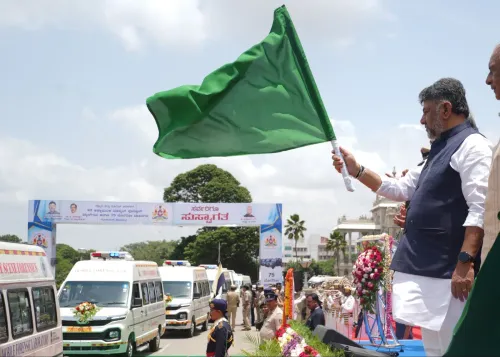
Deputy Chief Minister DK Shivakumar on 11 July 2026 flagged off 32 advanced mobile forensic vans and 75 Bolero vehicles for Karnataka's district police units at Vidhana Soudha, marking a significant step in the state's police modernisation drive and compliance with national forensic mandates.
Key Takeaways
32 mobile forensic vans and 75 Bolero vehicles were flagged off for Karnataka district police units on 11 July 2026 .
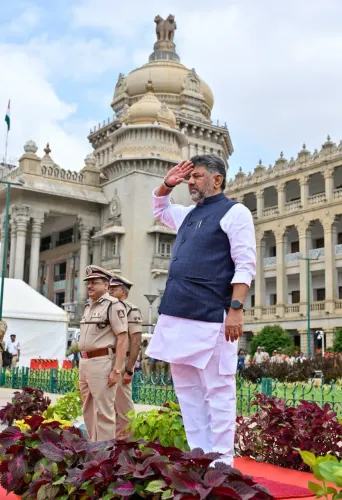
The ceremony was held at the steps of Vidhana Soudha , Bengaluru, and was presided over by Deputy CM DK Shivakumar .
The deployment is part of the Karnataka Police Modernisation Programme (2021) , which funds forensic infrastructure and fleet upgrades.
National criminal procedure laws introduced in 2023 mandate forensic examination in serious cases, driving demand for mobile forensic capacity.
Similar mobile forensic deployments have been made in Maharashtra , Tamil Nadu , and Telangana in recent years.
The rollout schedule for district-wise allocation of the vans and further budgetary support under the 2026-27 police modernisation head remain to be announced.
The Chief Minister's Office of Karnataka announced on Saturday, 11 July 2026 that Deputy Chief Minister DK Shivakumar flagged off 32 state-of-the-art mobile forensic vans and 75 new Bolero vehicles for district police units at a ceremony held on the steps of Vidhana Soudha, Bengaluru, in a significant push to strengthen law and order and accelerate criminal investigations across the state.
Context
The post, shared by the official CMO Karnataka handle, states in Kannada that the Karnataka State Police Department has taken 'a significant step' (ಮಹತ್ವದ ಹೆಜ್ಜೆ) to 'further strengthen law and order in the state and make the criminal investigation process even more agile.' The ceremony was held at the 'grand steps of Vidhana Soudha' (ವಿಧಾನಸೌಧದ ಭವ್ಯ ಮೆಟ್ಟಿಲುಗಳ ಮುಂಭಾಗ), the seat of the Karnataka Legislature and the symbolic nerve centre of state governance in Bengaluru.
Shivakumar, a senior Congress leader who holds oversight of key portfolios including home and finance, personally flagged off the vehicles — a gesture that underscores the political weight the ruling dispensation is attaching to police modernisation ahead of upcoming electoral cycles.
Policy Backdrop
The deployment is rooted in the Karnataka Police Modernisation Programme (2021), which allocated dedicated funds for forensic infrastructure upgrades and fleet renewal across the state's district police units. Mobile forensic vans are specialised vehicles equipped with on-site tools to collect, preserve, and conduct preliminary analysis of evidence directly at crime scenes, cutting turnaround time significantly compared to transporting samples to fixed laboratories.
The push has gained urgency nationally since 2023, when new criminal procedure laws mandated forensic examination in serious cases — placing states under pressure to build the physical infrastructure needed for compliance. Karnataka's move mirrors similar deployments carried out in Maharashtra, Tamil Nadu, and Telangana over the past three years, reflecting a broader, nationwide effort to raise conviction rates through faster, scientifically supported investigations.
Stakeholders and Impact
District police units and crime investigation teams across Karnataka stand to be the most immediate beneficiaries. The 32 mobile forensic vans will allow investigating officers to process evidence at the scene of a crime — reducing the risk of contamination, minimising delays, and strengthening the evidentiary chain that courts increasingly scrutinise. The 75 Bolero vehicles will augment the general patrol and rapid-response capacity of district units.
For ordinary citizens, faster forensic response translates into more timely closure of cases — particularly in serious crimes such as road accidents, homicides, and organised crime incidents where on-site evidence is critical. Civil society groups monitoring police accountability have long flagged the shortage of forensic mobility as a bottleneck in Karnataka's criminal justice pipeline.
What's Next
Attention will now shift to the rollout schedule for the 32 forensic vans across Karnataka's districts — specifically which units receive priority allocation and whether remote or conflict-sensitive districts are covered in the first phase. Observers will also watch for a follow-up budgetary allocation under the 2026-27 police modernisation head to sustain and expand the programme beyond this initial tranche.
With Karnataka's law-and-order record under close public scrutiny, this deployment signals that the Siddaramaiah-led government — with Shivakumar as a key pillar — is willing to invest in visible, outcome-oriented policing infrastructure as a political and administrative priority going into the second half of its term.
Point of View
Presiding over a high-visibility police event reinforces his authority over the home portfolio at a time when the government faces scrutiny over crime trends. The critical test will be equitable district-level distribution and whether the investment translates into measurable improvements in charge-sheeting and conviction rates.
NationPress
10 Oct 2026
Frequently Asked Questions
What did DK Shivakumar launch for Karnataka Police in July 2026?
Deputy Chief Minister DK Shivakumar flagged off 32 advanced mobile forensic vans and 75 new Bolero vehicles for Karnataka's district police units at a ceremony at Vidhana Soudha on 11 July 2026.
What is a mobile forensic van and how does it help police?
A mobile forensic van is a specially equipped vehicle that allows forensic experts to collect, preserve, and conduct preliminary analysis of crime-scene evidence on the spot, reducing delays and minimising the risk of evidence contamination before samples reach a fixed laboratory.
Why is Karnataka investing in mobile forensic units now?
National criminal procedure laws introduced in 2023 mandate forensic examination in serious cases, making mobile forensic infrastructure a legal and operational necessity for state police departments across India, including Karnataka.
Which other Indian states have deployed mobile forensic vans?
Maharashtra, Tamil Nadu, and Telangana have carried out similar mobile forensic van deployments over the past three years as part of the broader national push to modernise police investigation capabilities.
What is the Karnataka Police Modernisation Programme?
The Karnataka Police Modernisation Programme, launched in 2021, allocates dedicated state funds for upgrading forensic infrastructure and renewing the vehicle fleet of district police units across Karnataka.