Westlake University device detects cancer biomarkers in one blood drop
Synopsis
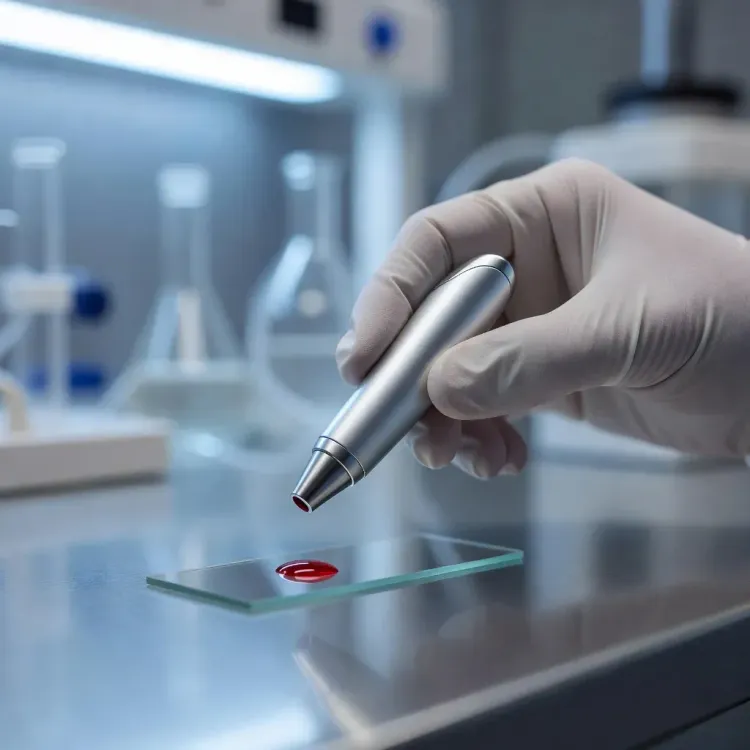
A handheld device developed at Westlake University in Hangzhou can detect cancer biomarkers from a single blood drop with accuracy 10,000 times greater than conventional methods — potentially enabling early cancer screening outside hospitals, according to a May 13 paper in Nature Photonics.
Key Takeaways
Westlake University researchers in Hangzhou have built a handheld biosensor that detects cancer biomarkers from a single drop of blood.
The device is approximately 10,000 times more accurate than conventional detection methods, according to the research team.
The technology uses Q-modulated refractometric sensing targeting small extracellular vesicles — nanoscale disease-marker carriers shed by cells.
Findings were published in Nature Photonics on May 13, 2026 , led by Associate Professor Wen Liaoyong .
Wen joined Westlake University in 2019 from the University of Connecticut and was promoted to associate professor in July 2025 .
The platform is described as scalable for clinical, remote, and at-home diagnostic settings, with potential applications including lung cancer screening.
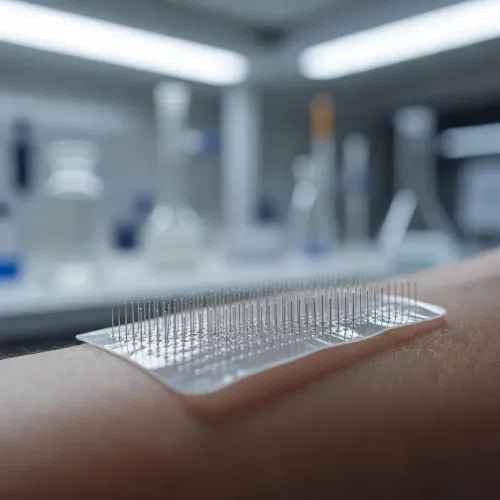
Westlake University researchers in Hangzhou have developed a handheld nanophotonic biosensor capable of detecting early-stage cancer biomarkers from a single drop of blood, achieving accuracy roughly 10,000 times greater than conventional diagnostic methods. The breakthrough, led by Associate Professor Wen Liaoyong of the university's School of Engineering, was published in the journal Nature Photonics on May 13. The device compresses what was previously a refrigerator-sized detection system into a compact, handheld form factor.
The Science Behind the Sensor
The technology centres on Q-modulated refractometric sensing and targets small extracellular vesicles — nanoscale particles shed by cells that carry molecular signatures of disease, including cancer. By engineering novel multi-component nanostructured materials, Wen's team achieved sensitivity levels that legacy laboratory equipment cannot match at comparable size or cost. The approach enables detection at concentrations previously undetectable outside specialised clinical environments.
Why It Matters for Diagnostics
Early cancer detection remains one of medicine's most consequential unsolved challenges; most cancers are diagnosed at advanced stages when treatment options narrow sharply. A device that is both portable and highly sensitive could shift screening from hospital laboratories to clinics, remote communities, and eventually the home. Wen stated in the paper: 'This work establishes a scalable and robust nanophotonic biosensing paradigm for miniaturised, high-performance diagnostics in clinical, remote and at-home settings.'
Researcher Background and Institutional Context
Wen Liaoyong, a former researcher at the University of Connecticut, joined Westlake University's School of Engineering in 2019 as an assistant professor and independent principal investigator. He was promoted to associate professor in July 2025. Westlake University, a privately funded research institution in Hangzhou, has rapidly built a reputation for high-impact science since its founding, attracting researchers from leading global institutions.
Competitive Backdrop
The race to miniaturise liquid biopsy and biosensing technology is intensifying globally, with research groups and startups in the United States, Europe, and across Asia-Pacific competing to bring point-of-care cancer screening to market. Chinese academic institutions have increasingly published in top-tier journals — Wen's group has prior work featured in Nature Materials — signalling a maturing research ecosystem capable of competing at the frontier of biomedical photonics. Applications beyond lung cancer detection, including screening for other malignancies, are considered plausible extensions of the platform.
What's Next
The immediate challenge is translating laboratory results into clinically validated, regulatory-approved devices. Collaboration with hospitals and diagnostic companies — potentially including partners at Xiamen University, with which Wen's network has prior ties — will be critical to moving the technology toward trials. Observers will watch whether Westlake University pursues commercialisation through a spin-out or licensing arrangement, and how quickly the platform can be validated for specific cancer types such as lung cancer.
Point of View
000x accuracy improvement claim is striking, but the harder question is regulatory and commercial translation — a gap where many promising biosensor platforms have stalled. What mainstream coverage often misses is the institutional dimension: Westlake University's model of recruiting globally trained researchers like Wen, who came from the University of Connecticut, is a deliberate strategy to compress the gap with MIT and Caltech. If the platform proves clinically robust, it could pressure Western medtech incumbents in the rapidly growing point-of-care diagnostics market.
NationPress
9 Oct 2026
Frequently Asked Questions
What has Westlake University developed for cancer detection?
Researchers at Westlake University in Hangzhou have developed a handheld nanophotonic biosensor that detects cancer biomarkers from a single drop of blood. The device achieves accuracy approximately 10,000 times greater than conventional diagnostic methods and was described in a paper published in Nature Photonics on May 13.
Who led the research and where was it published?
The research was led by Associate Professor Wen Liaoyong of Westlake University's School of Engineering. The findings were published in the peer-reviewed journal Nature Photonics on May 13, 2026.
How does the biosensor work?
The device uses Q-modulated refractometric sensing to detect small extracellular vesicles — nanoscale particles shed by cells that carry molecular disease signatures including cancer markers. The technology is built on novel multi-component nanostructured materials engineered by Wen's team.
Why is this cancer detection breakthrough significant?
Most cancers are diagnosed at advanced stages, limiting treatment options. A portable, highly sensitive device could enable early screening in clinics, remote areas, and potentially at home, according to Wen's paper, which describes it as a platform for 'clinical, remote and at-home settings.'
When could this device be available for clinical use?
No commercial timeline has been announced. The next steps involve clinical validation, regulatory approval, and potential partnerships with hospitals or diagnostic companies. Translation from laboratory prototype to approved medical device typically requires several years of trials.