Goldman Sachs: Chinese AI firms may adopt paid-weights licensing

Synopsis
Goldman Sachs analyst Ronald Keung says Chinese AI developers — whose open-weight models like Kimi K3 and GLM-5.2 now rival top US rivals — could start charging cloud platforms commercial licensing fees, turning surging global adoption into direct revenue for the first time.
Key Takeaways
Goldman Sachs analyst Ronald Keung flagged on 28 July 2026 that Chinese AI developers may shift to ‘paid-weights’ commercial licensing for cloud hosts.
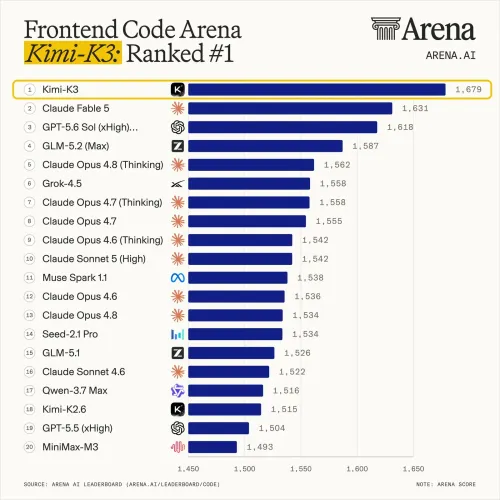
Models including Moonshot AI 's Kimi K3 and Zhipu AI 's GLM-5.2 are reportedly performing just a fraction behind leading US rivals.
Most Chinese models currently use permissive licences such as the MIT License , allowing free commercial use by any third party.
Keung cited “considerable adoption among small and medium enterprises in the global market” as a driver for potential monetisation.
Key players in scope include DeepSeek , Moonshot AI , Zhipu AI , Minimax , and Alibaba Group Holding , with cloud operators like Alibaba Cloud and Tencent Holdings most directly exposed.
Goldman Sachs analyst Ronald Keung says Chinese AI developers could begin charging cloud platforms commercial licensing fees to host their open-weight models, a shift that would let firms monetise surging global adoption. The assessment, published 28 July 2026, arrives as Chinese models close the performance gap with leading US rivals.
The open-source revenue gap
Most Chinese AI models are currently distributed under permissive licences such as the MIT License — originating from the Massachusetts Institute of Technology — which allows anyone to use, modify, and commercially host the software at no cost. This means foreign cloud platforms and developers can freely download and serve these models without paying the original builders a cent, even as usage volumes climb sharply.
Models such as Moonshot AI's Kimi K3 and Zhipu AI's GLM-5.2 have reportedly reached performance levels just a fraction behind top US competitors, making them increasingly attractive to enterprise customers worldwide.
The commercial licensing case
Keung, a Hong Kong-based head of Asia internet research at the US investment bank, argues that requiring third-party providers to purchase commercial licences before running inference workloads on their own infrastructure is a logical next step. “Domestic growth in adoption is very fast, and we think there’s considerable adoption among small and medium enterprises in the global market, and even larger [companies] are starting to consider using [Chinese models],” Keung said.
Such a ‘paid-weights’ model would mirror strategies used by some Western open-source AI providers, who offer free community licences while requiring revenue-sharing or flat fees from commercial deployers above certain usage thresholds.
Why it matters
The potential licensing shift has direct implications for major cloud operators — including Alibaba Cloud, Tencent Holdings, and international hyperscalers — that currently host Chinese models at no licensing cost. A transition to paid weights would reshape the economics of AI inference hosting globally.
Chinese AI developers including DeepSeek, Moonshot AI, Zhipu AI (also known as Z.ai), Minimax, and Alibaba Group Holding have collectively built a large installed base of users precisely because of open, permissive licensing. Any pivot toward commercialisation would need to balance monetisation against the risk of losing developer mindshare to competitors still offering free access.
The competitive backdrop
The debate over open-source monetisation is not unique to China. Western counterparts such as Meta and Mistral have faced similar questions about how to generate returns from widely adopted open-weight models. What distinguishes the Chinese case is the scale of cross-border usage: foreign enterprises are increasingly evaluating Chinese AI models as cost-effective alternatives to proprietary US offerings.
The performance convergence between Chinese and leading US models has accelerated this trend, making the licensing question more commercially urgent for developers in Shanghai and beyond.
What’s next
Whether Chinese AI firms move collectively or individually toward paid-weights licensing will depend partly on competitive dynamics and partly on regulatory signals from Beijing. Investors and enterprise buyers alike will be watching for any formal licensing policy announcements from leading developers — and for how cloud platforms respond to potential fee demands.
Point of View
And now face the classic open-core dilemma of monetising that installed base without surrendering the adoption flywheel. What mainstream coverage often misses is that the leverage here runs both ways — cloud platforms hosting Chinese models at zero cost are also building dependency on that supply chain, giving developers real negotiating power when they do move to commercial terms. Goldman Sachs' framing of this as an imminent revenue opportunity also signals that institutional investors are beginning to price Chinese AI firms not just on domestic growth but on global licensing potential. The wildcard is whether Beijing views aggressive cross-border IP monetisation as strategically desirable or as a friction point in tech diplomacy.
NationPress
28 Jul 2026
Frequently Asked Questions
What is paid-weights licensing for AI models?
Paid-weights licensing means AI developers charge cloud platforms or businesses a commercial fee to host and run their model’s core parameters — the ‘weights’ — on third-party infrastructure. Currently, most Chinese AI models use permissive licences like the MIT License that allow free commercial use, but a shift to paid weights would require companies serving these models to pay the original developer.
Which Chinese AI models are involved?
Moonshot AI 's Kimi K3 and Zhipu AI 's GLM-5.2 were specifically cited as examples of Chinese models that have reached performance levels close to top US rivals. Other developers in scope include DeepSeek , Minimax , and Alibaba Group Holding .
Why does Goldman Sachs think Chinese AI firms will move to commercial licensing?
Goldman Sachs analyst Ronald Keung pointed to rapid domestic adoption and growing uptake among global small and medium enterprises as the commercial rationale. As usage scales internationally, the revenue left on the table under free open-source terms becomes increasingly significant.
Who would be most affected by a paid-weights shift?
Cloud platforms that currently host Chinese AI models at no licensing cost — including Alibaba Cloud , Tencent Holdings , and international hyperscalers — would face new fee obligations. Enterprise customers using Chinese models via these platforms could also see cost increases passed through.
How does this compare to Western open-source AI licensing?
Western open-weight providers such as Meta and Mistral have grappled with the same monetisation challenge. Some impose commercial-use thresholds or revenue-sharing requirements above certain user counts. A Chinese move to paid weights would follow a similar playbook, though the cross-border geopolitical dimension adds complexity absent in purely Western licensing disputes.