Goldman Sachs: US AI spend to pay off despite Chinese open-source threat
Synopsis
Goldman Sachs analyst Eric Sheridan says the US$700 billion US AI infrastructure buildout is not a bubble — a compute supply crunch driven by agentic AI tools like Anthropic's Claude Code will keep demand ahead of supply well into 2027, invalidating bearish open-source margin-erosion theses.
Key Takeaways
Eric Sheridan , co-head of tech, media and telecoms research at Goldman Sachs , said the US AI sector is at an 'inflection point', not in a bubble, as of 19 May 2026 .
US AI infrastructure spending is on track to exceed US$700 billion in 2026 , with the compute supply-demand gap expected to persist until 'well into the second half of 2027 '.
Bearish forecasts of margin erosion from cheap Chinese open-source models, including DeepSeek , have largely failed to materialise, according to Sheridan .
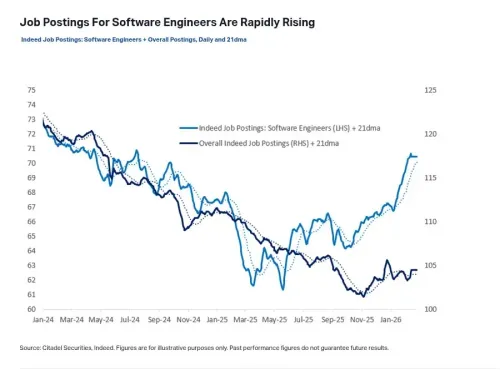
Agentic AI tools, including Anthropic 's Claude Code , have triggered a demand spike that is outstripping current compute supply.
Lower token costs from infrastructure investment have expanded — not suppressed — overall AI demand, sustaining revenue growth for US providers.
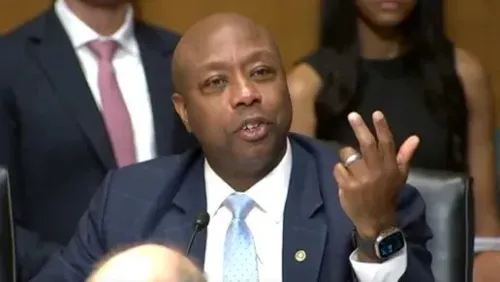
Goldman Sachs analyst Eric Sheridan said on Monday, 19 May 2026 that US tech giants are positioned to deliver returns on their massive AI infrastructure bets, even as cheap, open-source Chinese models intensify competitive pressure. Speaking at Goldman Sachs's Asia Communacopia + Technology Conference in Hong Kong, Sheridan argued the industry has reached an inflection point — not a bubble.
The Compute Gap That Won't Close Soon
Sheridan, co-head of tech, media and telecoms research at Goldman Sachs, told reporters there is 'a pretty big disconnect between the demand and the availability of compute.' He added: 'We don't think that imbalance closes until well into the second half of 2027.' Rather than signalling overinvestment, the persistent supply crunch points to structural, durable demand for AI infrastructure.
US tech companies are on track to spend more than US$700 billion on AI infrastructure in 2026 alone — a figure that has fuelled recurring questions on Wall Street about whether returns will ever be proportional to outlays.
Why Open-Source Chinese AI Has Not Eroded US Margins
The emergence of lower-cost, open-source models from Chinese developers — most notably DeepSeek — prompted some analysts to forecast margin compression for US model providers. According to Sheridan, those bearish predictions have largely failed to materialise. Instead of a demand deficit characteristic of a speculative bubble, US providers remain severely constrained by compute capacity.
Falling token costs, driven by infrastructure investment, have not suppressed demand — they have expanded it. More affordable inference has unlocked new use cases and pulled more enterprises into the AI ecosystem, sustaining revenue growth for hyperscalers and model developers alike.
Agentic AI: The Demand Catalyst
The launch of advanced agentic AI tools has been a pivotal trigger. Anthropic's flagship Claude Code is among the products cited as driving a spike in compute demand that is far outstripping current supply. Agentic tools — which autonomously execute multi-step tasks — consume significantly more tokens per session than conventional chatbots, amplifying infrastructure requirements.
Sheridan framed this moment as early vindication for the industry's unprecedented capital expenditure on data centres and semiconductors, describing it as an 'inflection point' where economically productive AI applications are beginning to justify the spend.
What's Next for AI Infrastructure Investment
The compute supply-demand imbalance identified by Goldman Sachs suggests that companies across the AI value chain — from hyperscalers such as Alphabet and Amazon to enterprise adopters like Uber and DoorDash — face a prolonged period of capacity constraints. For investors, this implies continued pricing power for compute providers through at least 2027.
The trajectory of agentic AI adoption and the pace at which US data centre capacity can scale will be the two variables most worth watching as the industry moves deeper into this infrastructure cycle.
Point of View
Which suggests hyperscalers retain pricing power regardless of model commoditisation. What mainstream coverage underweights is the token-consumption multiplier effect of agentic AI: each autonomous workflow can generate orders of magnitude more inference demand than a single chatbot query, making the supply crunch self-reinforcing as adoption scales. The '2027 gap' framing also quietly shifts the debate from 'will capex pay off?' to 'who captures value when supply finally catches up?' — a question that exposes semiconductor suppliers, data centre operators, and second-tier cloud providers to very different risk profiles. Investors fixated on near-term margin compression may be mis-pricing the duration of this infrastructure cycle.
NationPress
7 Oct 2026
Frequently Asked Questions
What did Goldman Sachs say about US AI investment returns?
Goldman Sachs analyst Eric Sheridan said on 19 May 2026 that US tech giants are set to deliver returns on their AI infrastructure investments, describing the current moment as an 'inflection point' rather than a bubble. He cited severe compute capacity constraints and surging agentic AI demand as evidence that spending above US$700 billion in 2026 is justified.
Why hasn't DeepSeek hurt US AI companies' margins?
According to Sheridan , cheaper open-source models from Chinese developers such as DeepSeek have not eroded US provider margins because falling token costs have expanded overall demand rather than cannibalising it. US providers remain supply-constrained, not demand-constrained, which preserves their pricing power.
What is agentic AI and why is it driving compute demand?
Agentic AI refers to tools that autonomously execute complex, multi-step tasks — consuming far more compute per session than conventional chatbots. Products such as Anthropic 's Claude Code have triggered a demand spike that is outstripping current supply, according to Goldman Sachs .
When will the AI compute supply-demand gap close?
Eric Sheridan of Goldman Sachs said the imbalance between compute demand and availability is not expected to close 'until well into the second half of 2027 .' This sustained gap implies continued pricing power for compute providers and infrastructure operators for at least another year.
How much are US companies spending on AI infrastructure in 2026?
US tech companies are on track to spend more than US$700 billion on AI infrastructure in 2026 , encompassing data centres and semiconductors. Goldman Sachs views this capital expenditure as increasingly vindicated by the arrival of economically productive agentic AI applications.