CM Sawant Pushes Tech-Led Farming via Krishi Pe Charcha
Synopsis
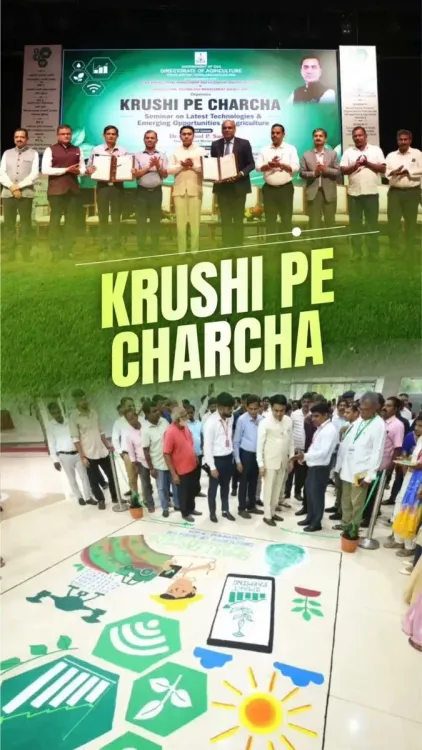
Goa Chief Minister Pramod Sawant on 7 July 2026 promoted Krishi Pe Charcha, a farmer engagement forum, as the foundation for a technology-led, sustainable, and self-reliant agricultural future under the Swayampurna Goa initiative.
Key Takeaways
CM Pramod Sawant publicly backed Krishi Pe Charcha on 7 July 2026 as a platform to empower Goa's farmers with technology and innovation.
The forum is linked to Swayampurna Goa , the state's flagship self-reliance scheme launched in 2020 .
The initiative aligns with the national National Mission for Sustainable Agriculture framework established in 2010 .
Goa , India's smallest state, uses technology-led farming to compensate for limited cultivable land.
Agri-tech providers and smallholder farmers are the primary stakeholders of the Krishi Pe Charcha platform.
Future budget allocations and district-level expansion of the forum are key indicators to watch.
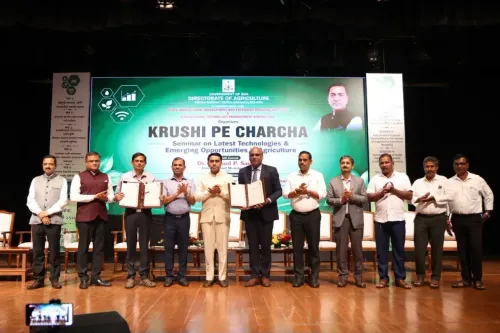
Goa Chief Minister Pramod Sawant on Tuesday, 7 July 2026, highlighted the state government's push to modernise agriculture through Krishi Pe Charcha, a participatory forum designed to connect farmers with technology, innovation, and new economic opportunities aimed at building a self-reliant agricultural sector in Goa.
Context
Posting on X, CM Sawant described Krishi Pe Charcha as a vehicle for 'empowering Goa's farmers with technology, innovation, and new opportunities,' framing it as a step toward a 'smarter, sustainable, and Swayampurna agricultural future.' The term Swayampurna — meaning self-reliant — is central to a flagship state scheme launched by the Goa government in 2020.
Krishi Pe Charcha functions as a discussion and outreach platform where farmers engage directly with policymakers and agri-tech providers on adoption of modern farming practices. The forum reflects a broader state effort to shift Goa's agricultural base — constrained by the state's limited land area — toward higher-value, technology-enabled production.
Policy Backdrop
The Swayampurna Goa scheme, launched in 2020, anchors the state's self-reliance agenda across multiple sectors, with agriculture and allied activities forming a core pillar. The initiative draws on the national National Mission for Sustainable Agriculture framework — established in 2010 — which provides a template for climate-resilient and technology-led farming that states including Goa have adapted to local conditions.
As India's smallest state, Goa faces inherent constraints of scale in farming, making technology adoption and sustainable intensification more critical than expansion of cultivable area. The state has increasingly positioned agri-tech integration alongside its dominant tourism economy as a diversification strategy.
Stakeholders and Impact
The primary beneficiaries of Krishi Pe Charcha are Goa's smallholder farming community, who gain direct access to information on modern inputs, digital tools, and government schemes. Agri-tech providers and allied sector businesses also stand to benefit from a state-facilitated platform that signals institutional demand for technology solutions.
Participatory forums of this kind have become a recognised instrument across Indian states for bridging the gap between policy design and ground-level farmer awareness. For Goa, where agriculture competes with tourism and real estate for land and labour, such engagement is particularly important to retain farming as a viable livelihood.
What's Next
Observers will watch whether Krishi Pe Charcha translates into concrete budget allocations for agricultural technology in the next Goa state budget cycle, and whether the forum expands into district-level sessions to reach farmers beyond the state capital. The alignment of Swayampurna Goa with central missions on sustainable agriculture could also unlock additional funding streams for tech-enabled farming programmes. CM Sawant's public framing of the initiative signals that agricultural self-reliance will remain a visible political and policy priority for the BJP-led state government.
Point of View
The government ties a participatory event to a larger, ongoing scheme — lending it policy continuity rather than one-off optics. For a state where agriculture is economically marginal relative to tourism, this kind of high-visibility engagement serves as much to signal intent as to deliver immediate outcomes. The real test will be whether follow-through in budget allocations and district outreach matches the rhetorical emphasis on farmer empowerment.
NationPress
7 Jul 2026
Frequently Asked Questions
What is Krishi Pe Charcha in Goa?
Krishi Pe Charcha is a participatory forum initiated by the Goa government to engage farmers on technology adoption, innovation, and sustainable agricultural practices, aimed at building a self-reliant farming sector in the state.
What is the Swayampurna Goa scheme?
Swayampurna Goa is a state government initiative launched in 2020 to promote self-reliance across sectors, with sustainable agriculture and local empowerment as core pillars.
What did Goa CM Pramod Sawant say about farmers in July 2026?
On 7 July 2026, CM Pramod Sawant stated that Krishi Pe Charcha is 'empowering Goa's farmers with technology, innovation, and new opportunities' toward a smarter and Swayampurna agricultural future.
How does Goa plan to modernise its agriculture sector?
Goa is pursuing technology-led, sustainable farming through platforms like Krishi Pe Charcha and the Swayampurna Goa scheme, drawing on the national framework of the National Mission for Sustainable Agriculture.
Why is agricultural technology important for Goa specifically?
As India's smallest state, Goa has limited cultivable land, making technology adoption and sustainable intensification essential to improving farmer incomes without expanding the agricultural footprint.