₹37,500 crore coal gasification scheme draws 7 bids in Round 1
Synopsis
Seven major corporates and PSUs — led by Adani Enterprises with three bids — have applied under India's ₹37,500 crore coal gasification scheme in its very first round, directly rebutting reports of poor industry interest. With the second round already open and a ₹3 lakh crore investment potential on the table, the scheme is shaping up as one of India's most ambitious energy transition bets.
Key Takeaways
The ₹37,500 crore coal gasification scheme received seven applications in its first round, according to the Ministry of Coal on 8 September .
Adani Enterprises Ltd submitted three proposals for urea production ; NTPC Ltd applied for synthetic natural gas .
The scheme targets 100 million tonnes of coal gasification capacity by 2030 and could catalyse up to ₹3 lakh crore in investments.
It aims to cut import dependence on LNG, urea, ammonia, and methanol , which cost India around ₹2.77 lakh crore in FY25 .
The second round of applications opened on 8 September , with new windows every two months .
The scheme builds on a prior ₹8,500 crore incentive programme approved in January 2024 , under which eight projects are already under implementation.
India's ₹37,500 crore surface coal and lignite gasification scheme has attracted seven applications in its first round, with major corporates and public sector undertakings stepping forward, the Ministry of Coal announced on Tuesday, 8 September. The strong initial response comes after earlier reports had suggested the scheme might struggle to find takers — claims the ministry had publicly dismissed as premature.
Who Has Applied and for What
Adani Enterprises Ltd has submitted three proposals, all centred on urea production, making it the most active applicant in the first round. Gallantt Ispat Ltd has applied for a project producing direct reduced iron and syngas, while state-owned NTPC Ltd has filed for synthetic natural gas. Shyam Sel & Power Ltd has applied for a syngas project and Talcher Fertilisers Ltd for urea, according to the ministry.
What the Ministry Said
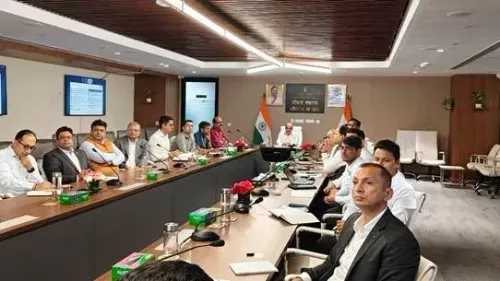
A senior Ministry of Coal official welcomed the response in strong terms. 'When we said reports of 'no takers' were premature, we were confident that industry would respond and it has, decisively. Seven applications in the very first round, including from some of India's largest industrial houses and public sector undertakings, are a clear vote of confidence in the scheme and in India's coal gasification mission. The market has spoken and it has spoken loudly,' the official said.
Scheme Objectives and Scale
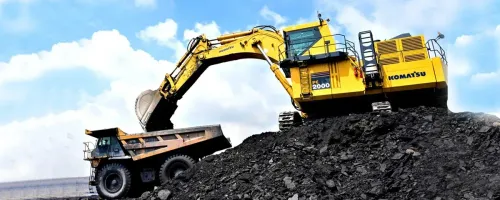
Approved by the Union Cabinet in May, the scheme carries a total financial outlay of ₹37,500 crore and aims to convert domestic coal and lignite into higher-value outputs including syngas, methanol, ammonia, urea, and hydrogen. A central goal is reducing India's reliance on imports of LNG, urea, ammonia, and methanol — commodities that together were valued at approximately ₹2.77 lakh crore in FY25, according to the ministry. The scheme also supports India's target of achieving 100 million tonnes of coal gasification capacity by 2030, with 75 million tonnes of that capacity earmarked under this specific programme. It is expected to catalyse investments of up to ₹3 lakh crore and generate both direct and indirect employment, though specific job figures have not been detailed.
Building on Earlier Efforts
This latest scheme builds on a ₹8,500 crore financial incentive programme approved in January 2024, under which eight gasification projects are currently under implementation. Notably, the government opened the second round of the new scheme on the same day — 8 September — with the Request for Proposal (RFP) stipulating that application windows will open at two-month intervals, giving eligible entities recurring opportunities to submit bids. The first-round applications were submitted following the issuance of the RFP on 7 July.
What Comes Next
With the second round now open and a pipeline of application windows planned every two months, the ministry appears intent on building momentum quickly. The participation of both private conglomerates and public sector units in Round 1 signals that coal gasification is gaining traction as a credible industrial pathway — though the ultimate test will be whether these proposals translate into operational capacity before the 2030 deadline.
Point of View
But the composition of applicants warrants scrutiny — three of the seven proposals come from a single conglomerate, Adani Enterprises, which concentrates early-round risk. The real measure of scheme health will be Round 2 and beyond, where mid-tier industrialists and newer entrants either show up or don't. More critically, India has set coal gasification targets before; the ₹8,500 crore predecessor scheme from January 2024 has eight projects 'under implementation' — a phrase that rarely means construction has begun. Unless the ministry publishes milestone-linked progress data, the ₹37,500 crore headline risks becoming another aspirational number that outpaces delivery.
NationPress
24 Oct 2026
Frequently Asked Questions
What is the ₹37,500 crore coal gasification scheme?
It is a Union Cabinet-approved scheme, cleared in May 2025, that provides financial incentives worth ₹37,500 crore to promote the conversion of domestic coal and lignite into higher-value products such as syngas, methanol, ammonia, urea, and hydrogen. The scheme aims to reduce India's import dependence and support a national target of 100 million tonnes of coal gasification capacity by 2030.
Who applied in the first round of the coal gasification scheme?
Seven applications were received, including three from Adani Enterprises Ltd for urea production, one from Gallantt Ispat Ltd for direct reduced iron and syngas, one from NTPC Ltd for synthetic natural gas, one from Shyam Sel & Power Ltd for syngas, and one from Talcher Fertilisers Ltd for urea, according to the Ministry of Coal.
How does this scheme differ from the earlier coal gasification incentive?
The earlier ₹8,500 crore financial incentive scheme was approved in January 2024 and currently has eight projects under implementation. The new ₹37,500 crore scheme is significantly larger in outlay and scope, targeting 75 million tonnes of capacity on its own, and is structured with recurring application rounds every two months.
What imports does the coal gasification scheme aim to replace?
The scheme targets a reduction in India's dependence on imported LNG, urea, ammonia, and methanol — commodities that collectively cost the country approximately ₹2.77 lakh crore in FY25, according to the Ministry of Coal.
When does the second round of applications open?
The second round opened on 8 September 2025, the same day the first-round results were announced. Under the RFP terms, subsequent application windows will open at two-month intervals, allowing eligible entities multiple opportunities to submit proposals.