Coal India to invest ₹1,900 crore in R&D by FY30, sets up NaCCER hub
Synopsis
Coal India is betting ₹1,900 crore on R&D by FY30 — a fourfold jump in annual spend already visible in FY25. With NaCCER, three IIT partnerships, and tie-ups spanning Canada, Sweden, and Australia, India's coal giant is quietly repositioning itself as an energy technology player, not just a miner.
Key Takeaways
Coal India Limited (CIL) plans to invest approximately ₹1,900 crore in R&D by FY2029-30 .
R&D expenditure jumped from ₹61 crore in FY2023-24 to ₹245 crore in FY2024-25 .
The National Centre for Coal and Energy Research (NaCCER) was established in FY2024-25 as the central R&D hub.
Three Centres of Excellence set up at IIT Hyderabad , IIT Madras , and IIT (ISM) Dhanbad , with ₹253 crore committed.
19 R&D projects worth ₹225 crore are underway under NaCCER; 13 pilot-scale projects active at CoEs.
International collaborations signed with Ergo Exergy (Canada) , Ericsson (Sweden) , and CSIRO (Australia) .
Coal India Limited (CIL), the state-owned Maharatna company, has announced plans to invest approximately ₹1,900 crore in research and development activities by FY2029-30, as it accelerates efforts to modernise operations and align with India's shifting energy priorities. The commitment was disclosed in an exchange filing on Tuesday, 30 June.
NaCCER: The Innovation Hub
At the centre of CIL's R&D push is the National Centre for Coal and Energy Research (NaCCER), established in FY2024-25. Operating on a hub-and-spoke model, NaCCER is designed to fast-track prototype development and technology deployment across the company's operations. 'We intend to shift R&D to a higher orbit to drive the company's future growth and technological transformation,' a senior CIL official said.
The company's R&D expenditure surged multifold — from ₹61 crore in FY2023-24 to ₹245 crore in FY2024-25 — underscoring the pace at which the coal major is scaling its innovation investments. CIL has also put in place a comprehensive R&D policy to provide a structured framework for this push.
IIT Partnerships and Centres of Excellence
To deepen industry-academia ties, Coal India has established three Centres of Excellence (CoEs) at premier institutions: IIT Hyderabad, IIT Madras, and IIT (ISM) Dhanbad. The company has committed ₹253 crore — to be released in phases — to fund these centres. Currently, 13 pilot-scale research and prototype development projects are underway across the CoEs.
Separately, 19 R&D projects valued at ₹225 crore are being executed by leading scientific institutions under the direct oversight of NaCCER, according to the exchange filing.
Research Focus Areas
The research agenda spans a wide range of strategic domains, including clean coal technologies, carbon capture, utilisation and storage (CCUS), coal gasification, recovery of rare earth elements and critical minerals, sustainable materials, circular economy practices, environmental remediation, wastewater treatment, and advanced mining technologies. This breadth signals CIL's intent to position itself not just as a coal extractor but as an energy technology organisation.
International Collaborations
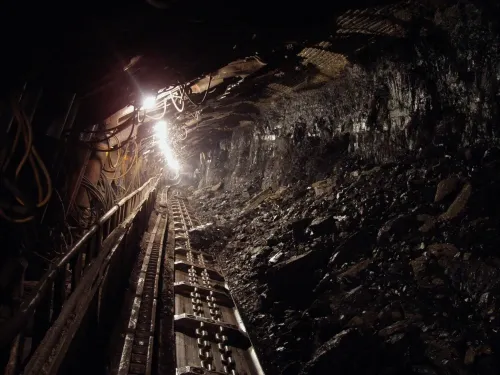
Coal India has also forged partnerships with global players to bring frontier technologies into its operations. These include a tie-up with Ergo Exergy of Canada for an underground coal gasification project, a collaboration with Ericsson of Sweden to deploy 5G technologies at its Jhanjra underground mine, and a research partnership with Australia's CSIRO. The international outreach reflects a deliberate strategy to import expertise that domestic R&D ecosystems are still developing.
Why This Matters
This comes amid growing pressure on coal-dependent public sector enterprises to demonstrate a credible transition roadmap. India remains the world's second-largest coal consumer, and CIL accounts for over 80% of domestic coal production. The R&D scale-up is widely seen as CIL's attempt to future-proof its operations against tightening environmental norms and the long-term energy transition. Whether the investment translates into deployable technology — rather than research outputs that stay on shelves — will be the critical test in the years ahead.
Point of View
But the real question is execution quality, not spend volume. Indian PSUs have a long history of committing to innovation budgets that produce research reports rather than deployable technology. The NaCCER hub-and-spoke model is structurally sound, but its success will hinge on whether prototype outputs at the IIT CoEs are actually integrated into CIL's mining operations — or remain academic exercises. The international tie-ups with Ergo Exergy and CSIRO are the most credible signal yet that CIL is serious about underground gasification, a technology that could extend the commercial life of ageing coal seams. That, more than the headline ₹1,900 crore figure, is the number to watch.
NationPress
30 Jun 2026
Frequently Asked Questions
How much is Coal India investing in R&D by FY30?
Coal India Limited plans to invest approximately ₹1,900 crore in research and development activities by FY2029-30. This represents a significant scale-up from its R&D spend of ₹245 crore in FY2024-25, which itself was a multifold jump from ₹61 crore the previous year.
What is NaCCER and what does it do?
NaCCER, or the National Centre for Coal and Energy Research, is CIL's central R&D hub established in FY2024-25. It operates on a hub-and-spoke model aimed at accelerating prototype development and technology deployment, and currently oversees 19 R&D projects worth ₹225 crore.
Which IITs has Coal India partnered with for research?
Coal India has set up Centres of Excellence at IIT Hyderabad, IIT Madras, and IIT (ISM) Dhanbad. The company has committed ₹253 crore — to be released in phases — to fund these centres, where 13 pilot-scale research and prototype development projects are currently underway.
What international collaborations has Coal India signed?
Coal India has entered into partnerships with Ergo Exergy of Canada for an underground coal gasification project, Ericsson of Sweden to deploy 5G technologies at its Jhanjra underground mine, and Australia's CSIRO for collaborative research.
What research areas is Coal India focusing on?
CIL's R&D spans clean coal technologies, carbon capture and storage, coal gasification, recovery of rare earth elements and critical minerals, sustainable materials, circular economy, environmental remediation, wastewater treatment, and advanced mining technologies.