How Can New Developers’ Toolkit Foster Open and Inclusive Speech Technologies in India?
Synopsis
Explore how the new Developers’ Toolkit and Policy Report aim to enhance the development of open and inclusive voice technologies in India, ensuring that this transition aids in digital inclusion for all citizens.
Key Takeaways
India is adopting a voice-first digital ecosystem.
Robust policy foundations are essential for this transition.
The Developers’ Toolkit offers actionable guidance.
Voice technologies are key to digital inclusion.
Addressing governance and quality challenges is crucial.
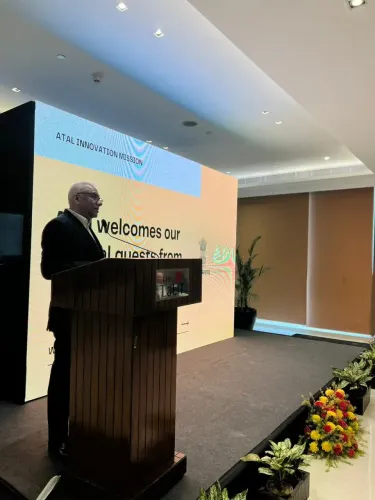
New Delhi, Feb 21 (NationPress) As India transitions towards a voice-first digital ecosystem, it is crucial to establish this shift on robust policy frameworks and effective implementation strategies, stated Amitabh Nag, CEO of the Digital India BHASHINI Division.
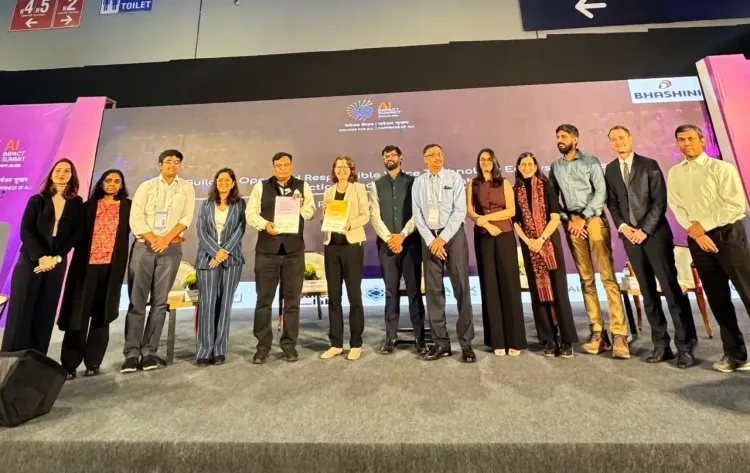
Voice technologies are becoming essential for digital inclusion in India. In this context, a new Policy Report and Developers’ Toolkit focused on voice technologies was unveiled at the ‘India AI Summit Expo 2026’.
According to Nag, "The Policy Report and Developers’ Toolkit deliver a systematic framework for developing open, inclusive, and responsible speech technologies in India. The policy recommendations facilitate alignment within the ecosystem, while the Developers’ Toolkit transforms these principles into actionable steps throughout the AI lifecycle — from data collection and model development to deployment and governance.”
The report suggests specific policy recommendations aimed at enhancing the voice technology ecosystem. These include recognizing foundational speech datasets as digital public assets, improving the openness and representativeness of models, investing in sustainable public infrastructure, and implementing safeguards to prevent misuse while fostering innovation.
This toolkit was collaboratively produced by ARTPARK at IISc, Digital Futures Lab, and Trilegal, with support from Bhashini and the FAIR Forward - AI for All initiative, executed by GIZ (German Development Cooperation) and funded by the German Federal Ministry for Economic Cooperation and Development (BMZ).
Given India’s linguistic diversity, voice technologies play a vital role in digital public infrastructure, reducing barriers to digital access through speech-driven applications.
Nonetheless, the creation and application of speech technologies raise complex issues regarding data governance, inclusion, openness, quality, and responsible usage.
The Developers’ Toolkit complements the policy assessment by pinpointing significant challenges faced by developers utilizing Indian-language voice datasets and creating voice applications. It highlights structural deficiencies within India’s speech and language technology landscape, such as uneven data representation, inadequate quality assurance mechanisms, limited evaluation practices, and fragmented governance frameworks.
“When voice AI operates in local languages and dialects, it opens doors to public services, healthcare, education, and economic involvement,” remarked Dr. Ariane Hildebrandt, Director-General of the department for global health, equality of opportunity, digital technologies, and food security; German Federal Ministry for Economic Cooperation and Development.
Point of View
The development of voice technologies in India is crucial for ensuring digital access for all. This initiative reflects the nation's commitment to inclusivity and innovation, making strides toward enhancing the digital landscape while addressing governance and quality challenges.
NationPress
19 Sept 2026
Frequently Asked Questions
What is the purpose of the Developers’ Toolkit?
The Developers’ Toolkit provides a structured framework for developing open, inclusive, and responsible speech technologies in India, translating policy recommendations into actionable practices.
Who collaborated on the development of the toolkit?
The toolkit was collaboratively developed by ARTPARK at IISc, Digital Futures Lab, and Trilegal, supported by Bhashini and the FAIR Forward initiative.
Why are voice technologies important in India?
Voice technologies are essential for digital inclusion in India's linguistically diverse society, lowering barriers to access through speech-based applications.
What challenges does the toolkit address?
The toolkit highlights challenges such as uneven data representation, weak quality assurance, and fragmented governance structures in India's speech technology ecosystem.
How does the Policy Report contribute to the ecosystem?
The Policy Report suggests targeted recommendations to strengthen the voice technology ecosystem, focusing on data representation, openness, and safeguards against misuse.